



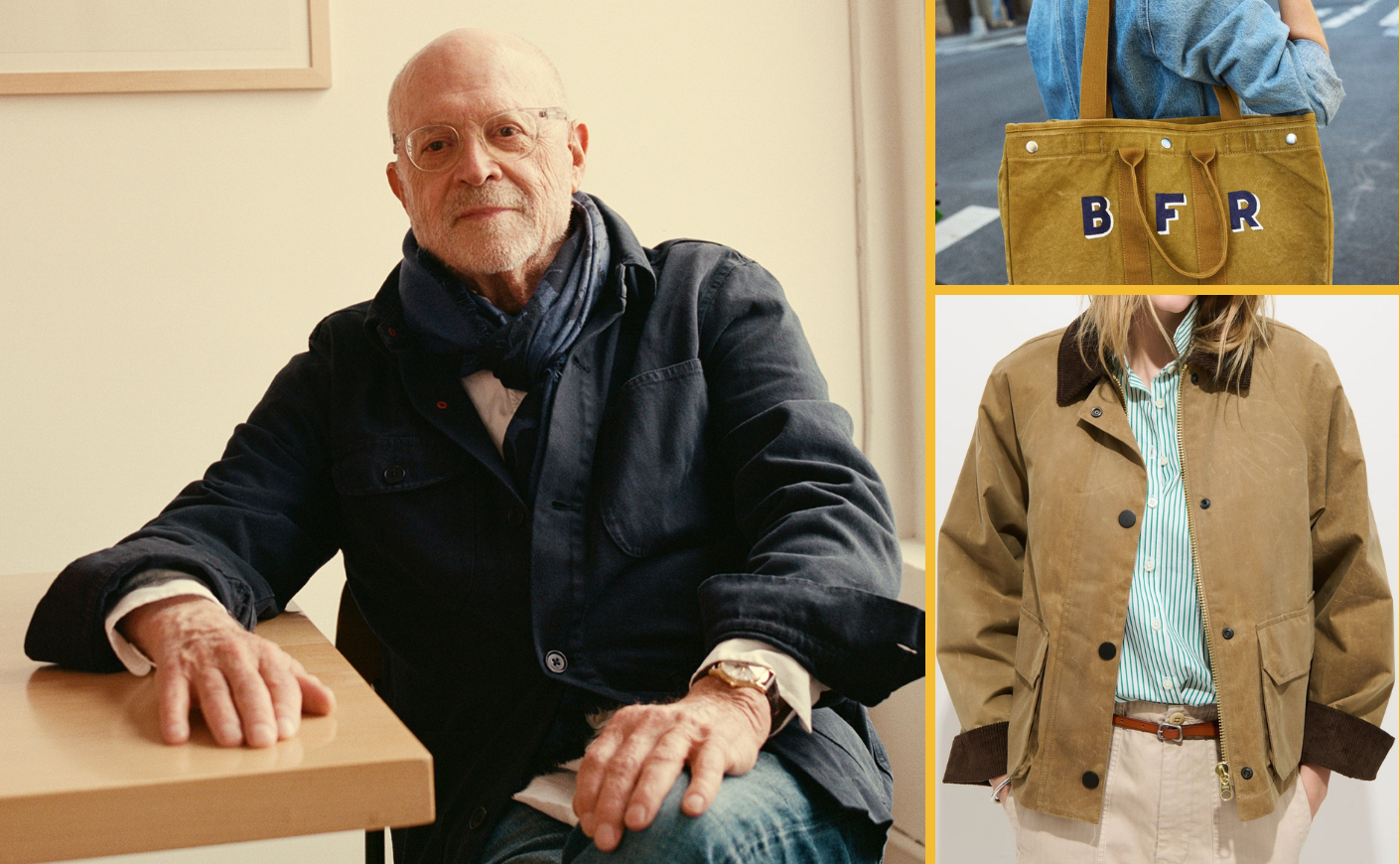
In the '90s, Mickey Drexler helped turn Gap into a multi-billion-dollar brand. He's often credited with creating the office uniform (a button-down shirt and a crisp pair of khakis) and mainstreaming its cool, casual look. During his 18-year run at Gap, he also founded Old Navy, but was fired after a downturn in sales. Less than a year later, he wound up at J.Crew, where he was able to work his magic again, elevating the company and its classic, slightly preppy aesthetic to help it become one of America's most-beloved brands.
Now, at 81, Drexler is still pushing fashion forward. He's currently at Alex Mill, the line founded by his son Alex Drexler, a brand that quickly staked its claim as a go-to for high-quality, timeless workwear with a modern flare.
Although he may be unconventional in his approach (he's a proud micromanager and is the rare leader unmoved by AI), Drexler has proven over his long career a knack for reinvention, divining what Americans want in their wardrobes, and scaling — fast. Below, he shares his hard-won advice on leadership, trusting your gut, and much more.
You’re known for trusting your gut: What’s an example of a time when the data said one thing and your instincts said another?
Drexler: Trusting data is like looking through the rearview mirror. When I started at Gap in 1984, the data said Shut [this brand] down, it’s headed south. But my instinct was that there was a big white space in the market for what Gap could be. In my mind, there wasn’t an affordable source for casual, cool clothes. I’ve always gone off intuition, knowing the landscape, and doing my own research — not trusting external consultants to tell me how to feel.
How do you think AI will impact the fashion industry? And are you implementing AI at Alex Mill?
We’re a people-first company at Alex Mill, so I really have no idea if and how we’ll use it. In my opinion, I don’t see AI having emotional, intuitive DNA. I think it will be great in some regards and areas of enterprise, but I doubt that it'll write the songs that move us, pick the colors that inspire us, and see around corners.
What’s one decision in your career that you wish you could take another run at?
Frankly, I don’t second-guess my decisions; I don’t like to ruminate. In the end, it all worked out nicely, even when it didn’t seem like it would. That said, I can’t say I would’ve fired myself at Gap, but here we are.

What’s a typical day in your life like now, compared to when you were running Gap or J.Crew?
My mornings at Gap started on a treadmill at 7 a.m. PST, 10 a.m. EST, with the NYC creative offices. I was on the phone every morning for 45 minutes, while walking fast or running. It was a good catch-up time to touch-base. When I was at J.Crew, I went to SoulCycle everyday, which was more schmoozy and fun than being alone in my home in San Fran. But I always like to start my days being active — I like to work off the anxiety.
Now, there's no such thing as a typical day for me. I don’t like to fill my time with meetings like most CEOs at big companies do. I’m a micromanager and I’m proud of that. If you’re not in the weeds, then you’ll miss the big opportunities.
What's the best piece of career advice you've ever received — and from whom?
I was in my third department store job in my third year, and I wanted out, sooner rather than later. It was 1980, and I got a call out of the blue to be the CEO of Ann Taylor. How they found me, I’m not sure. I was offered the job, but I said no — I wasn’t interested. They asked me a second time and I gave a reason why I wasn’t interested and said Don’t ask me again.
That Sunday evening, I was having dinner with an old friend of mine — he was far more successful than I was at the time. He asked what my career status was, and when I told him he emphatically said, "Take the job!" He said it was better to be CEO of a $25 million company than a VP of a $500 million company. Given my respect for him and his career, I called the CEO and asked, “Is the job still open?” praying that it was. He said yes, and that was the huge turning point.
What do you see as the single most-essential trait in a successful CEO?
Vision is extremely important, but so is smart work and hard work. It’s also important to be able to embrace failure and bounce back, know how to skate to where the puck is going, and keep yourself surrounded by good people. We have the best team at Alex Mill, and that is what’s moving us forward.
What's one fashion trend you think we'll be seeing in 2026?
I won’t be seeing any trends. Fashion should be timeless, and trends mean a short shelf-life. I believe in style. You can buy this or that, but you can’t buy style.
What are your favorite Alex Mill pieces?
Hands down, our monogrammed totes.