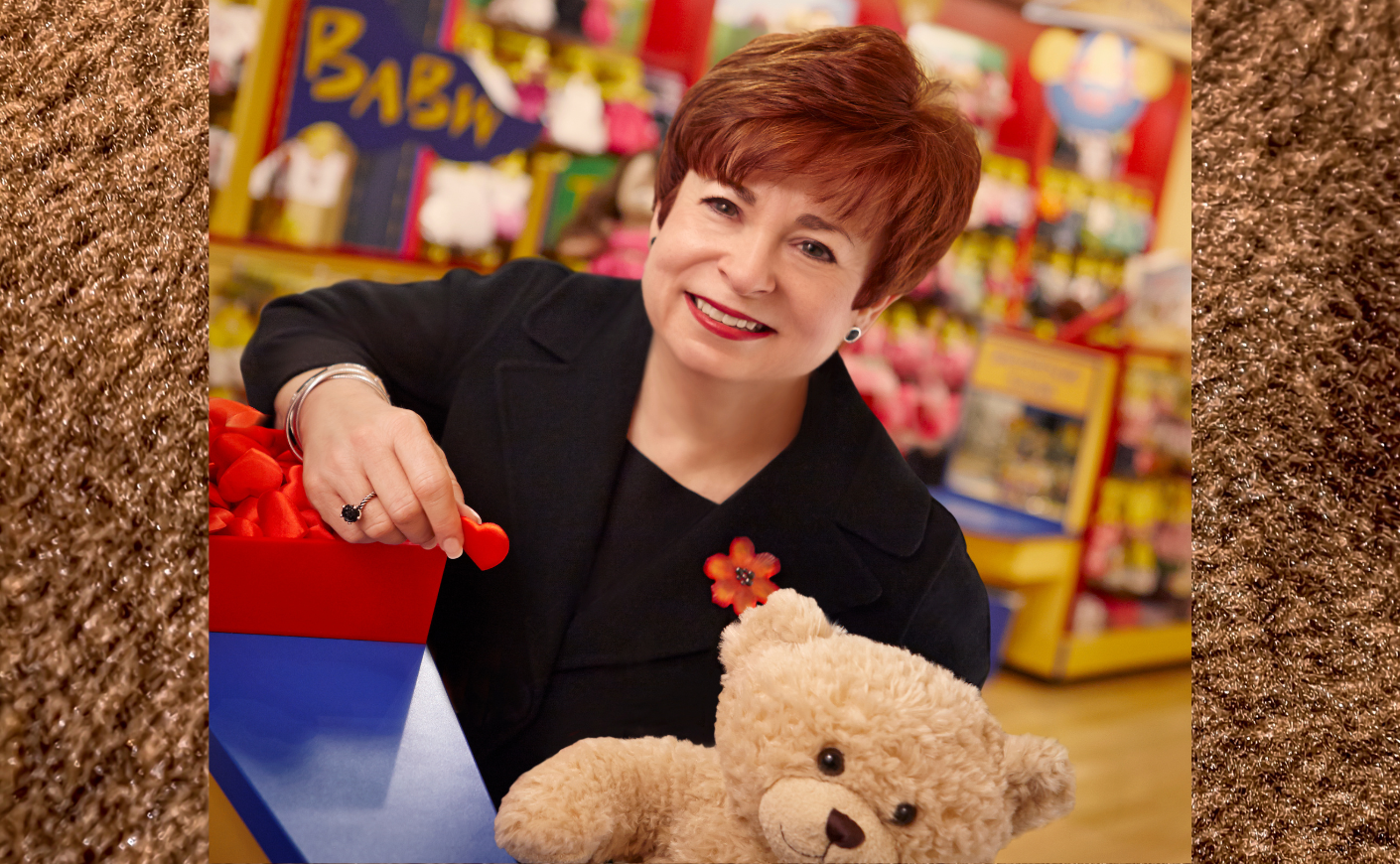
Maxine Clark has mastered the art of the pivot.
While supporting herself through law school, she took a job working for Hecht’s, a division of the May department stores, and fell in love with retail. She ended up taking a leave of absence (which she jokes is now running on 55 years) and quickly rose up the ranks at May before landing a job as president of Payless Shoe Source. After four years in the role, Clark decided to strike out on her own. In 1997, at 48 years old, Clark founded Build-A-Bear Workshop, which today is worth about $475 million and boasts 400 stores worldwide.
But Clark never saw building a plushie empire as the end of her story — she always anticipated a third act. “I had a plan for myself,” she tells us. “I knew what I had set out to do, and I wanted to make sure that I could still do it.”
In 2013, Clark resigned as CEO — or, as they call it at Build-A-Bear, “Chief Executive Bear” — and focused her attention on revitalizing an overlooked sector of St. Louis.
We got to chat with the founder about her remarkable career, her surprising connection to a famous first lady, and what inspires her to keep pursuing new peaks at 77.
How did you decide it was time to take the leap and leave Payless to build Build-A-Bear?
Maxine Clark: It was 1996, and the world was changing rapidly. As technology advanced, I knew eventually children would be spending a lot of time in front of a screen. I thought the hands-on experience of creating something might be lost.

One day, my next door neighbor, Katie, who was 10 at the time, was looking for a particular Beanie Baby that she couldn’t find. She just declared in the store: “These are so easy, we could make them.” What she meant was she could make them in my craft room, which I had in my basement for all the kids in the neighborhood to play with. But what I heard was something different. That day, Build-A-Bear was born.
Did you have an early mentor that shaped how you thought about work or entrepreneurship?
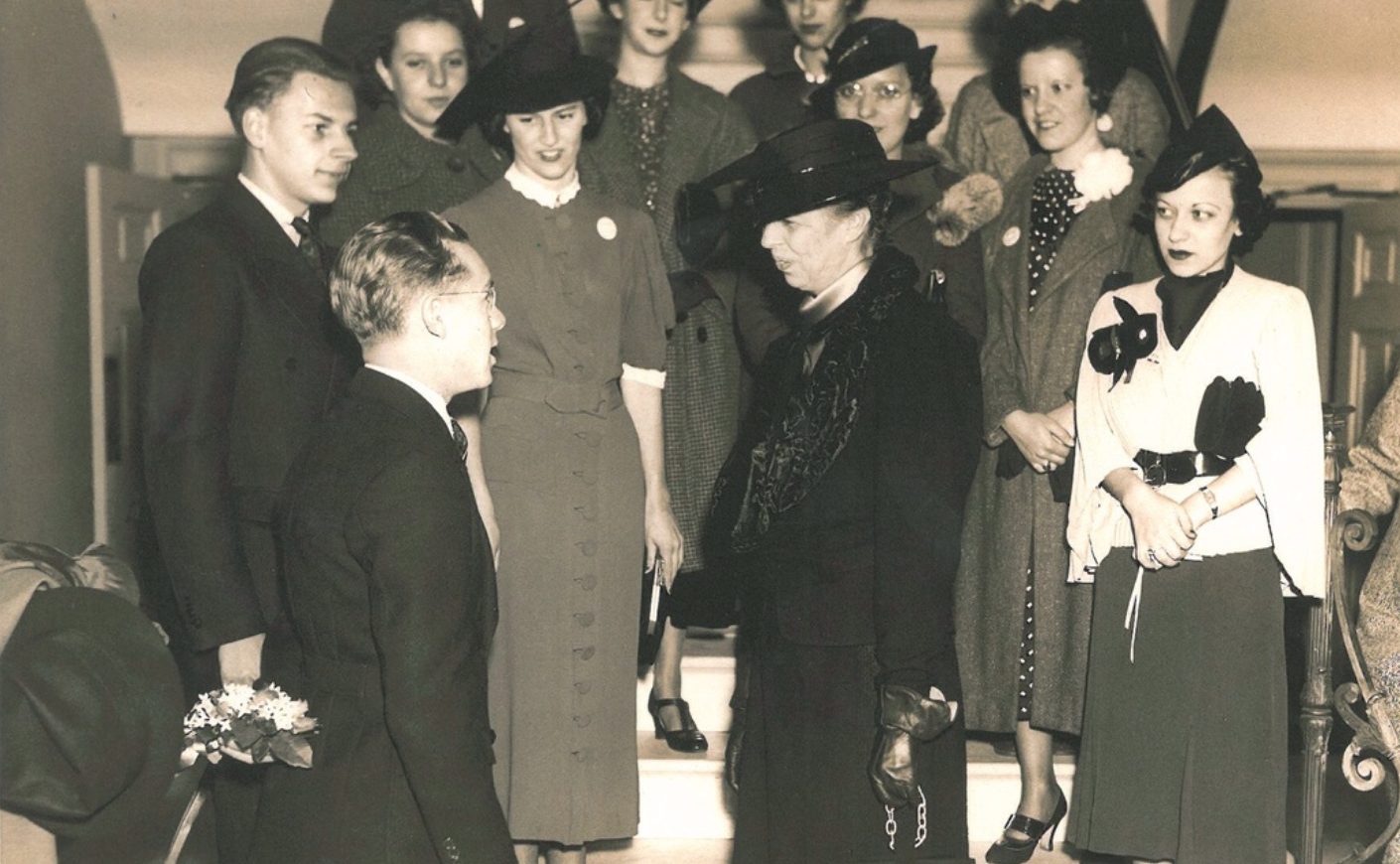
My mother was a self-taught social worker. She graduated from high school in New York City when she was 14 and went to work for Eleanor Roosevelt, who was first lady of the state of New York at the time, as a secretary. When Eleanor went to Washington, DC, she asked my mother to go with her, and my mother got to travel with her all over the country.
When President Roosevelt died, Eleanor said to all the women who had worked for her: “Go back to your cities and do something that solves one of the problems we saw on our travels.” So my mother and three of her friends started a school for children with Down Syndrome in Miami, Florida. That’s not what I wanted to do, but seeing her perseverance and how she managed to get things done — I always admired that.
And I did meet Eleanor Roosevelt once, when I was about seven or eight years old. She came to see the project my mother had started. She was very tall and kind of scary, but just being close to somebody like that — their aura rubs off on you.
What’s the one accomplishment you’re most proud of in your career?
I think the most important thing a founder can do after creating and establishing that business is finding a successor who’s going to keep that business thriving. I was very involved in that process. I wanted somebody who got the business and loved the brand and was willing to take it to the next level. And we found that all in Sharon Price John. She just recently announced her retirement, and we are bringing an inside person into her role, which I’m so excited about it. Chris [Hurt] is a fantastic leader.
It can be hard for founders to know when to walk away and hand over the reins. How did you know when it was time?
I was 48 when I started Build-A-Bear. Once that was successful, I knew there were other things I wanted to do, especially when it came to helping my community. I had a plan to do that about 10 years in — then we hit the recession and I couldn’t leave in the middle of that.
Once we became more profitable again and were back on track, that’s when I hired the new CEO. I was ready to go on to the next thing, because you only have so many years on this planet.
Tell me more about the 10-year plan for Build-A-Bear. It seems like it was quite detailed.
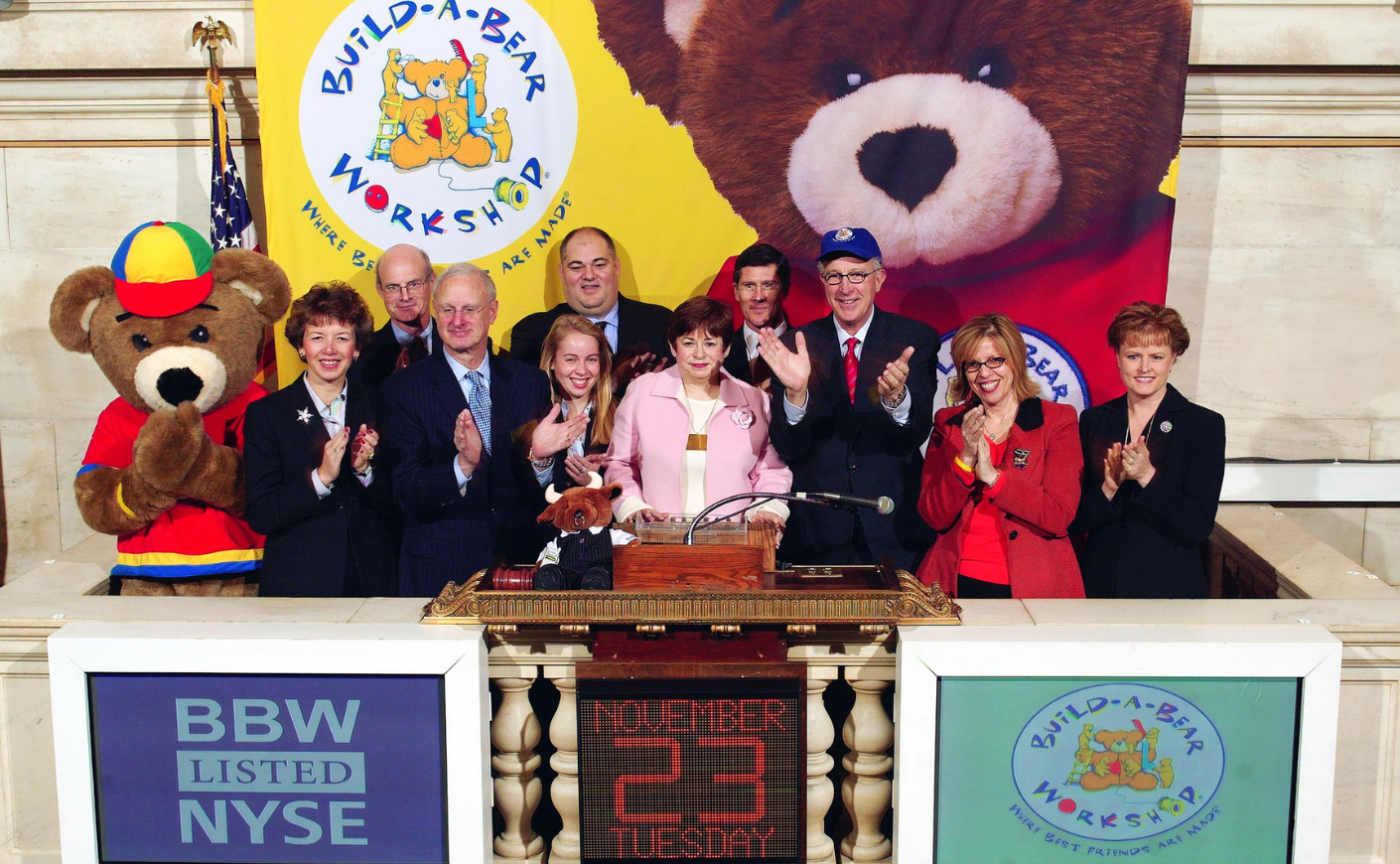
My 10-year plan was really important to me, because I thought I’d be doing this for about 10 years, and I wanted to make sure it could be successful. I knew what stores I wanted to open in — they were all labeled here by realtor or landlord. It was so detailed, I even planned around the 100th anniversary of the teddy bear, which was going to be in 2002. I wanted to open our 100th store at Roosevelt Field on Long Island, because Teddy Roosevelt inspired the bear. Sure enough, that happened.
We met the plan. We had the number of stores we said we were going to have. They just did way more business than we projected.
What have you been up to post-Build-A-Bear?
St. Louis is one of those cities with lots of challenges — racial and economic. Michael Brown was killed in 2014, which was right after I retired from Build-A-Bear. I remember being on the street where he was killed and listening to kids just across the street, and realizing that I was pretty far removed from them. So it made me think differently about how I could engage the community. At the time, I was involved in education and was on the board of a charter school. It was on the way to this charter school that I landed on a big empty building that had been an old hospital.
I ended up buying it, with the idea of bringing the community together there and giving space to local nonprofits. We turned it into a multi-use facility called Delmar DivINe. Delmar is the name of the street in St. Louis that divides the rich and poor, Black and white, and it’s referred to as the “Delmar Divide.” We’ve been open since fall 2021 and our offices, our apartments, our retail shops are full.
This interview has been edited and condensed for length and clarity.