




Do you feel like you truly matter at your office? And, equally importantly, do you know how to make someone else feel like they do?
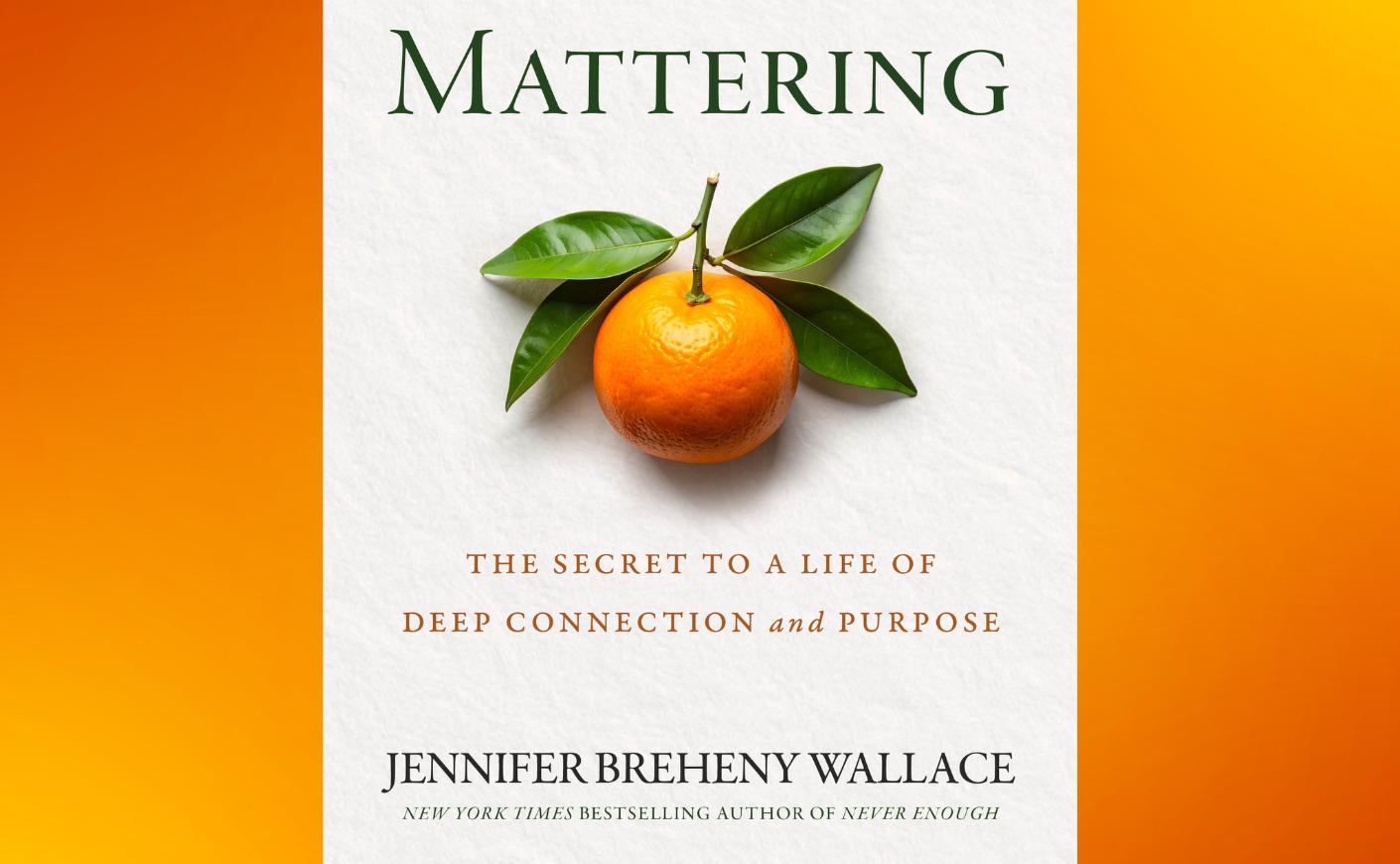
Bestselling author and award-winning journalist Jennifer Wallace made a splash with 2023's Never Enough, her fascinating book about the dangers of the toxic "achievement culture" teenagers experience today. Writing it taught her that many young people don't feel like they matter to the people around them, which led to her newest thought-provoking read. In Mattering: The Secret to a Life of Deep Connection and Purpose, Wallace draws on decades of psychological and sociological research to argue that the human need to matter — "to feel we are valued by others, and that we add value to the world" — is just as essential as our needs for food, water, and shelter.
One of the chapters focuses specifically on mattering at work, which is perhaps more important than ever in this current age of ever-shifting professional trends and the rise of artificial intelligence. Below, we go deep with Wallace about how to create "mattering moments" at the office, what managers can do to foster a more productive environment, and how workers can help one another without waiting on the higher-ups.
KCM: You write that people don’t leave jobs so much as they leave environments where they don’t feel they matter. What are the most common “anti-mattering” moments, as you refer to them, that employees describe?
Jennifer Wallace: Nearly 70 percent of employees report feeling disengaged, which is often mistaken for apathy or lack of commitment. In reality, it's a form of self-protection from a culture that tells them they don’t matter. When people repeatedly receive “anti-mattering” signals, disengaging becomes a way to cope and to conserve energy and dignity.
In my hundreds of interviews for Mattering, the most common “anti-mattering” moments were when employees described feeling replaceable. Decisions about their work are made without their input, or their contributions go unacknowledged. Over time, those signals accumulate and send a message that anyone could do this job, and no one would really notice if you didn’t.
Workplace incivility compounds these feelings. Even low-level rudeness — sarcasm, dismissive comments, eye-rolling, public correction, being talked over — registers as a threat in the brain, hijacking attention and cognitive bandwidth. In one experimental study, medical teams targeted by rude remarks performed significantly worse in a neonatal care simulation, making serious diagnostic and treatment errors.

What makes anti-mattering moments so damaging isn’t any single incident — it’s their cumulative effect. Together, they communicate who counts and who doesn’t. And once people internalize the belief that they don’t matter at work, it can spill over into other parts of their lives.
On the flipside, what does a “mattering moment” look like in an ordinary workday?
Mattering shows up in everyday moments: who gets asked, thanked, developed, and counted on. Over time, these signals accumulate, shaping whether work becomes a source of “clean fuel” that energizes and engages people or “dirty fuel,” a culture that leads with threats and fear.
When it comes to mattering moments, four core ingredients emerged repeatedly in the research. I use the acronym SAID to capture them:
S — We long to feel significant. It's the small moments — a colleague checking in when you've been sick, or surprising you with a cup of coffee before an important meeting. Or your manager pausing before moving on to say, “Katie, what do you think?” The message is: Your voice counts here.
A — Appreciation answers the question: Does anyone notice the effort I’m putting in? It’s about appreciating the doer behind the deed, in a way that's specific, accurate, and connected to the person's positive impact. For example, after a project wraps, a colleague sends a quick note: “Your attention to the client’s concerns kept this from going sideways. I can always count on you.”
I — Investment: When someone takes a stake in your development, it offers the psychological security that you're not going through life alone. Before a big presentation, a supervisor takes 10 minutes to rehearse with you, offering concrete feedback and encouragement. It’s a signal that your growth is worth my time and energy.
D — Dependence is feeling needed in a meaningful way. It’s when a colleague asks you to take the lead on a project, for example. Being trusted and relied on reinforces that you and your contribution are needed.
What’s the simplest way for managers to start building a culture of mattering on their team?
Help people see, concretely and personally, how their work makes a difference to their colleagues, the department, the company’s bottom line, and how it makes work or life better for others. Think of creating an impact map. It’s simple and immediately actionable. Managers help team members draw a straight line between three things:
- What I do
- Who it helps
- How it makes life or work better
For example, instead of “I process reports,” the map becomes: “I create reports → leaders make better decisions → teams waste less time, and customers get answers faster.”
Describe the concept of "ego extension" and share with us how that should look in practice at work.
Ego extension describes what happens when another person’s success begins to feel like your own. It’s the emotional expansion that occurs when you invest in someone else’s growth and their goals, struggles, and progress genuinely matter to you. Their story becomes partially entwined with yours.
In the workplace, ego extension shows up in tangible ways. It looks like a manager who understands what an employee is trying to build toward and actively helps them get there by connecting them to stretch opportunities, speaking up for them in closed rooms, offering honest feedback, and staying invested over time. Ego extension is the difference between managing people and taking a personal stake in a person’s development.
A powerful analogy is the cornerman in boxing. A cornerman studies the fighter’s blind spots, offers strategy, steadies nerves, and believes in them even when the boxer is doubting themselves. When the fighter wins, the cornerman feels the victory too. That shared stake is ego extension.
How does the rapid rise of A.I. in offices across the country affect workers' sense of whether they matter in a modern workplace?
A.I. is arriving in workplaces where many employees already feel fragile about their value. When it’s introduced purely as an efficiency tool, it can intensify the feeling of being replaceable: If a machine can do my job, do I still matter here?
That said, I’m hopeful that, used well, A.I. can actually strengthen the sense of mattering at work. By offloading cognitive clutter — scheduling, drafting, sorting, documenting — it can free people up to focus on what humans do best: mentoring, problem-solving, collaborating, and investing in one another. I think of it like using Google Maps on an unfamiliar drive. The directions are handled, which frees us to have more meaningful conversations with the people in the car. At work, A.I. can play a similar role, clearing space for the relationships that generate real value.
For employees who don’t have the power to change their workplace culture, what are realistic ways to reclaim a sense of mattering without burning out or walking away entirely?
You don’t have to wait for a leader to connect you to your impact. You can do it yourself. One of the most effective tools is what I’ve come to call an impact file. It’s a simple record of moments that show your work made a difference, such as an email from a client, a note of thanks from a colleague, or a problem you helped solve. Even brief reminders of impact can significantly boost motivation and persistence, especially in draining environments.
Just as powerful is helping colleagues reconnect to their impact. Perhaps you have a colleague who routinely gathers the department for happy hours. Instead of just saying “thanks for organizing this fun evening,” you can offer words of appreciation that connect them to their impact: “You are a community builder and one of the reasons we are so strong as a team.” These words of appreciation cost nothing, but they make a big difference.
None of this replaces the need for healthier systems. But until those systems change, these practices can allow people to reclaim agency over their sense of mattering. And we do have agency. In fact, what I’ve found is that if you’re feeling like you don’t matter, one of the fastest ways to feel like you matter again is often to remind someone else why they do.