



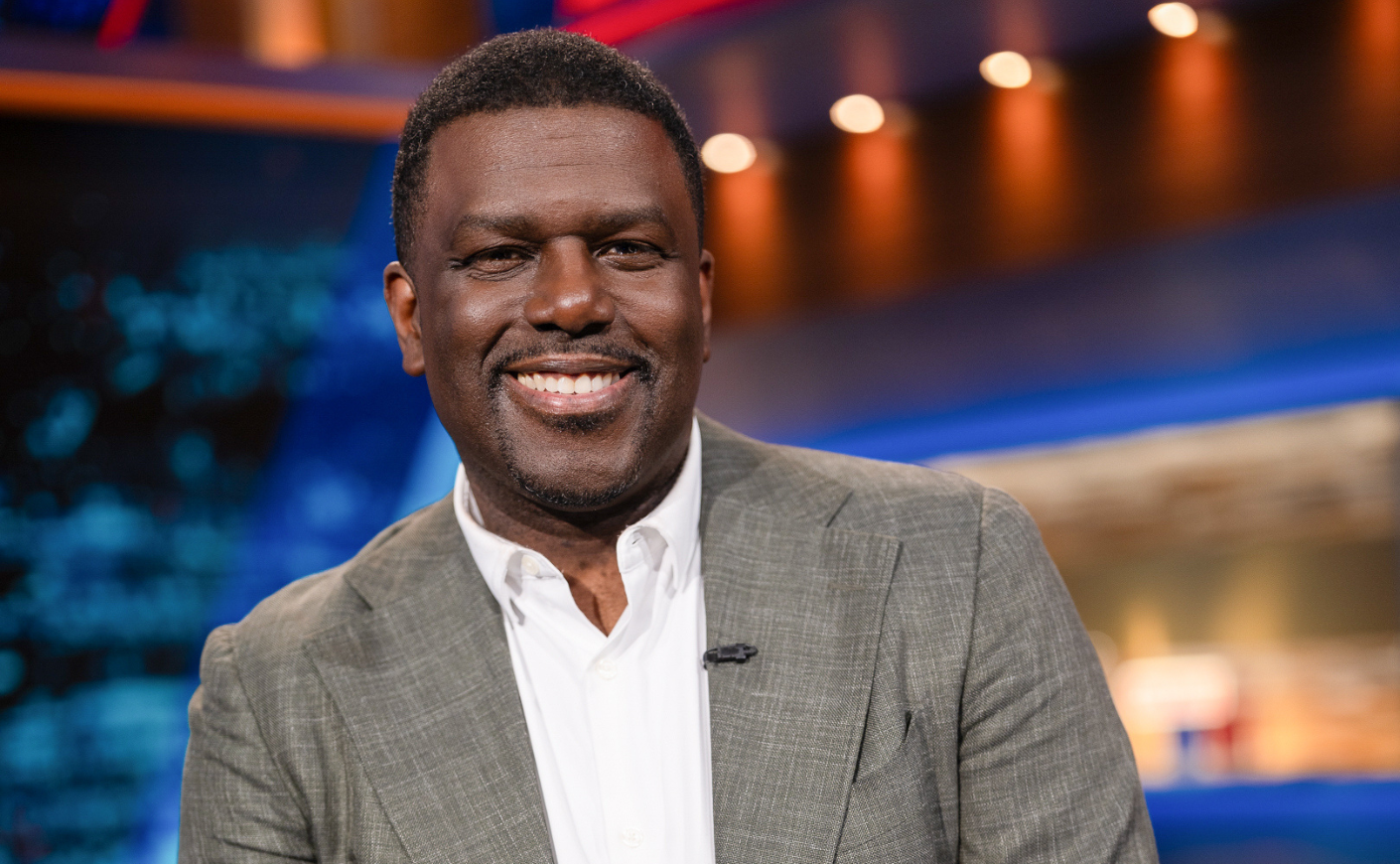
For over 120 years, Big Brothers Big Sisters of America has helped millions build meaningful relationships with adult mentors. Today, the non-profit runs a network of more than 200 agencies supporting thousands of children and young adults a year. Leading that mission is Artis Stevens, who joined BBBSA as president at the height of the pandemic in 2020 and took over as CEO the following year.
Under his leadership, the organization has shifted gears to not only provide holistic support for kids who may not have positive adult role models to look up to, but also to help young adults develop important career skills and experience. Today, their fastest growing demographic is 18- to 25-year-olds, Stevens tells us.
We spoke to the executive about overseeing that shift, how he’s working to bring more adult men — historically the trickiest demographic to recruit — into the fold, the one quality it takes to be a great mentor, and more.
Talk to us about the importance of mentorship for young people.
Artis Stevens: Mentorship and passing down knowledge from one generation to the next so that we can continue to grow and evolve is core to who we are as humans is the mission of Big Brothers Big Sisters, and it has been for more than 120 years.
Today, there are about 10 million kids in this country who don’t have a positive, sustained mentor in their lives. And without that, people become more disconnected, more isolated, and at risk of falling into the juvenile justice system or mental health system. Conversely, over 30 years of research tells us that when a young person has a mentor in their life, they’re 20 percent more likely to go to college, and they earn 15 percent more across their career. If they grew up in a lower-income household and have a more well-off mentor, they’re more likely to reach the economic status of that mentor.
But it not only benefits the young person, it makes the mentor better, too. They become more engaged, more empathetic, and supportive in their community.

Has the organization’s approach to mentorship changed in the digital era?
A lot changed during the pandemic. We started implementing ways to supplement in-person contact with our kids. So twice a week, we’d give young people the opportunity to go online to connect. That’s allowed us to expand our offerings, especially when it comes to career development. For example, there may be someone in a rural community who may not have access to a mentor with the skills they’re interested in building, so we can connect them with someone in the Bay Area who can give them that exposure and experience.
The organization has really expanded to support young adults, not just kids. Can you tell us about that shift?
Our fastest growing population is now 18- to 25-year-olds. A lot of people don’t know that — we’ve traditionally served the 5- to 18-year age group. But we’ve seen that we can really support these young adults when it comes to skill building, career training, and gaining experience as they join the workforce.
Have you noticed any trends when it comes to the number of volunteers you’ve been able to recruit?
The number of volunteers has declined a bit in recent years. I think the pandemic was certainly part of that, and then you have the economy, which has affected people in terms of their ability to give in a lot of different ways.
When I started, we had 30,000 kids on our waitlist — mostly boys who may not have had men in their families to serve as mentors. We’ve really focused on bringing more men in by going into barbershops and building relationships with sports organizations and group mentoring, which allows peers to come together as a communal activity, which has worked well for us. Men have always been our hardest group to reach, but they’re now our fastest growing population of volunteers, and we’ve been able to cut down our waiting list by more than a third.
What would you tell someone who may be interested in becoming a volunteer, but who’s concerned about the time commitment?
We hear that a lot. Our mentorship program is two times a month and an hour per visit — so we’re talking two hours a month. But those two hours can make an incredible impact; they can be life-changing. You’re giving kids an opportunity to see things they may not have ever had exposure to, and in turn you’d get the chance to see things you may not have ever seen either. In fact, 90 percent of our mentors say they got into this program thinking they’d make a difference — and they do — but they report that the young person had more impact on their life than they had on theirs.
What’s one quality you think every great mentor has?
Resilience, and the ability to stick with it. Most mentorships, even the best ones, start off awkwardly, and then something clicks. We pair people up intentionally, matching strangers based on background, experience, and interests to make sure we’re bringing the right people together — then the magic takes place. You start talking and connecting and this beautiful thing happens. But it doesn’t happen if you don’t show up, if you don’t keep coming back, even when it’s uncomfortable. You build trust when you show up, and when you show up, you’re not only helping that young person, you’re becoming better yourself, too.
You became the first Black CEO of BBBSA in the organization’s 117-year history. What did that mean to you?
I take a lot of pride in that, because I know it’s breaking a barrier. One thing I said when I first got this role was that I may be the first, but I won’t be the last. I’m in this place because I’ve had great mentors in my life, people that open doors and given me the opportunity to come and serve. I view my responsibility as doing the same for others.
My dad was a preacher, and I remember going to him when I was seven and asking him, Do I need to be a preacher like you to do good work? He told me that everyone has their ministry in this world, and you have to find yours. And that’s what’s been my guiding principle — using my ministry to help others find theirs. That’s the power I believe Big Brothers Big Sisters has as a platform for mentorship, and that’s the power I believe any well-meaning individual can have when they commit themselves to helping someone else.
If you could pick anyone to join BBBSA as a mentor, who would it be?
This is probably what a lot of people would say, but I’ve always been a fan of Oprah. She’s so inspirational, so phenomenal, just seeing the impact that she’s made in so many people’s lives.
This interview has been edited and condensed for clarity.