




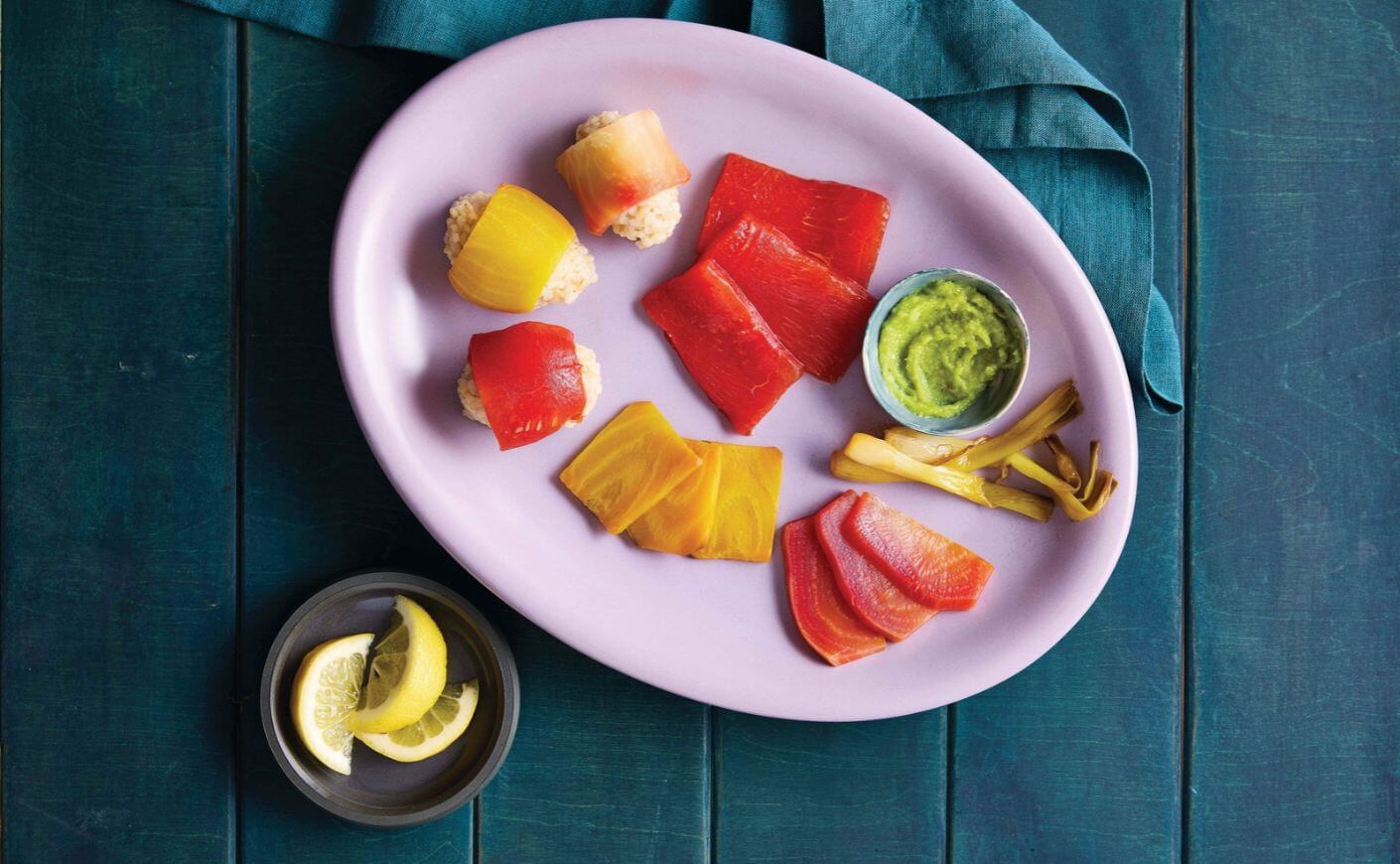
We're big fans of eating with the seasons, which means it's almost time to start chowing down on root vegetables. But this year, we're thinking of diversifying our menu of roasted veggies and mashes with something a little more inventive: "Rootshimi," a brilliant, innovative, meat-free take on sashimi.
This eye-catching dish comes from Mark Bittman. To longtime foodies, Bittman needs no introduction; his New York Times column "The Minimalist" ran for 13 years. Plus, he's gained recent notoriety for slinging whole-grain, naturally fermented sourdough bread (check out his op-ed on what you might be misunderstanding about bread). His latest book, How to Cook Everything Vegan, focuses on plant-based foods thoughtfully prepared with a variety of techniques. The results are satisfying, interesting dishes that will encourage you to experiment with produce.
"An easy oven-braising technique delivers vegetables and fruit that eat like sashimi," Bittman writes of his rootshimi. "Imagine how much fun you can have with that." Whether paired with sushi rice or served sans-grain, this elegant dish will make for an exciting appetizer at a dinner party or an engaging solo dinner that will remind you to think a little more creatively.
Rootshimi
Author: Mark Bittman
Prep Time: 23 min
Cook Time: 63 min
Calories: 350 calories per serving
Servings: 4-6 servings
Ingredients
- ½ cup soy sauce, or tamari (for a more intense flavor), plus more for serving
- ¼ cup oil for cooking (like grapeseed)
- 1 teaspoon toasted sesame oil for finishing
- 1 tablespoon chopped ginger
- 1 tablespoon turbinado sugar
- 3 pounds root vegetables (like watermelon radish, beets, daikon, jicama, or rutabaga)
- 1 bunch scallions
- 2 tablespoons wasabi powder (optional)
- ¼ cup hot water (optional)
- 1 or 2 lemons, cut into wedges for serving
Directions
1. Heat the oven to 375°F. Put the soy sauce, both oils, ginger, and sugar in a small saucepan over medium-high heat; add 1 cup water. As soon as the glaze starts to boil, lower the heat so it bubbles gently but steadily. Cook, stirring frequently until the ginger softens, about 3 minutes. Remove from the heat.
2. Scrub the root vegetables and carefully halve them from top to bottom. Put the flat sides on a cutting board and cut downward to remove the peels and trim off the ends. Put them flat side down in an 8- or 9-inch square baking pan or dish. Trim the ends from the scallions and cut between the white and green parts. Add the white parts to the pan and refrigerate the greens until you’re ready to assemble the rootshimi.

3. Pour the glaze over the vegetables, turning them so they’re well coated. Cover the pan with foil and bake, turning the pieces over every 15 minutes so they absorb the glaze as evenly as possible, until they’re just tender enough to pierce with a skewer or fork, 40 to 50 minutes, depending on how big the halves are. Remove the scallion whites from the glaze when they’re tender, cover, and refrigerate them until it’s time to serve.
4. When the vegetables are tender, remove the foil and use a brush or spoon to baste the vegetables with the glaze. Return the pan to the oven, uncovered, for another 5 minutes to thicken the glaze. When they’re ready, let them cool in the pan for 10 minutes, continuing to baste them once in a while as they cool.
5. While the vegetables cook, make the wasabi if you’re using it. Put the powder in a small bowl with the hot water and stir to combine. Transfer the vegetables and glaze to a covered bowl or airtight container where they’ll be submerged. Refrigerate until chilled but not ice cold, about an hour. Chop the reserved scallion greens. (Now is a good time to make rice and any sides, too.)
6. To serve, remove the vegetables from the glaze and slice them into rectangles or half-moons 2 to 3 inches long, 1 inch wide, and about 1/2 inch thick. If the color isn’t totally even—and that bothers you—just cut so the slices look uniform. Overlap the rootshimi on a serving plate. Scatter or pile the glazed scallion whites near the slices, put the wasabi in a mound at the side, and garnish with the scallion greens and lemons.
Variations
Fruitshimi ➜ The texture of this is unreal. Instead of root vegetables, use a small seedless watermelon (about 4 pounds). After making the glaze, peel and halve it as described in Step 2. Then cut each half into 2 or 3 large chunks. Everything remains the same except in Step 3, simply bake the basted watermelon in the sauce uncovered until it releases its water and then dries a bit, 30 to 40 minutes. (Remember to turn the chunks every now and then as they bake.) Continue with the recipe.
Tomatoshimi ➜ A nice addition to a full spread, or double the recipe if this is all you’re making. Instead of the root vegetables, drain 1 large (28-ounce) and 1 small (15-ounce) can whole plum tomatoes in a colander over a large bowl. (Reserve the juice for another use.) Make a half-recipe of the glaze. Carefully cut the tomatoes in half lengthwise and remove the cores. Transfer the tomatoes cut side down to a large rimmed baking sheet lined with parchment paper. They can be close but not touching. Use a teaspoon or brush to baste each generously with glaze. (You may have extra glaze; refrigerate and use it for drizzling within 1 week.) Bake the tomatoes uncovered until they dry and glaze, about 20 minutes. Continue with the recipe.
Peppershimi ➜ Omit the scallions and cut a small bunch of chives for garnish if you like. Instead of the root vegetables, roast and peel your own red, orange, or yellow bell peppers; or drain, rinse, and dry a 16-ounce jar of roasted peppers. Put them in a large shallow bowl with the glaze and refrigerate until chilled. To serve, lift the peppers from the glaze, cut them into wide strips as best you can, and continue with the recipe from Step 6.
Vegetable Nigiri ➜ It’s easy. All you need is a batch of sushi rice, sliced vegetables from the Rootshimi recipe, and maybe a sheet of toasted nori. With wet hands, shape about 2 tablespoons rice into an oblong mound about the size of the Rootshimi and drape the piece on top. If you like, wrap a small band of nori around some. Serve garnished as described in the main recipe. Another fun idea is to carefully scoop out the seeds and gel from fresh tomatoes or cucumbers with a tablespoon and use them to top the rice. (Save the tomatoes and cucumbers for something else.) You’ll think of lots more ways to eat vegetable sushi, too.
Make Ahead
Any of these vegetables and fruits will still look gorgeous after being refrigerated for up to a day, though they’ll keep for a few days longer than that. Put the vegetables and liquid in separate airtight containers. The glaze will still be fresh after a week in the fridge.
Excerpted from the book HOW TO COOK EVERYTHING VEGAN, provided courtesy of Harvest, an imprint of HarperCollins Publishers. Copyright © 2026 by Mark Bittman. Reprinted by permission.