



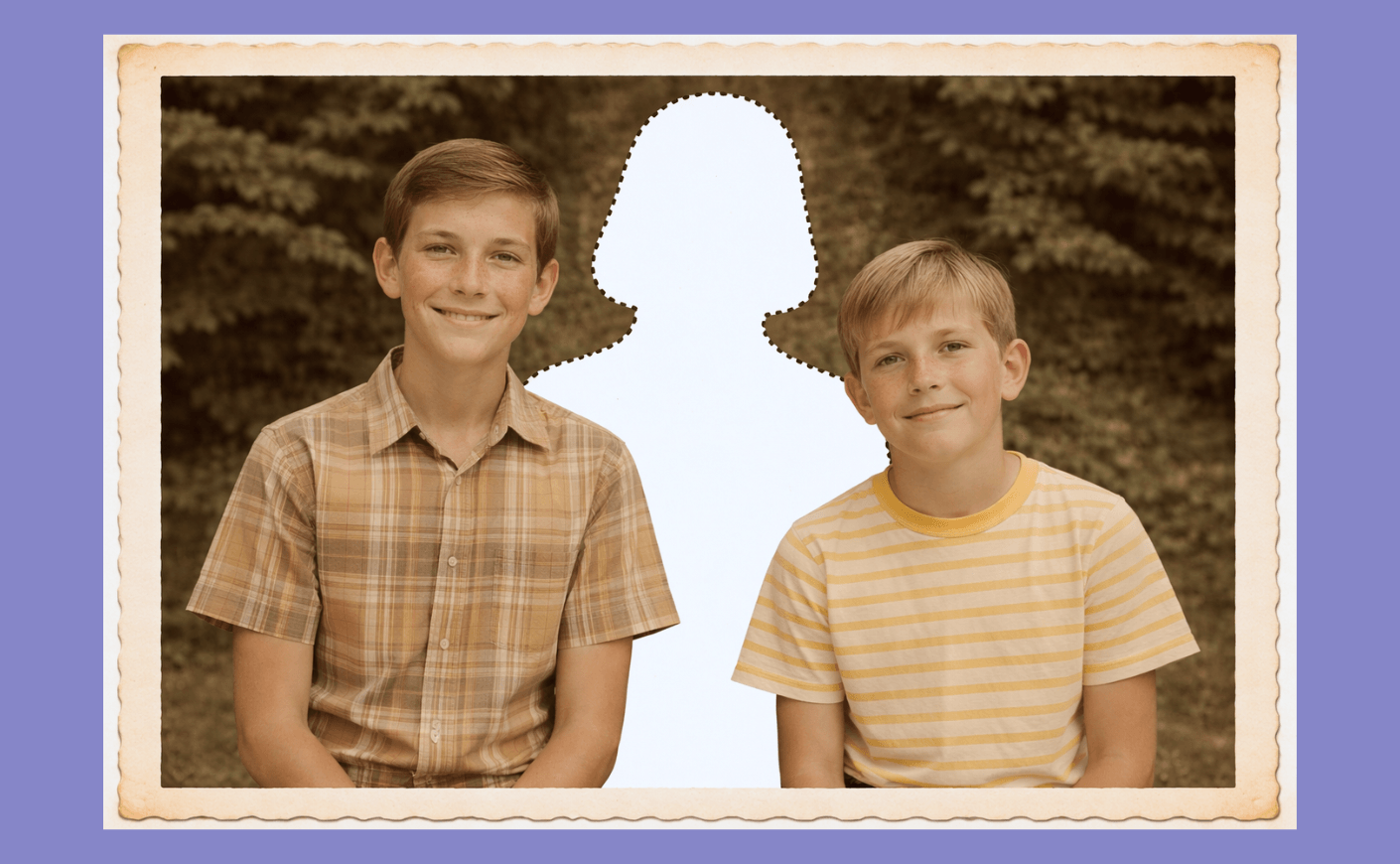
My mother, Lyla Smith Tupper, after years and years of illness, died of cancer on April 28, 1965, in Ann Arbor, Michigan, when I was just eleven years old. At that age, grief is so difficult to understand and process. Our family’s situation was compounded by the fact that my father had some kind of undiagnosed mental illness. After the funeral, he never even collected her ashes.
Grief has a half-life that is endless, and a large part of my life has been trying to understand the pain I “conveniently” didn’t deal with when I was young.
Many years later, when I was approaching forty, I had a conversation with my late father-in-law, an eminent psychologist, and told him that I seemed to be trying to keep my mother alive. I said that all my life, the day of her death, April 28, was always approaching and then receding. I was never present on the actual anniversary.
He said to me, “I bet you blow out the candles on your birthday cake and wish for her to come back.” Then he referred to five or six other intimate things that only I knew I had done to “keep her alive.” How did he know that? I asked.
He paused and said, “Look at what you do for a living. You wake the dead. You make Abraham Lincoln and Jackie Robinson and Louis Armstrong come alive. Who do you think you are really trying to wake up?”
And so, at that moment, I began a journey with my younger brother, Ric, to come to terms with her death, to find her ashes — to come to terms with all that had been suppressed and forgotten.
She stayed alive through a combination of internal strength, willpower, and love for my brother and me.
A couple of years after that fateful conversation with my father-in-law, I participated in a sociological study about the early death of a parent. Two sociologists came to interview me, and after a few hours, I realized that it was going to take a lot longer than I anticipated. They sensed my unease and finally said, “Okay. One more question. What was your mother’s greatest gift to you?”
Instantly, I replied, “Dying.”
Then I started to cry.

Of course, I did not want her to die. But I also understood, in that instance, that everything I am today is built on the fact that she did die and that I have somehow transformed that loss into something positive: telling the history of my country by “waking the dead.”
When I was growing up in Delaware, where our family lived before moving to Michigan, my mother was a force on the block, a resource for our neighbors, even as she was dealing with her terminal illness. It had all begun with a diagnosis of breast cancer, then a radical mastectomy. After a few years, her cancer had metastasized, with horrific consequences for her and her family—us. Yet she maintained a remarkable and heroic cheerfulness.
She possessed exceptional courage.
I remember once, as a boy of eight or nine, that my mother was so weak she could not get out of bed. We moved a hospital bed into our living room, and she held forth from there. I remember rubbing her feet when they hurt, and I’d sometimes do it for hours.
She was incredibly loving but also expected much from us. She told us to assume responsibility for ourselves and our actions, one of the many lessons that was constantly imparted by her in the midst of a life that was slowly being taken from her.
She received her death sentence while she was in her thirties. We boys knew something was wrong, but we didn’t really find out until I was seven years old and my parents told us she had only six months to live. But my mother pulled me aside and said, “I’ll see you to junior high school. Don’t worry. Six months is just what the doctors say.”
Junior high seemed impossibly far away. In the end, she missed it by just a few months. She stayed alive through a combination of internal strength, willpower, and love for my brother and me.
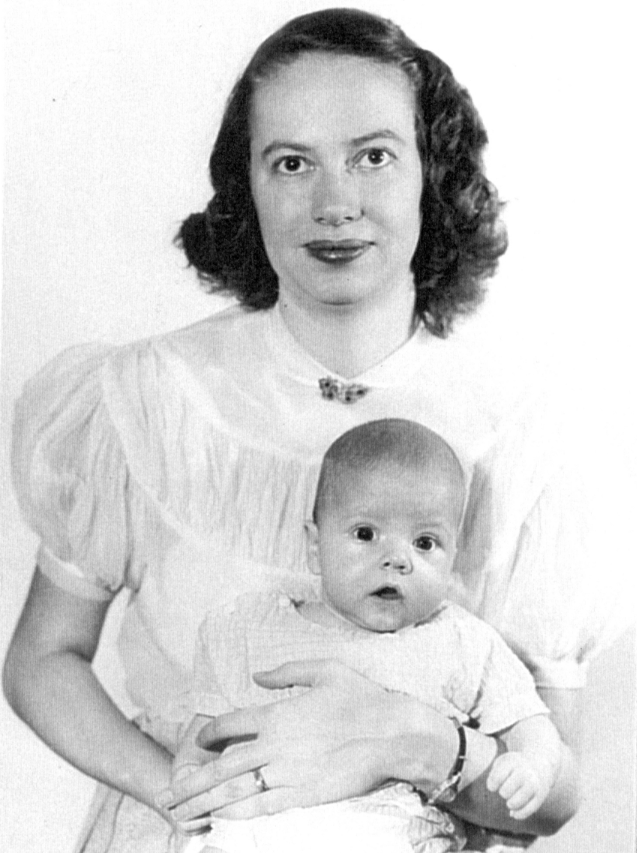
I’m seventy-two now. She died when she was forty-two. It seems like forever ago. My brother and I still call her “Mommy.” In our minds, she still towers over us in size.
Not a day goes by that I don’t think about her and feel that acute sense of loss. She’s been gone so long. Sixty-one years is too long to be without a mother.
But we have gotten by. We’ve figured out how to make lemonade out of the lemons given to us by her illness and passing. It is comforting to embrace the paradox that her greatest gift to me is that by her death, she set me on a course to “wake the dead.”
The lesson I learned from my mother not being around is that I made a priority of being around. My advice is to let the grief in, transform it, and don’t miss the important work — perhaps the greatest job there is — of raising children.
This is my mother’s greatest gift.
Excerpted with permission from What I Learned From Mom: 27 Celebrated Individuals on How Mother’s Wisdom Shaped Their Lives by Jeffrey D. Dunn and Sherrie Rollins Westin, out March 31, 2026.