


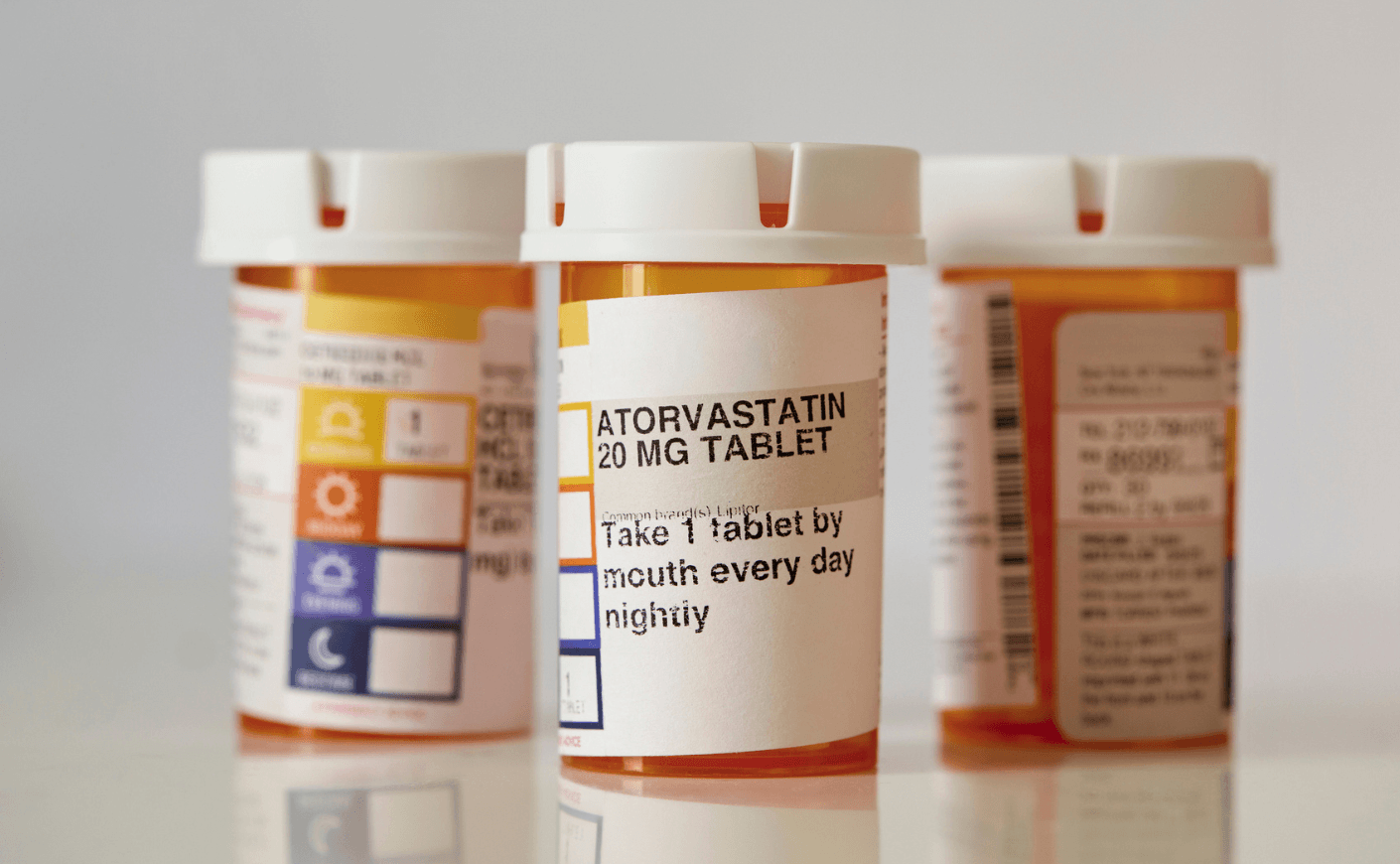
When Katie sat down recently with cardiologist Dr. Stacey Rosen for a conversation about women’s heart health, they covered everything from recognizing a heart attack to understanding cholesterol. The discussion continued on social media, where readers shared their experiences, raised questions about statins, and asked for more detail about how these medications work.
So we brought some of the most important follow-up questions back to Dr. Rosen. Are statins appropriate for older adults? What do we know about muscle aches and memory concerns? And do women benefit from these medications as much as men? Below, she walks us through the questions you raised — and explains why conversations with your own clinician are an essential part of understanding your heart health.
Katie Couric Media: Some readers asked whether lowering cholesterol is safe for older adults. What should they know about statins and cholesterol management as they age?
Dr. Stacey Rosen: You asked about cholesterol management in older people, and that's a very important question. There were some old studies that showed an association between low cholesterol and earlier death. But when we looked at this very old data, we realized that the lower cholesterol was actually due to significant illnesses like cancer, heart failure, liver failure — those diseases were lowering the cholesterol and causing premature death. So it wasn't the low cholesterol.
In fact, we have several important studies that show that statins in the right older adults at the right time, in the right dose, are actually both safe and effective. A large study looked at 28 smaller trials that looked at statin use in older adults and found that there was a 13% lower risk of heart disease and no increased side effects. In fact, just this week in the New England Journal of Medicine, one of our most respected international journals, a study looked again at older individuals taking statins and found that these medications, again, in the right people, prolonged life and lowered risk from heart disease and stroke without any increased side effects.
So I hope that I've set you at ease about the use of statins in older adults.
Readers also asked about coenzyme Q10, or CoQ10. How do statins affect it, and should people taking statins take a CoQ10 supplement?
Coenzyme Q10, also known as ubiquinone or ubiquinol, is produced in the same pathway that statins inhibit. So when you take statins, your natural coenzyme Q10 level is mildly decreased. And there was a concern in the past that lowering your level of CoQ10 might lead to more muscle aches for people who are on statins.

But we also studied this again, and found that the lowering of the CoQ10 enzyme is so mild that it's not related to muscle aches for those taking statins. In fact, we've shown repeatedly over many years that there's no association between CoQ10 levels and muscle aches. So CoQ10 the coenzyme is not recommended for individuals who are on statins. The studies have been done, and the safety of taking the statin is well-established.
Muscle aches were another common concern among the readers. How often do they occur, and what options are available for someone who experiences them while taking a statin?
Statin attributed muscle symptoms, what we call SAMS, seems to be a common concern. We have looked at this quite a bit over decades of study, and what we found in our clinical studies is that only 1% or 2% of patients taking statins have mild muscle aches. But we have seen it more frequently in general practice, so we continue to address these questions.
We know now that very serious muscle problems called myopathy are seen in one in 1000 people who take a statin, and very, very serious muscle concerns — something called rhabdomyolysis — are seen in one in 10,000 or more patients. So we do know that these drugs are very safe, but yes, there is a small percentage of patients who do have muscle ache.
And sometimes even just expecting these side effects, as I see, can raise the likelihood. But the good news is that if you are struggling with a statin, there are many creative ways to manage your cholesterol. We have individuals who will take pills just once or twice a week, under a doctor's supervision, rather than every day. There are other medications that can lower your cholesterol and lower your risk of heart attack and stroke without causing any sort of muscle symptoms.
So this is a perfect example of the importance of customizing your treatment and asking your clinician to work with you to get the best results for your cholesterol with the least amount of side effects.
What do we know about statins and the risk of memory loss or dementia?
Over many years, rightfully so, I've gotten questions over whether there's a risk of cognitive dysfunction or dementia for those taking statins. This is one of the most persistent and worrisome concerns, but it's also one that has been very well-studied and there's a history as to why we think this.
In 2012, many years ago, the FDA added a concern that forgetfulness may be seen with those taking statins — and also wrote in 2012 that it's very rare and reversible. But since then, the concern around memory loss, dementia, and other cognitive changes has stuck. So there has been a significant amount of research looking at just this question.
The good news is that huge trials in the United States and beyond have shown over and over that there's absolutely no increase in dementia or cognitive changes or memory loss — either for those on a statin, or even for those on some of the newer cholesterol lowering agents, the PCSK9 inhibitors.
What you must remember is that when we don't lower cholesterol, plaque can actually build up in the arteries in the brain as well as in the heart. And these sorts of plaques can in fact lead to dementia, vascular abnormalities, and stroke.
When Katie mentioned a cholesterol number over 140, which number was she referring to? Can you explain the different numbers on a cholesterol panel?
When Katie and I were speaking, she was referring to an LDL greater than 140, and that's where my concern comes from. Because that number, for almost everyone, is a number that's too high and would require treatment.
So let's level-set what your cholesterol or lipid panel means. When you get a blood test, cholesterol panel, lipid panel, you get a report that has multiple numbers. You get a total cholesterol, an HDLC cholesterol, an LDL-C cholesterol, and a triglyceride. Do these have to be fasting or non-fasting? Either is really okay. For some patients, fasting is preferred, but for most, either fasting or not fasting is fine.
So the LDL is the bad cholesterol, low density lipoprotein. And what it does is carry cholesterol from the liver to the rest of the body. When it's elevated, these deposits can cause plaque. And when plaque grows in our arteries, we're at a higher risk for heart attack, heart failure, stroke, and kidney disease.
For most people, we look for an LDL to be lower than 100. If you have an event, if you are at higher risk, we may even want your LDL to be below 70. And for some very high risk people who've already had heart attack or stroke, we may even look for a goal LDL of 55.
Now we'll turn to HDL, which we want to be high — it's the good cholesterol, and it's pretty much a vacuum cleaner. The HDL will scavenge and remove excess cholesterol from the bloodstream and bring it back to the liver, basically, to be disposed of. Optimally, we want men to have an HDL of greater than 40, and women to have an HDL greater than 50.
Next, we turn to triglycerides, which is another form of fat in the blood. And we should all know that your triglycerides are the ones that are most related to food intake. So if you have a big meal and have labs done soon after, your triglyceride lab is the most likely to be elevated.
Finally, you may have heard of some new things, lipoprotein little A, apoprotein B. These are other tests that may be available or recommended for you, but again, customizing the conversation you have with your clinician is the most important thing.
Some readers questioned whether statins benefit women as much as men. What does the research show?
Are they really the same? Much of what we're concerned about in the women's health world is that women weren't adequately studied. So there is a myth out there that women are less likely to have good effects from cholesterol lowering agents. It's a great question. But the short answer is statins do work for both men and women and significantly lengthen lives by changing the risk of heart attack and stroke.
You know, interestingly, some of the very important cholesterol studies that were done specifically did not include women. So then we got all this data for men, then we included small numbers of women, and it was impossible to see if there was a true benefit. So this was almost an artifact of the history of how we excluded women from trials.
Since then, we have specifically worked to increase the number of women in our cholesterol trials, and luckily, thankfully, we do have many, many decades of studies that show that the small amount of side effects is exactly the same in women and men.
Thanks so much for these important questions. And remember, what's ideal is a conversation with you and your clinician, to really optimize your heart health and lower any concern about important risk factors and side effects.
