




Good morning,
I begin today with one of my favorite quotations, which comes from the poem “Song of Myself” by Walt Whitman:
"Do I contradict myself?
Very well then I contradict myself,
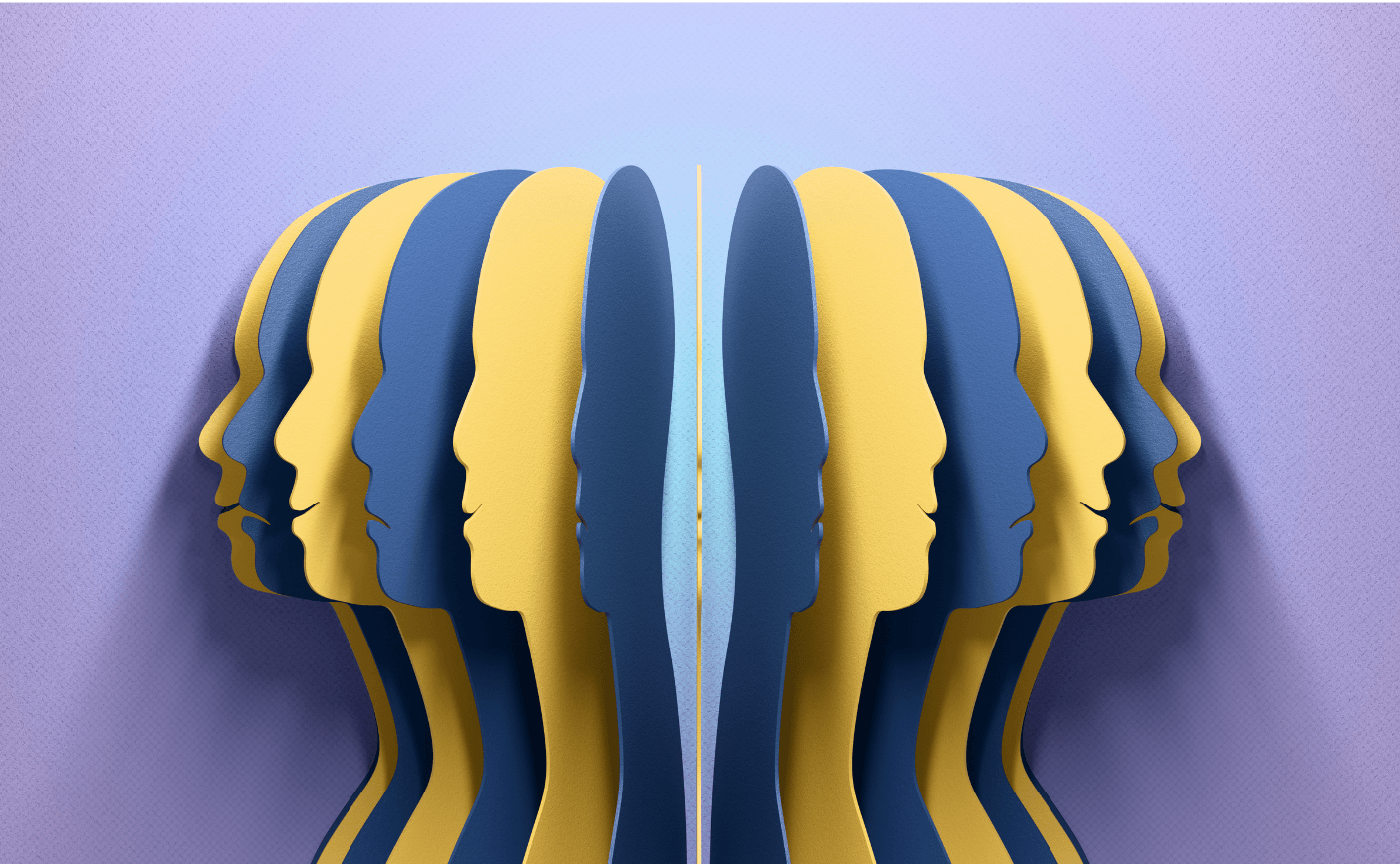
(I am large, I contain multitudes.)"
- Walt Whitman
In this age, when political and moral issues increasingly are seen as black and white, with little room for nuance, where it seems that people rarely seem willing to shift their stance, this quotation speaks to a willingness to shift gears. One should, after all, be entitled to sometimes contradict oneself. It resonates with the great Ralph Waldo Emerson quotation, “a foolish consistency is the hobgoblin of little minds.”
We’re all — or at least we should be — evolving in how we see the world. At different times in our lives, we may find ourselves reacting differently in similar situations. Experience has its instructional value, after all. This quotation, with its defiant, “very well then…” disarms the argument that we're somehow precluded from changing our minds. It’s also OK at times, to contradict oneself. Indeed, at times it's a necessity.
There's another way to consider Whitman's words, which is that sometimes we don’t even have to change our minds to contradict ourselves: We can believe two seemingly conflicting things at once. Reading the quotation this way is reflective of the complexity of ideas and the fact that seemingly inconsistent ideas — even regarding the same issue — can exist in one’s mind simultaneously.
Then again, the statement also is asserting that we're all complex beings, filled with simultaneous competing ideas. We're complex enough to moderate our persona to fit into certain situations. One can be a goof-off in class, yet master the material. One can party on Saturday night and be the most serious professional on Monday. Sometimes, I think we don’t appreciate that complexity in how we present ourselves to — and understand — others.
In fact, most interactions with others are experienced in a kind of one-dimensional sense: We may not stop to consider that an Uber driver or a barista has a life beyond the limited way in which their lives intersect with ours. But of course they, as we do, have a multitude of thoughts, talents, relationships, and challenges, which emerge depending upon the circumstance. As we get to know people better, we can see more detailed aspects of their personalities. But we never can really fully know another person.
How often have you been surprised to learn that a friend of many years speaks another language, plays the piano, or does needlepoint? We're internally quite diverse, yet to others we're experienced in only limited aspects of our personalities. So when someone surprises us or seems to contradict the person we thought we knew, maybe we’re simply seeing another facet of them.
And this brings me to another contemplation of the famous Whitman quote. We build within our minds an entire world constructed of the collection of what we've seen and experienced — and that complex interrelationship of experiences form a world view at a level of detail known only to ourselves. Other people only get glimpses of that world when we choose to share it. That takes curiosity on their part — and a little vulnerability on ours.
I found, strangely, a profound expression of that complexity of humans in the movie Life of Chuck. It's based upon a Stephen King novella and it plays out in three distinct, yet interrelated, contemplations of the life of a single person. At various points of the movie, the protagonist is an awkward kid and an uninteresting accountant. But as the movie plays out, he's revealed to be so much more. In other words, there are multitudes within this person that aren't readily apparent to those who do not seek to explore them. The movie is poignant, touching, and moving. (And it contains two of the best dance sequences I’ve seen in a film, one when Chuck is a child and one when he's an adult.)
“I contain multitudes” really is the theme of the movie. That, in and of itself, makes it a special treat. Here is a scene in which Chuck’s elementary school teacher explains what the phrase means to her. It’s one minute long, and it articulates in a unique way how special each of us is:
Have a great day,
Glenn
When he isn’t writing his column Thinking Things Through, Glenn Sonnenberg heads a real estate investment company and serves on several nonprofit boards. A graduate of the University of Southern California, Mr. Sonnenberg also received his J.D. from USC. He began his career as an attorney specializing in real estate and finance. Follow him on Substack here.