






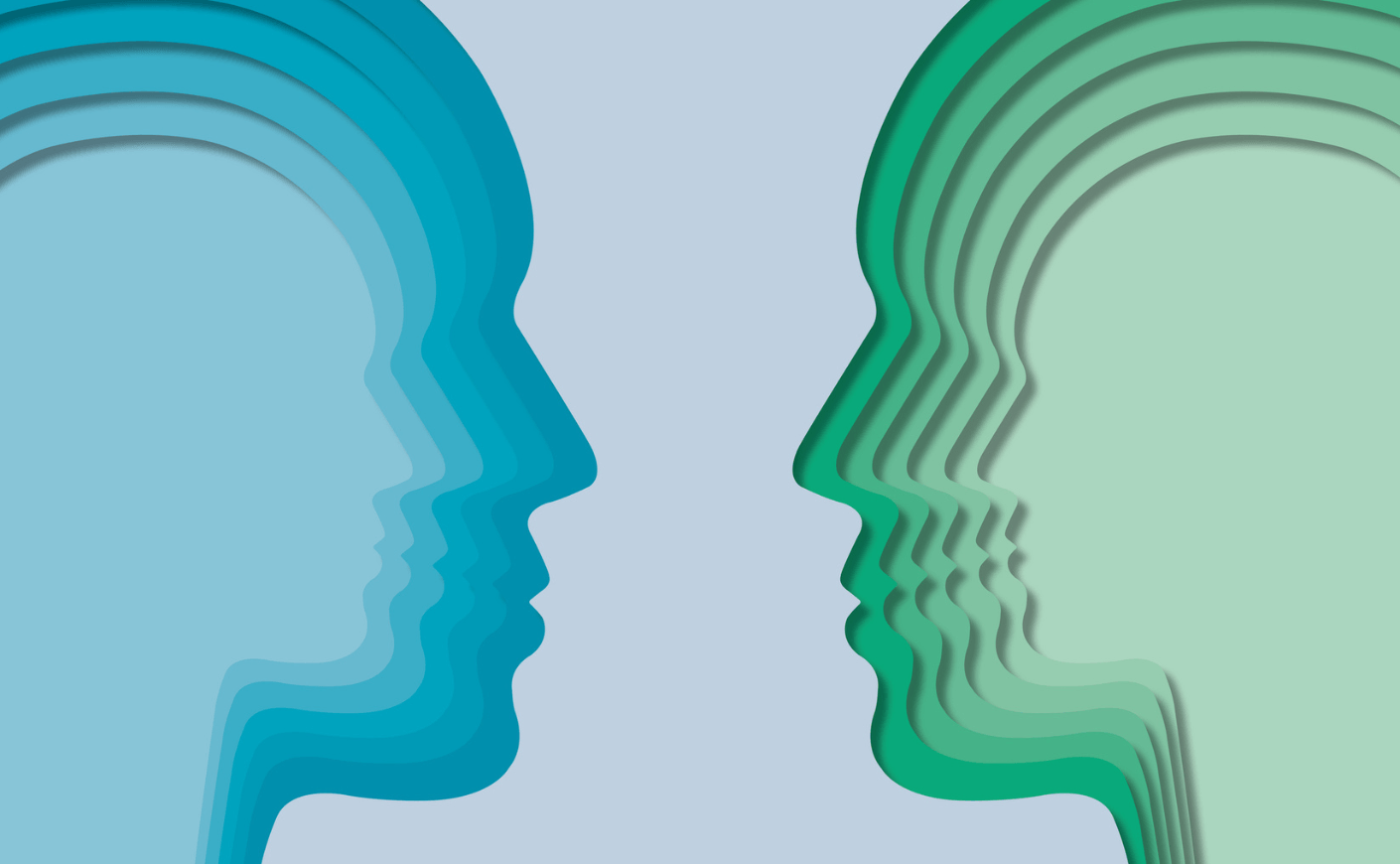
I like to talk to people. Sometimes it's a barista or a security guard outside a store on Rodeo Drive. Other times, it's a group of students on USC’s campus, a cab driver, or, the other day, the new mailman. I enjoy sharing a little bit about the day — the weather or the traffic — and learning some brief snippet about this person. Every once in a while, I get a bemused stare, but usually the other person is equally delighted that someone stopped to converse with them. I think it’s healthy and all part of living in a community.
Why do I do this? For one, it puts me in a good mood. For another, more often than not, it puts the other person in a good mood (or so I hope!). I also learn something new about someone else — who they are, where they’re from, what they do. Just as importantly, I’m pushing myself to engage in conversations with people outside my usual social networks, compelled to think of good questions and responses based upon what they have to say.
The other day, I was playing golf and stopped for a bite. When I did, I bumped into one of the agronomists; I thanked her for the hard work her team does to keep the course in great shape, for which she was grateful. She proceeded to share with me her specific tasks, and explained how good agronomists respond to the many microclimates on a golf course. Suffice it to say, it’s a tough job done by professionals who care deeply about their jobs.
In the same couple of days, there were other random contacts — some with people I already know and some whom I otherwise might not ever have met. There was the conversation with someone I’ve known for years. She and I talked about being grandparents, getting older, the need for community, and the dangers of lives lived mostly online. We agreed how sad it is to see several people at a table interacting with their devices, rather than with each other. The ability to connect with those around you is like a muscle. Like any other muscle, if that one isn’t exercised, it will atrophy.
The science of socializing
There's a lot of science suggesting that personal contact and social interaction are among the clearest contributors to both mental health and longevity. Curiously, these interactions don't always need to be with people we know. In fact, random interactions with strangers and new experiences stretch our mental and emotional capacity and stimulate positive reactions in our brains.
The University of Sussex conducted a “kindness” survey, asking people to describe a recent interaction with a person who was kind to them. Over 10% said that was the result of an interaction with a stranger, often who did nothing more than say “hello” and smile at them.

Some people are afraid to engage with a stranger. Maybe they’re shy but more often, they’re simply afraid of being rejected, that they’ll be judged or that they won’t have enough to say. NPR cited a 2022 study from the Proceedings of the National Academy of Sciences which found that relational diversity — interacting with many different people and not simply those whom we know intimately — is a determinant of happiness and mental health. The study suggests that going beyond our families and social circles to challenge our minds with new and diverse interactions.
Interaction with a device isn’t interaction at all
We live in a world where it's all too easy to disengage. After all, friends, advice, entertainment, news, and self-help are all available on our phones, so it's very easy to check out “in real life” (aka “IRL” in Gen Z speak) and divert our attention to that digital dimension. But if we do, the homogenized drivel that's designed not to stimulate our brains, but to stimulate our purchasing impulses, anxieties, and grievances, will take over. And that’s just not healthy.
Increasingly, people are finding that AI agents can fill in for friends. They offer advice and support, increasingly in a manner that mimics human conversation, often eerily so. Some have turned to AI to find chatbot “friends” with whom to interact and depend on. But when we seek advice from other humans, there is an interchange of ideas, problems, and even love. We're dealing with another person who has their own needs and desires, meaning we can't merely vent about what’s bothering us and download unbiased advice. AI does not demand our attention, our support, or our empathy. Real people, on the other hand, expect (reasonably enough) our attention and our advice in return, and we must respond to those expectations. Real people interact with us, not simply react to us.
What's important isn't just the fact that relationships with real people require there to be equality and reciprocity. Real human beings will actually push back on what we're saying. They'll sometimes have the temerity to suggest that we may be out of line, or even (gasp) wrong. Real people will tell us when we're spewing bull, when we're being selfish, or when we haven’t considered other points of view.
Yes, real people require our investment — of time, of emotions, of concern, and of commitment. But AI can’t meet us for a cup of coffee on a Saturday morning or a beer after work. In many ways, AI is nothing more than our shadow: moving with us, and never in opposition to us. Shadows have no substance — and when the sun goes down (or when we’re not online), they disappear.
A total stranger in a friendly place
You might not think of bookstores as a place to meet people, but they're actually a great place to engage in conversation. The other day, I asked the two women working at the desk for recommendations. A couple nearby heard this inquiry and didn't hesitate to jump in — I was wearing a USC baseball cap, and the man said, “I think I have a good book for a Trojan fan.” That broke the ice, after which this couple and others at the store joined a conversation about books. We shared our mutual interest in stoicism, about which I’ll be writing soon, and part of that view of life means taking things as they come and doing the best with what we’re given — like engaging with those around us.
It was a day of a variety of interactions, all informative, delightful, and utterly human. I'm the better for them — and hopefully the others are as well.
When he isn’t writing his column Thinking Things Through, Glenn Sonnenberg heads a real estate investment company and serves on several nonprofit boards. A graduate of the University of Southern California, Mr. Sonnenberg also received his J.D. from USC. He began his career as an attorney specializing in real estate and finance. Follow him on Substack here.
