






I’ve been making false promises to myself on the January pages of cheap diaries since I was a preteen. When I wrote “Eat less pizza and stop trying to make everybody happy” at age 13, I expected success. Decades later, I had the same aspirations.
I love pizza too much to eat less of it. (Don't get me wrong, I'm not eating pizza in the morning, pizza in the evening, and pizza at suppertime, as the jingle goes.)
And while I still try to make people happy, I've realized with enormous joy that it might be my wish, but that does not make it my job or my mission.
The inability to change those things (and others) about myself used to make me feel scared, but now the certainty and acceptance make me feel safe.
Making unrealistic New Year's Resolutions is nothing new. We've all done it. Me, almost every year until adulthood. One of my more mature promises was to learn enough French to read Proust in the original. I got halfway through the first volume — in English, no less — and gave up. Guess what? I survived.
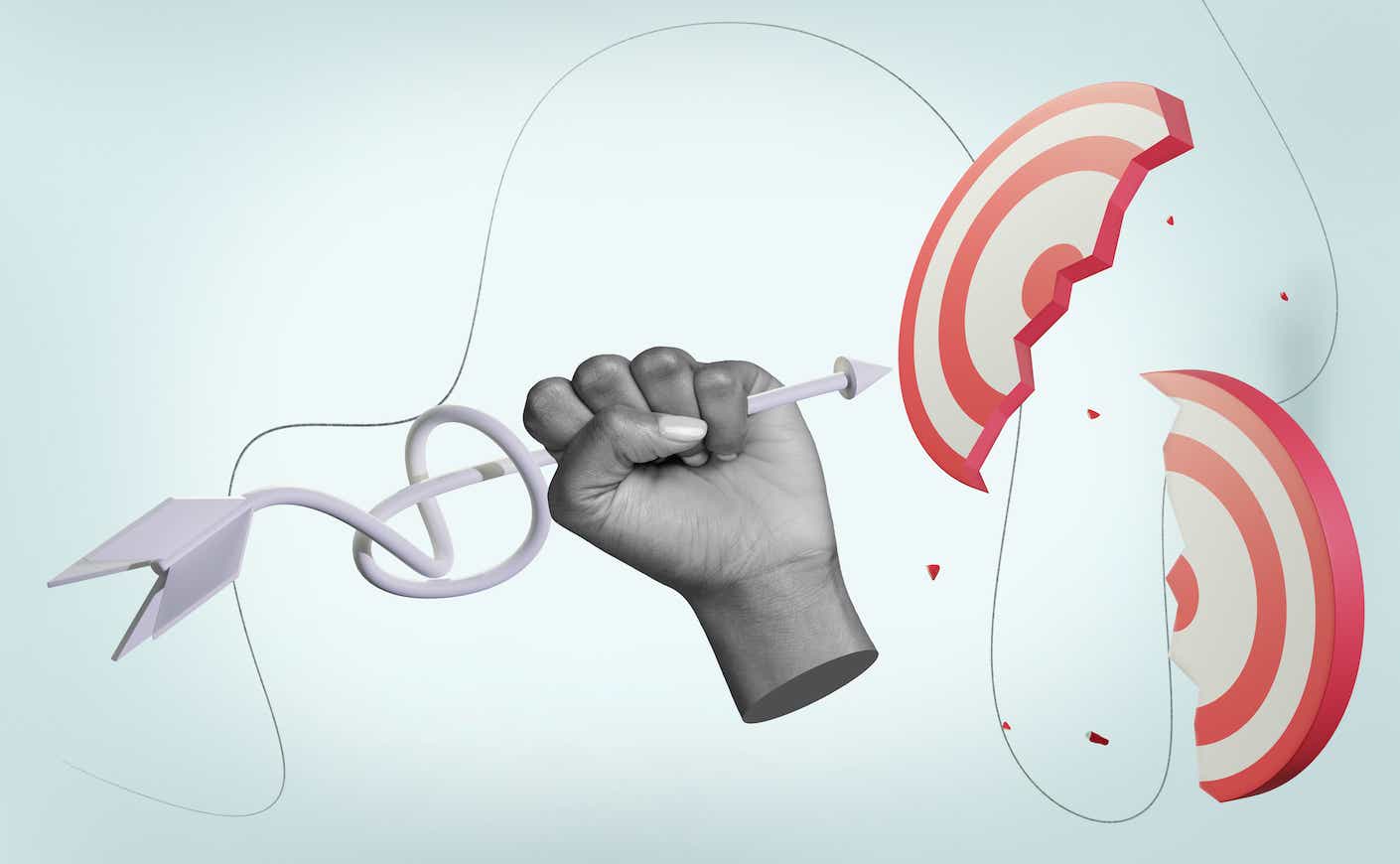
I’ve come to accept that those once-earnest resolutions now belong in the category of New Year’s Dissolutions: the quiet art of admitting what I’m not going to do. My fantasies and I are breaking up. Do I feel embarrassed, flustered, or humbled by understanding that my reach exceeds my grasp?

Nope.
What I feel most is profound relief.
If you're still searching for a New Year's Resolution after years of let-downs, I encourage you to consider breaking up with self-imposed unattainable challenges, too.
We need to stop holding ourselves hostage to our aspirations. Gym memberships, meal-prep plans, volunteer committees, and book groups swell at the very start of the year. By April? We’re whiny, grumpy, and resentful that somebody said we’d do this. Oh yeah, that was our overly energetic inner cheerleader who can't seem to read the room (occupied by the very, very stretched-thin real-life you). But that voice can be quieted — it's just a version of you, after all. Which means, you control it.
I first felt the power to give up on a goal in graduate school when I decided that the way to express my artistic, rather than scholarly, self would be best served by learning how to weave. I was studying 19th- and 20th-century British literature, teaching as an adjunct, working a second job as a grant writer, and yet I convinced myself that what I really needed was a loom.
The fact that I was living in a one-bedroom New York City apartment didn’t stop me from announcing my ambitions to all and sundry; this was in the early days of “manifesting” one’s wishes and dreams, sending them out into the universe to make them more likely to come true.
Only after seeing the expression on the faces of my friends did it occur to me that this wasn't my dream — it was the convoluted idea of that unrealistic, overachieving version of myself that really needed to be quieted. My 750-ft living area meant I’d be looking into a loom the size, say, of a bar of soap, and I’d be making bedspreads for doll houses. While that might pay as well as an academic position, what I’d really wanted was to be The Lady of Shalott. And that wasn’t ever going to work, so I resolved to dissolve that dream.
That's what helped me build my New Year's Dissolutions framework: to recognize and free myself from the impossible visions I have for a version of myself that isn't real and doesn't need to be. This version is just fine.
So when I hear myself proclaiming things like, “I’m going to respond to every message by the day’s end,” my vibrant and wise new voice elbows me and says, “Please, don’t agree to that; it can't happen for all of these valid reasons…"
By allowing yourself to dissolve promises you can’t keep except at great expense to your own life, you're being kind to your later self by letting them off the hook. Or the loom.
My new supportive voice is reminding me that life itself occupies a contained space, and while it might have more than one bedroom (a girl can hope), it is not boundless. By this, I mean we can have goals and dreams — and even resolutions — but to avoid disappointing ourselves every year, they should stay within our boundaries. They should be achievable based on the limits of our lives.
Author of Wolf Hall and winner of The Booker Prize, Hilary Mantel declared that the days surrounding New Year’s Eve are “a time of suspension, of hesitation, of the indrawn breath. It is a time to let go of expectation yet not abandon hope.”
If I give up a strict regimen of reform, will I lack rigor? Or am I going to start enjoying what lies ahead of me? That was my fear for years, but I've finally realized that if I leave some goals behind, I’ll leave some bad habits and patterns of self-destruction there, too.
