






During a career spent in locker rooms, dugouts, and training facilities, Marie Spano, MS, RD, CSCS, CSSD, has worked with elite athletes from the Atlanta Braves to the Falcons and Hawks. Her job as a professional sports performance nutritionist is about more than telling players what to eat — it's about helping them stay on the field, recover faster, and push through when a game is on the line.
Which is why she notices when the smallest things shift.
"One day I was watching a player at practice," Spano recalls from her time with the Atlanta Falcons. "I was noticing that he could just go, go, go, and nothing made him tired. And I asked if he was exhausted, but he said 'No.' He told me, 'I feel incredible.'" The difference wasn't a new workout or a buzzy wellness gimmick, says Spano — it was in how he was fueling his body with the right nutrition.
That's the kind of energy most of us would love, even if our version of "performance" looks more like getting through a busy workday rather than running drills under stadium lights. According to Spano, the key to that energy and endurance starts with circulation.
How circulation connects heart and brain function
We tend to think of brain health as connected solely to what happens inside our heads. But keeping our brains thriving takes more than completing crossword puzzles — it's a full-body effort.
“The heart and brain cannot be separated,” says Spano. “The delivery of oxygen and nutrients throughout the body is what allows someone to think clearly, make decisions under pressure, and react quickly.”

In sports, that brain-body connection makes a huge difference when it comes to performance under pressure. Split-second decisions, fast reaction times, and staying mentally locked in all depend on what an athlete's muscles and neurons can deliver. But outside of sports, the same system is quietly working in the background for all of us. “In real life,” Spano says, “you need quick reaction time whether you’re on the field or just driving a car.”
Why blood flow plays a key role in memory and cognitive health
Your brain is the body's command center, and blood flow is what keeps everything running. And like any delivery system, it works best when nothing is getting in the way. Spano puts it simply: “Think of it like a garden hose. If there’s buildup inside, you’re not getting as much water through.”
That same idea applies to the body as a whole: When overall circulation is strong, oxygen and nutrients can move efficiently. When it’s not functioning as it should, that delivery system slows down. Over time, that decrease can affect how the brain functions. It’s also why Spano spends so much time thinking about vascular health — especially in high-performance environments.
Daily nutrition habits that support healthy circulation
Whether you’re chasing a championship or just trying to stay sharp, the circulatory system underneath it all matters. So what does supporting that system actually look like? According to Spano, you don't need to follow Instagram trends or overhaul your entire diet overnight. “It’s about mastering the basics,” she says. That means building meals around nutrient-dense foods, especially plants. “We talk a lot about carbohydrates and protein in sports,” Spano says. “But the base of your diet should be plant foods.”
Those foods bring more to the table than just vitamins: They’re packed with good carbohydrates and compounds that help support circulation, recovery, and overall health. Fiber, in particular, is a big factor. “Most people only get about half of the fiber they need,” Spano says. “Fiber feeds the gut microbiome, which influences everything.” Including, yes, the brain.
Simple ways to build a performance-ready nutrition routine
Of course, knowing what to do is one thing, but actually doing it (and consistently) is another. That's why Spano keeps things practical, emphasizing straightforward daily nutrition habits. For athletes, that might mean planning meals around practices and recovery. For everyone else, it might look a little different, but the overarching idea is the same.
One of Spano's favorite strategies? Instead of cooking everything from scratch, she encourages “meal assembly” — mixing and matching what’s already available at the grocery store. “You can grab pre-cooked rice, rotisserie chicken, canned beans, and pre-cut vegetables and have a healthy meal in minutes,” she says.
How cocoa flavanols support circulation and vascular health
Alongside everyday fruits and veggies, there’s growing interest in specific compounds that support circulation, such as cocoa flavanols — plant-based nutrients found in cocoa that have been studied for their role in supporting blood flow and vascular health. They’ve been studied for more than three decades, with clinical research showing their ability to support blood vessel function and healthy blood flow — two factors that play a central role in how efficiently oxygen and nutrients move through the body.
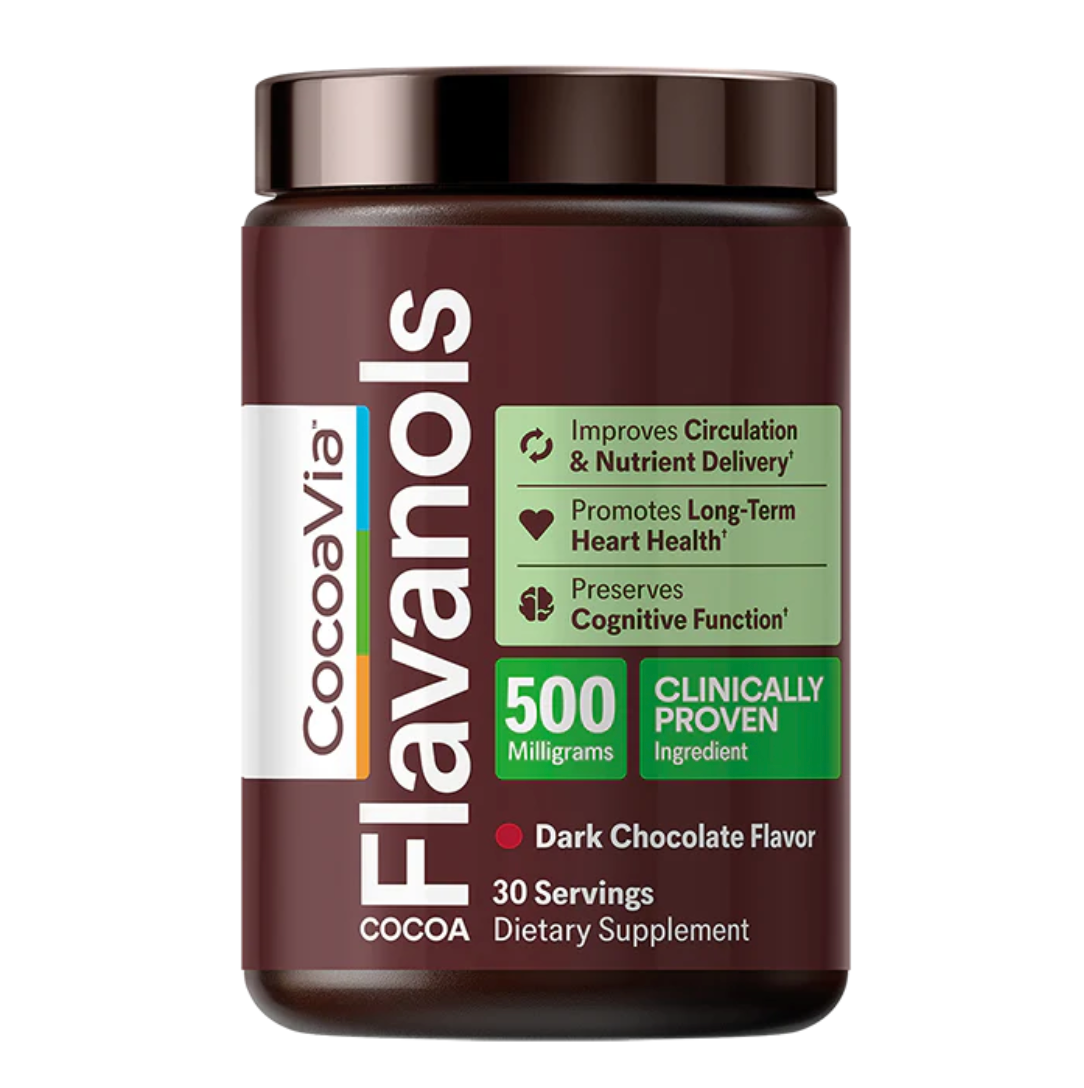
One of the most widely researched sources is CocoaPro extract, used exclusively in CocoaVia, a cocoa extract supplement specifically designed to deliver concentrated levels of these flavanols in a consistent, measurable way.
“I tell athletes to think of nutrition like training,” she says. “Make it part of your routine.” For many of Spano's clients, that means adding CocoaVia to something they’re already having, like a post-practice shake. “A lot of my athletes like the 500-milligram packets,” she says. “We add them to shakes with berries and milk. It’s a great way to get them in.”
CocoaVia
For a limited time, you can enjoy an extra 20 percent off in single, bulk, or subscription purchases of CocoaVia. Just use promo code KCM2026 at checkout.*
New research suggests that consistent intake of cocoa flavanols may help support memory and cognitive function over time, in part by increasing blood flow to key areas of the brain associated with age-related memory changes. “Cocoa flavanols support healthy circulation and vascular health,” Spano says. “And that’s critical for the delivery of oxygen and nutrients throughout the body.”
As Spano’s work with elite athletes makes clear, the heart-brain connection is hard to ignore. When circulation is strong, everything else has a better chance of working the way it should.
Better blood flow means better delivery — and over time, a stronger foundation for how you think, move, and feel.
*This offer is valid until December 31, 2026, on any single, bulk, or subscription order of CocoaVia products sold at cocoavia.com; Limited to one use per e-mail.
