






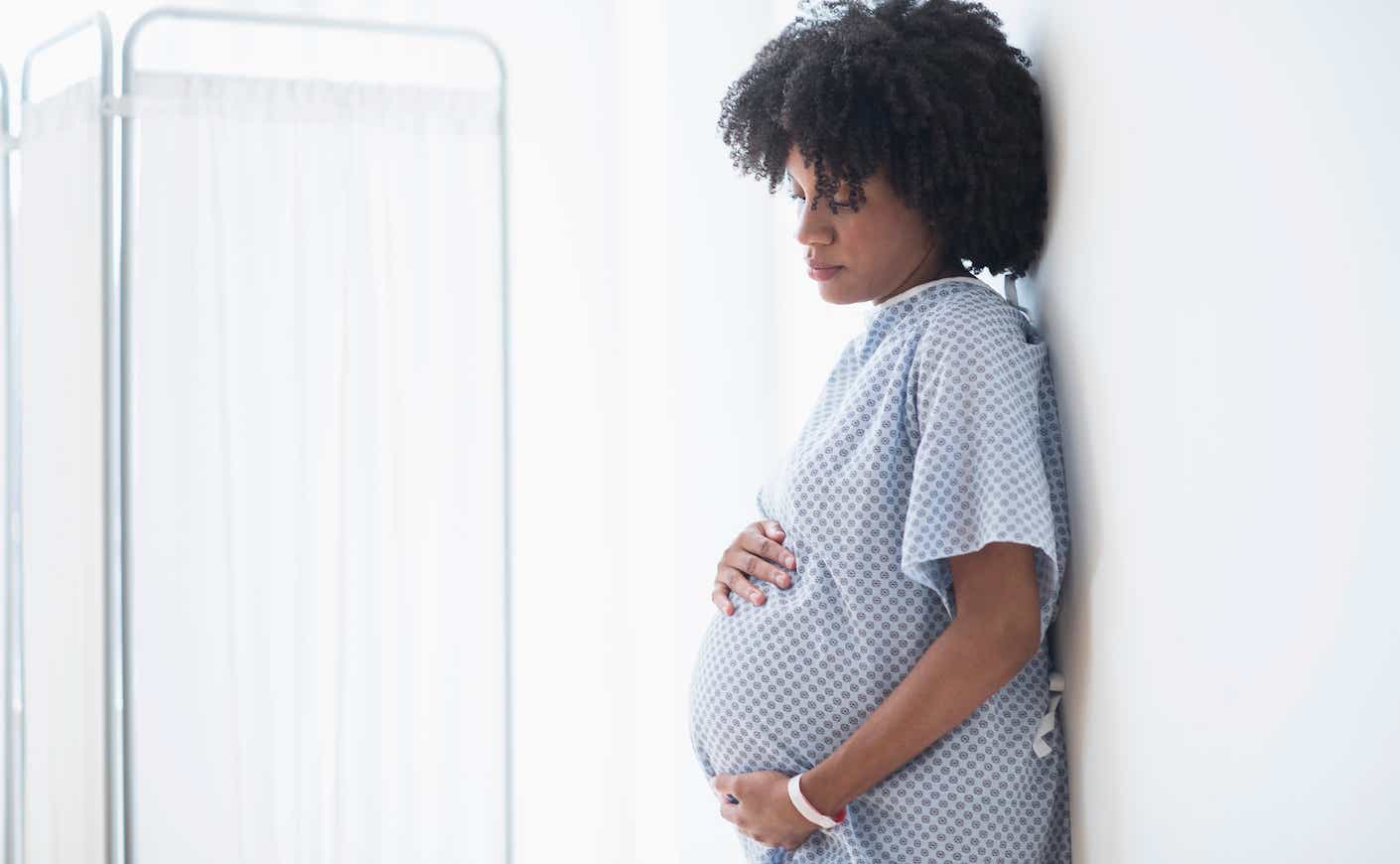
Janell Green Smith, DNP, CNM, dedicated her life to making childbirth safer. As a certified nurse-midwife and maternal health advocate in Charleston, South Carolina, she delivered over 200 babies and trained the next generation of midwives. She understood pregnancy complications inside and out. She knew the warning signs and had helped countless families navigate the postpartum period safely.
None of that knowledge, none of that expertise, none of that experience was enough to save her own life.
On January 2, 2026, Dr. Green Smith died from childbirth complications shortly after delivering her first child, a daughter who will grow up without her mother. The American College of Nurse-Midwives called her death "both heartbreaking and unacceptable," adding what so many of us in maternal health advocacy have been saying for years: "That a Black midwife and maternal health expert died after giving birth in the United States is...a profound failure of the systems meant to protect birthing people."
Let that sink in. A midwife. A maternal health expert. Someone who literally saved other people's lives couldn't save her own. If she couldn't navigate this system successfully, what does that tell us about the chances for everyone else?
The Black maternal mortality crisis is getting worse
The latest CDC data (reviewing 2023 records) reveals what we already knew but have been hoping would change: Black women in America are dying from pregnancy-related causes at 50.3 deaths per 100,000 live births, more than three times the rate of white women at 14.5 deaths per 100,000. While maternal mortality decreased for white and Hispanic women between 2022 and 2023, the rate for Black women barely budged.

This shouldn't be happening to any woman, any person. But what we see over and over is that Black women are at the highest risk of losing their lives and their babies' lives while giving birth.
These deaths are just the beginning. For every maternal death, there are approximately 70 cases of severe maternal morbidity, including life-threatening complications like hemorrhage, preeclampsia, and postpartum cardiomyopathy. Black women experience these "near-miss" events at twice the rate of white women. Over 50,000 women in the United States suffer from pregnancy complications annually, and we are disproportionately represented in those numbers.
When knowledge and access aren't enough
For Black women, your profession, education, finances, and access to care will not protect you from this crisis. A 2023 Lancet study found that Black women with access to maternal healthcare in well-resourced areas still face disproportionately higher risks of dying during or after childbirth compared to white women in underserved areas.
I know this reality firsthand. After delivering my second child, I kept telling the staff at my hospital, where I serve as a physician leader and medical director, that something was wrong. Despite my medical training, despite working in that very building, despite having what should have been optimal access to care, I was dismissed.
"You're fine. Your vital signs are normal," my nurse told me.
It was only because I had a professional relationship with my physician and therefore direct access to him that I was able to escalate my concerns directly to him. He found out I had retained products of conception, a dangerous complication that can cause heavy bleeding, fever, and infection, and needed a blood transfusion. My privilege as a doctor gave me a lifeline. Without it, I wouldn't be here.
When Serena Williams nearly died from blood clots after giving birth, her initial concerns were dismissed. Dr. Shalon Irving, an epidemiologist at the CDC who studied maternal mortality, died three weeks after giving birth. Dr. Green Smith, a maternal health expert, couldn't save herself from the very crisis she worked to prevent.
The power of viral videos
In November 2025, two viral videos captured what Black women have been trying to tell the healthcare system for generations. In Texas, Karrie Jones's mother filmed her pregnant daughter screaming in pain at Dallas Regional Medical Center in Mesquite as a nurse kept her back turned, asking intake questions while Jones writhed in active labor.
Days later in Indiana, a video of Mercedes Wells surfaced. As a mother of three, she knew what active labor felt like. After six hours at the hospital — seeing only a nurse, never a doctor — Wells was told she wasn't in active labor and was discharged, despite showing clear signs of active labor. Eight minutes after leaving the hospital, Wells gave birth in her husband's truck on the side of the highway. Her husband, with no medical training, delivered their daughter.
Both of these women were put at risk of severe complications, including infection and blood loss.
These videos have achieved what years of data, research, and advocacy alone couldn't: They've cut through the denial. You can't explain away what's shown directly on camera. I've had countless people tell me that while they understood the crisis was real, it wasn't until they saw those videos that they could truly comprehend what we've been saying.
It's not biology — it's bias
Black women are not dying at higher rates because of biological differences. We're dying because we continue to be dismissed and ignored. The healthcare system points to "lack of access" as the problem, but access alone doesn't explain why Black women with private insurance and college degrees die at higher rates than white women who dropped out of high school.
Research shows that 84 percent of maternal deaths between 2017 and 2019 were preventable. With better care, providers who listen, and systems that don't dismiss women's pain and concerns, most of these deaths could have been avoided.
Black women report higher rates of mistreatment during pregnancy and childbirth — being shouted at, scolded, having requests for help ignored or refused. Even controlling for insurance status, income, age, and severity of conditions, Black patients receive lower quality care and are less likely to receive routine medical procedures. A 2022 analysis of maternity care in 36 U.S. States from 2017 to 2019 found that discrimination contributed to 30 percent of pregnancy-related deaths in 2020.
Childbirth is a medical emergency. When a woman is in active labor, risks to both mother and baby increase. Healthcare providers should monitor closely and be ready to act at any sign of distress. Instead, what we saw in those videos and what too many Black women experience is having to fight to be heard when something is wrong.
What has to change
Dr. Green Smith's death, along with the experiences of Jones and Wells, demands more than our grief. We need changes now.
Black physicians comprise less than 6 percent of physicians in the United States, despite Black Americans making up over 14 percent of the population. Research consistently shows that having more Black healthcare providers leads to better health outcomes for Black patients. We need more of us in the system.
We need comprehensive bias training that begins in medical and nursing schools. And it can't stop there. This training needs to continue throughout every healthcare professional's career, requiring them to confront their assumptions about race, pain tolerance, and which patients deserve to be believed.
We need hospital staff to recognize that pain and distress signals go beyond vital signs. A patient can have "normal" vital signs and still be in crisis. Pain and distress look different from person to person, especially in a healthcare setting where the power dynamic between patient and physician is already so wide. When a patient tells you something is wrong, believe them.
We need legislation that mandates accountability. The WELLS Act, introduced by Representative Robin Kelly in response to Mercedes Wells's ordeal, would require hospitals to create safe discharge protocols and mandate bias training for healthcare professionals. I admire Rep. Kelly and the Wells family for refusing to let this moment pass without fighting for change.
What Dr. Green Smith left behind
Dr. Green Smith leaves behind a husband, a newborn daughter, and hundreds of families whose lives she touched. She also leaves behind a question we can no longer avoid: How many more Black women, how many more healthcare professionals who understand the system from the inside, must die before we face the truth? Access to care isn't the problem. The problem is what happens when we walk through those doors and whether anyone will listen when we say something is wrong.
Dr. Green Smith lived her life helping women feel safe and cared for. She was a fierce advocate for women during one of the most vulnerable phases of life. Her legacy cannot be in vain. Let her death be a wake-up call. Let it show you how deep this issue runs and how desperately we need as many people as possible helping to make it safer for women to give birth.
No woman should die giving birth in 2026. And yet here we are. Mourning another preventable death. Watching videos of Black women being ignored as they labor. Reading stories of mothers forced to deliver on the side of the road because their pain wasn't taken seriously.
When we address the biases and barriers that put Black women at the highest risk, we improve care for everyone.
Finding care you can trust
The problem of dismissal goes beyond maternal health and beyond race. Patients of all backgrounds consistently report feeling gaslit in medical settings. There are great doctors out there, but finding a clinician who will actually listen, care, and believe their patients has become harder than it should be.
I created a list to help people find doctors who will believe them. I wish this resource weren't needed, but in our current reality, patients have to fight to be believed. Until that changes, you can find supportive medical providers at CliniciansWhoCare.com.
