






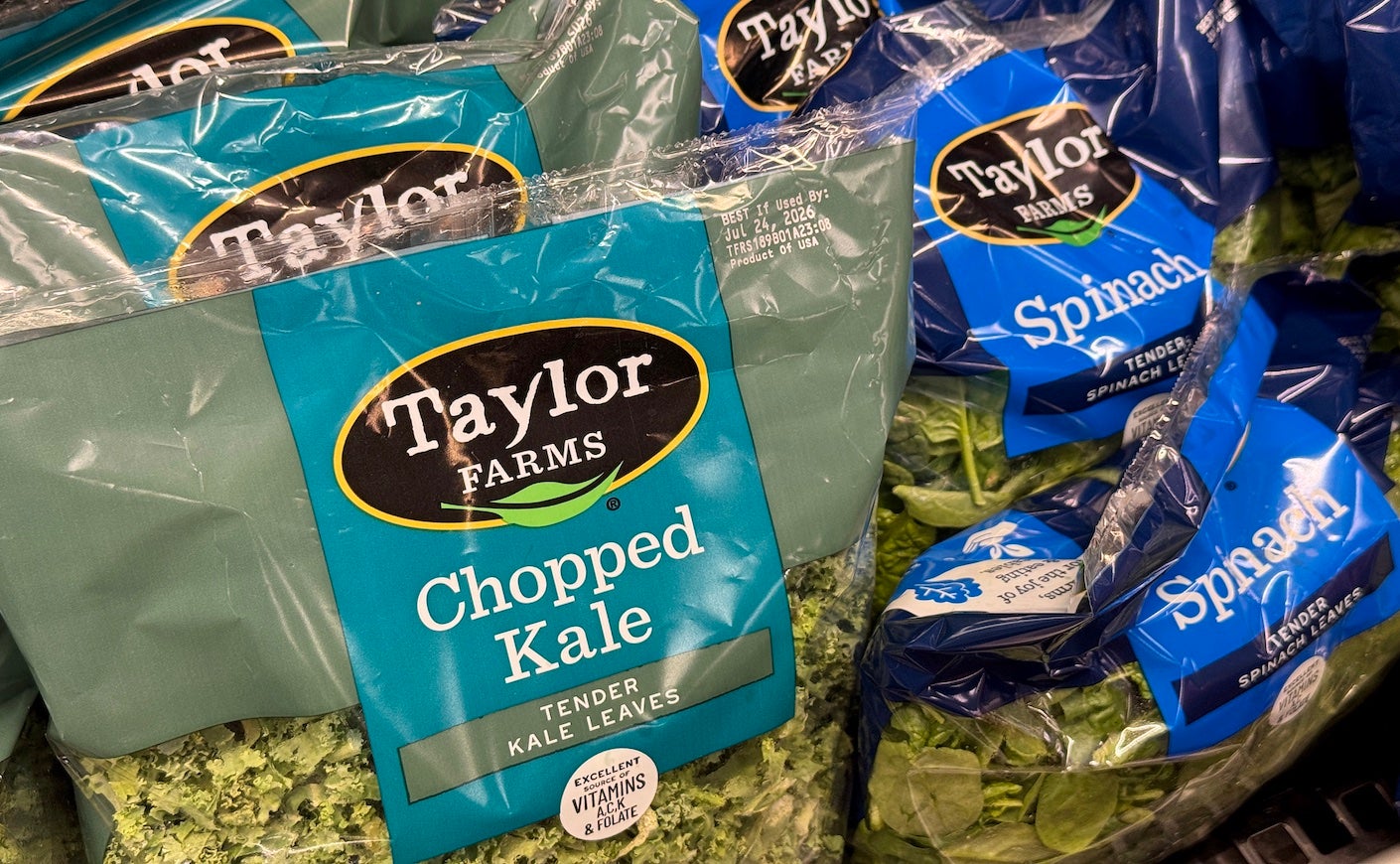
Just when you thought the recent wave of food safety troubles might be winding down, there's been yet another recall. The company's parent, Taylor Fresh Foods, is pulling a range of products containing jalapeños after the peppers were linked to an ongoing multistate Salmonella outbreak.
Meanwhile, federal health officials are still looking into a separate Cyclospora outbreak linked to the company's iceberg lettuce. Unlike the jalapeño recall, which involves Salmonella, this one is caused by a parasite. The investigation recently took an unexpected turn after the FDA revealed that a laboratory test that initially appeared to detect the parasite in shredded iceberg lettuce was actually a false positive.
Here's what to know about the two separate outbreaks, where Taylor Farms products are sold, and what experts recommend if you're wondering whether it's safe to eat lettuce.
Why is Taylor Farms recalling products with jalapeños?
Taylor Fresh Foods, parent company of Taylor Farms, is voluntarily recalling several products containing jalapeños because the peppers may be contaminated with Salmonella.
The recall includes salsa, guacamole, chopped jalapeños and other prepared foods distributed to retail distribution centers in 26 states. Stores that received recalled products include Hannaford, Kroger, Stop & Shop, Target, Trader Joe's, Walmart, and Whole Foods. Some of the affected products have "Best If Used By" dates through Aug. 16. (That doesn't mean you need to avoid all jalapeños — the FDA's warning applies to the recalled peppers and products made with them, not jalapeños generally.)
The recall stems from another ongoing Salmonella outbreak linked to fresh jalapeños grown in Sinaloa, Mexico, and distributed by Coast Citrus Distributors. Taylor Fresh Foods issued its recall after learning that some of its finished products contained the affected peppers. According to the FDA, the outbreak has sickened 345 people across 27 states and led to 36 hospitalizations. No deaths have been reported so far.

The CDC now says epidemiological and traceback evidence shows the Coast Citrus jalapeños are the source of the outbreak. Chipotle and QDOBA previously stopped serving affected peppers, and federal health officials say they don't consider there to be a current ongoing risk to customers at those restaurants because of the steps they took to remove the product.
The company says it is no longer sourcing jalapeños from the farmer involved and is filling orders from alternative suppliers.
Is Taylor Farms responsible for the Cyclospora outbreak?
Investigators have continued to point to Taylor Farms lettuce as the source of the outbreak, even after a laboratory test that initially appeared to detect Cyclospora in one of the company's products turned out to be a false positive.
In its latest update on Aug. 5, the CDC said epidemiological and traceback data "continue to show" that iceberg lettuce from Taylor Farms de Mexico was contaminated with Cyclospora and made people sick. The outbreak has now been linked to 6,358 illnesses across 15 states, including at least 278 hospitalizations and two deaths.
The significant jump in cases since the CDC's previous update is partly due to an expansion of the investigation. Officials are now including people who reported exposure to either Taco Bell or recalled Taylor Farms de Mexico iceberg lettuce. Six additional states — Arkansas, Iowa, Missouri, Nebraska, New Hampshire, and North Carolina — have also been added, bringing the total number of states affected to 15. Many of the illnesses began before Taylor Farms recalled the lettuce on July 17, and officials warn the case count could continue to rise because it can take up to six weeks to determine whether an illness is connected to the outbreak.
Still, the investigation hasn't produced a confirmed positive food sample. In July, the FDA initially reported that a sample of Taylor Farms shredded iceberg lettuce had tested positive for Cyclospora, only to walk back that finding the following day after re-reviewing the laboratory data. The lettuce that was tested was not part of the original recall. Taylor Farms said the FDA apologized for the false positive, but the agency later disputed that account.
The FDA has maintained that the false positive doesn't change the basis of its investigation or the evidence linking the outbreak to shredded iceberg lettuce supplied by Taylor Farms.
Future testing could still detect the parasite in additional samples, but that isn't the only way investigators determine the source of an outbreak. Jennifer McEntire, a food safety expert who consults for companies including Taylor Farms, told The Wall Street Journal that Cyclospora is especially difficult to study. Unlike bacteria such as E. coli and Salmonella, it can't be grown in a lab to produce more genetic material, making it harder for scientists to connect individual cases to a common source. By the time illnesses are reported, contaminated lettuce has also often been eaten or thrown away before it can be tested. That's why investigators rely not only on laboratory testing but also on interviews with sick people and traceback data to identify the most likely source of the illnesses.
Taylor Farms, meanwhile, has maintained that its products were not contaminated but says it has fully cooperated with the investigation. The company voluntarily recalled all iceberg lettuce sourced from central Mexico on July 17.
Where are Taylor Farms products sold?
Taylor Farms is one of the largest fresh produce companies in North America. (It has also become a major political donor: Federal Election Commission records show the company has contributed more than $3.8 million to conservative-aligned groups this decade, including President Donald Trump's MAGA Inc. super PAC.)
It sells produce under its own brand and owns popular labels like Earthbound Farm. The company supplies lettuce and other fresh produce to major grocery chains, including Walmart, Safeway, Costco, Whole Foods, Kroger, Target, and Amazon Fresh, as well as restaurant chains such as Taco Bell, Chipotle, McDonald's and Subway. Through foodservice distributor Sysco, its products also end up in schools, hospitals, and sports venues.
The investigation has also had ripple effects for some of Taylor Farms' biggest customers. Taco Bell, for instance, has removed lettuce linked to the outbreak from its restaurants. According to The Wall Street Journal, citing Placer.ai data, visits to Taco Bell fell between 16.9 and 18.9 percent from Wednesday through Friday last week compared with the average for those weekdays between Jan. 1 and July 6. Chipotle saw traffic decline by 5.7 to 7.2 percent, while Panera experienced a 3.5 to 7.4 percent drop over the same period, suggesting some diners may have become more cautious about eating at restaurants that serve fresh produce.
What lettuce is safe?
Health officials aren't telling people to swear off lettuce altogether. The current warning is specifically focused on recalled iceberg lettuce from Taylor Farms de Mexico, rather than lettuce or leafy greens generally.
Michigan's chief medical executive, Natasha Bagdasarian, MD, told The New York Times that people who want to be extra cautious while the outbreak was being investigated could choose whole heads of lettuce over bagged or pre-cut salad mixes. Whole heads allow consumers to remove the outer leaves, trim away any damaged areas, and rinse the lettuce under running water before eating it.
Since then, investigators have strengthened the link to iceberg lettuce from Taylor Farms de Mexico. The CDC now says epidemiologic and traceback data show the recalled lettuce was contaminated with Cyclospora and made people sick. There is currently no broad federal recommendation to avoid romaine, spinach, kale, or other leafy greens.
People who are pregnant, immunocompromised, older, or very young may want to take extra precautions. It's also important to remember that washing produce doesn't eliminate the risk of Cyclospora entirely. According to the CDC, washing alone can't guarantee the removal of Cyclospora. Cooking produce to at least 158°F is the only reliable way to kill the parasite.
