






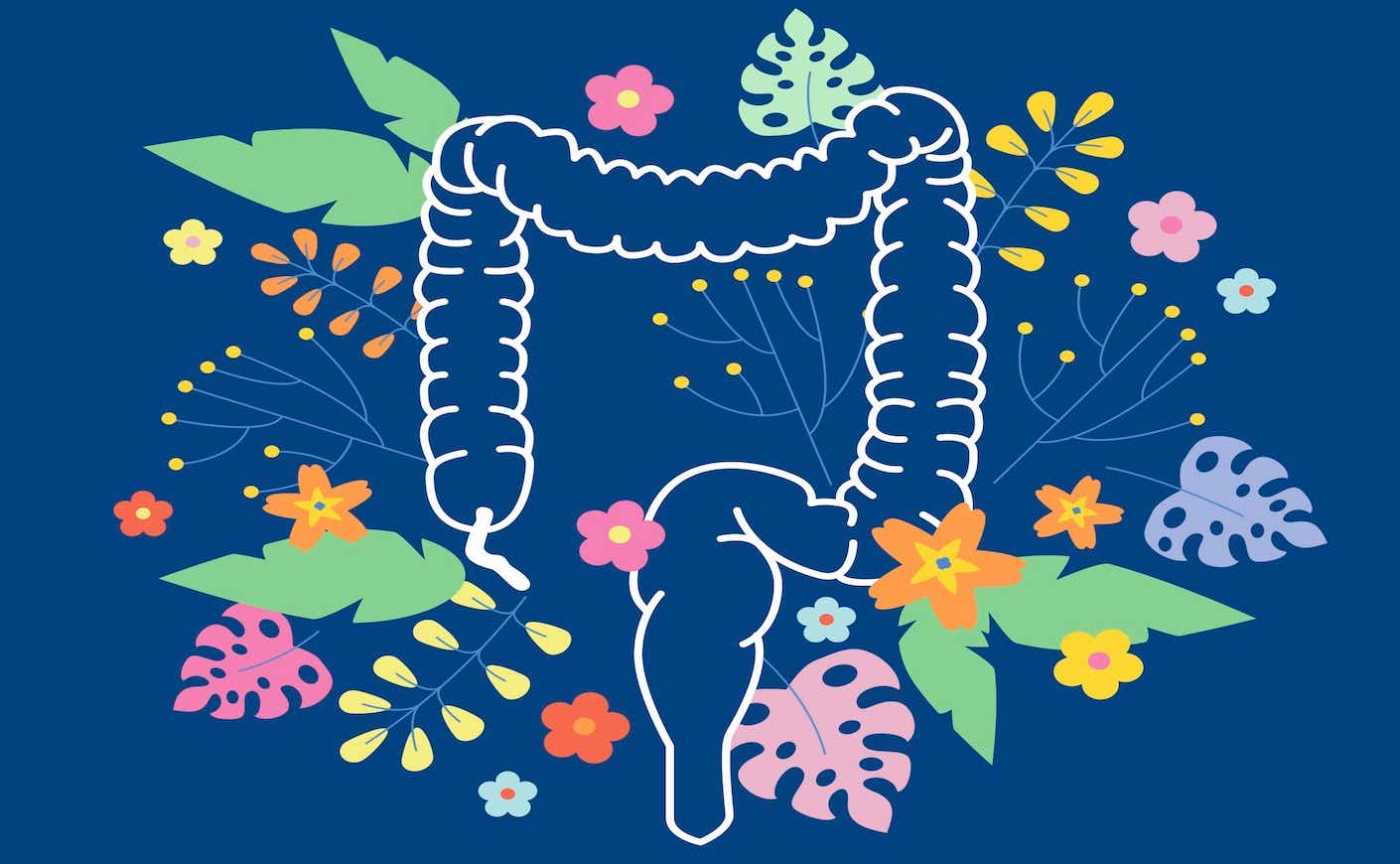
During Colorectal Cancer Awareness Month, the disease might be top of mind, but if we've learned anything from the recent deaths and research related to the disease, it's never too early or too late to prioritize colorectal health. To start the month on the right, fully informed foot, we checked in with Felice Schnoll-Sussman, MD, a gastroenterologist and the director of The Jay Monahan Center for Gastrointestinal Health (named after Katie’s late husband). She spoke to us about how common colorectal cancer (CRC) is, what treatments are available, who should get screened and when, and more about the “equal-opportunity killer.”
What exactly is colorectal cancer?
This form of cancer first appears in either the colon or rectum. Both cancers "tend to develop within glandular structures in the GI tract and are referred to as adenocarcinomas,” said Van K. Morris, MD, a gastrointestinal medical oncologist at the University of Texas MD Anderson Cancer Center.
The reason clinicians distinguish between colon cancer, which originates in the long, tube-like portion of the large intestine, and rectal cancer, which starts in the last 12 to 15 centimeters of the long intestine, is that the conditions are treated very differently. Radiation is commonly used to target rectal cancer, but rarely employed for colon cancer, she said. Plus, some patients with rectal cancer require a permanent or temporary ostomy when part of the rectum is removed. A surgeon will create an opening in the abdomen — called a stoma — to allow waste to leave the body.
In both cases, the disease typically begins as a benign growth or polyp within the colon or rectum that, over time, becomes malignant. If caught early, it can be “extraordinarily treatable,” Dr. Schnoll-Sussman said. But if the cancer breaches the colon wall, it can enter the lymph nodes, allowing it to spread throughout the body.
How common is colorectal cancer?
According to the CDC, colorectal cancer is the fourth most common type of cancer in men and women, excluding some forms of skin cancer, and the fourth leading cause of cancer-related deaths in the U.S. This year, the American Cancer Society estimates that more than 158,000 people will be diagnosed with CRC (roughly 108,860 new cases of colon cancer and 49,990 cases of rectal cancer) and 55,230 will die from the disease.
Although rates of CRC have declined since the mid-1980s, the downward trend is mostly seen in older adults. In people younger than 50, rates have risen 2.9 percent each year from 2013 to 2022, per the ACS.

“This is an equal opportunity killer. Period,” Dr. Schnoll-Sussman said.
What are some of the early colorectal cancer symptoms?
People who develop premalignant polyps don’t exhibit any symptoms, Dr. Schnoll-Sussman said. Even people who have developed the cancer may also feel completely fine and show no symptoms. That’s why it’s so important to get screened regularly, she told us. “Many people with polyps — even big polyps — feel nothing.”
Still, there are a few things you should be on the lookout for. Rectal bleeding is fairly common, she said, which will appear as bright-red blood. Younger people will often exhibit this symptom and regularly dismiss it as hemorrhoids. Discolored stool can be another warning. Maroon-colored or black stool (called melena) could be signs of bleeding within the colon.
A change in your pattern of bowel movements is also something to be aware of. “If you’re someone who has fairly normal bowel movements and all of a sudden are having diarrhea or loose stools or are constipated,” and that change persists, that could be a symptom of colorectal cancer, Dr. Schnoll-Sussman said.
The other big thing to look out for is a change in the shape of the actual stool. Colorectal cancer patients often describe having “pencil-thin” stools, which are narrower because it has to squeeze past a growth, she said. Unexplained weight loss or anemia could also be symptoms.
Shockingly, colon cancer remains the “most preventable, yet least prevented, cancer.” The problem is, many people with early-stage colon cancer have no symptoms or family history (approximately 70 percent of colon cancer patients have no family history), so they may not think to get screened.
But that’s when screenings are the most effective because they can detect colon cancer in its early stages, when the disease is more treatable.
How to screen for colorectal cancer
“What's sort of wonderful is that there’s been a lot of progress in how we actually screen patients,” Dr. Schnoll-Sussman said at the time of our interview.
There are three main types of screening tools. Stool-based screenings check for blood in the stool and also analyze certain genetic markers. Visual exams, such as a CT scan or colonoscopy, involve inserting a scope into the colon to screen for abnormalities. And blood-based tests, which look for possible signs of CRC in a person's blood.
Both the blood and stool tests are less sensitive than a colonoscopy, so they need to be performed more frequently, and they may present false positives. But if you've ever had a colonoscopy, you get why having these alternatives available is appealing and important for increasing access for more Americans.
“What it’s done is open up access to people who are either frightened by a colonoscopy or who don’t have the time to take off from work to get one,” she told us.
The recommended colonoscopy age
Because colorectal cancer is on the rise in people younger than 50, major medical associations, including the ACS and the U.S. Preventive Services Task Force, have updated their guidelines to recommend regular screening start at age 45 — five years younger than prior recommendations — and continue through age 75.
People between 76 and 85 can decide how frequently they should get tested based on "preference, life expectancy, overall health, and prior screening history," per the ACS. Those 85 and older should discontinue screening.
But if you're younger than 45 and you start to notice some of the symptoms mentioned above, Dr. Schnoll-Sussman recommends talking to your doctor: “The days of a young person thinking they can’t get colon cancer are over.”
How is colorectal cancer typically treated?
It depends on the stage of the disease. If it’s caught early on, doctors can remove a cancerous polyp and completely eliminate the condition. But if the growth has moved outside the colon wall, then the course of treatment will vary. For instance, if the cancer is what’s called “locally advanced,” meaning it’s spread outside the colon to surrounding areas, doctors may attempt to shrink the cancer through a course of chemotherapy in order to try to completely remove it surgically. Or if it’s become metastatic, meaning the cancer’s spread throughout the body, standard chemotherapy is prescribed.
