



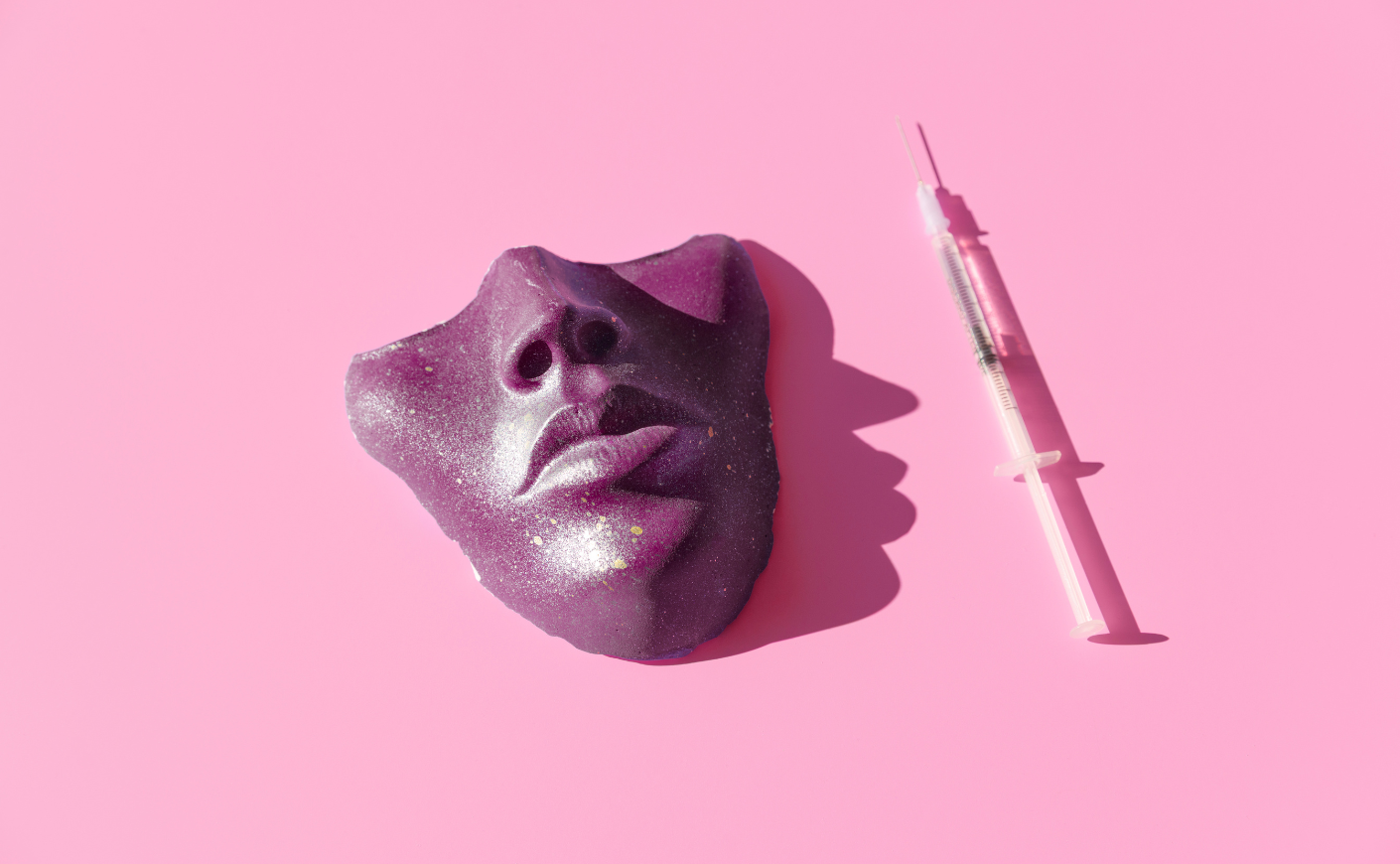
You might think there are only so many ways you can change your face with surgery, but it seems like every year, a new procedure takes over the zeitgeist. Remember the buccal fat removal craze of 2023, which was quickly replaced by people adding volume to their faces (via filler) after Ozempic-induced weight loss? Well, if social media and celebrities revelations are anything to judge by, it looks like cheeks are no longer our primary focus: Eyelids are what people have got their, well, eyes on.
Whether you're fascinated by the idea of an (ahem) fresher version of yourself or vehemently opposed to going under the knife, you might still be curious about the latest trends in this ever-evolving space. So to get a better understanding, we spoke with Dr. Oren Tepper, Co- Founder of Greenwich Street Aesthetics. He gets real about the procedures that are surging in popularity right now, the ones you should avoid, and how Ozempic has impacted his work.
Katie Couric Media: What are patients asking for most right now?
Dr. Tepper: We’re seeing more women interested in facial surgery, particularly facelifts, beginning in their 40s — with the intent of less-aggressive procedures and more subtle changes. People are definitely seeking more natural results: I often hear patients say, “I want to look different, but not have it be obvious from across the room.”
Which treatments are falling out of favor?
Filler to the lower eyelid/cheek junction is less sought-after than it used to be. That’s because the under-eye is a thin, nuanced area where the skin is very thin and crepey, and procedures carry certain risks. Blindness is the biggest concern, but lumps, bumps, contour irregularities, and damage to the overlying skin can occur after repeat treatments.
In our office, we think a fat transfer — rather than filler — is a better option for this area, because it offers a smoother transition between the lower eyelid and cheek. Fat is long-lasting; unlike filler, you won’t need additional volume until years or even a decade later, and it benefits collagen production, which improves overall skin quality.
I pioneered a concept called the “Boomerang Lift”: We take fat, generally from the abdomen or thighs, and place it in distinct compartments in the cheek to help soften and blend the junction between the lower eyelid and cheek.
How are weight-loss medications impacting faces and bodies?
The use of GLP1s has led to an uptick in body procedures that require the removal of sagging skin, such as tummy tucks or breast lifts, due to rapid weight loss. However, I’ve found the most significant impact of GLP1s to be in the face, like making it look more gaunt. Those changes have led to a significant increase in patients seeking volume restoration, and an industry-wide recognition that volume — in appropriate places of the face — gives a youthful appearance.
What’s with celebrities getting a "bleph," aka having fat and skin removed from their upper or lower eyelids? Have you seen an increase in requests for eyelid procedures lately?
Just like other procedures that were once popular with women 50 and up, blepharoplasties — removing excess skin or fat from the upper or lower eyelids — are growing in demand among women in their 30s. The nice thing about an upper bleph is that it can be done in 30 minutes under local anesthesia. There’s very little downtime, other than the stitches being removed in roughly five days.
But the aggressive removal of upper-eyelid fat has fallen out of favor. I think having some volume in the upper eyelid is youthful. In some cases, I actually add volume beneath the brow bone, to create more fullness in the upper eyelid.
The way we think about the bleph itself has changed, too. Over-excised eyelid skin results in a hollowed appearance to the upper eyelid. Now, the approach is for more-limited skin removal and fat preservation, which creates a much more natural result. And I think this approach appeals to the masses.