



When I tell people I do a lot of books coverage at KCM, I inevitably get hit with the dreaded question "What’s the best book you’ve read lately?" I say “dreaded” because when I get put on the spot like this, all my memories fly out of my head. I can’t recall my favorite book I’ve read lately, only what I last read (and sometimes not even that, unless I’m cross-referencing with my Kindle).
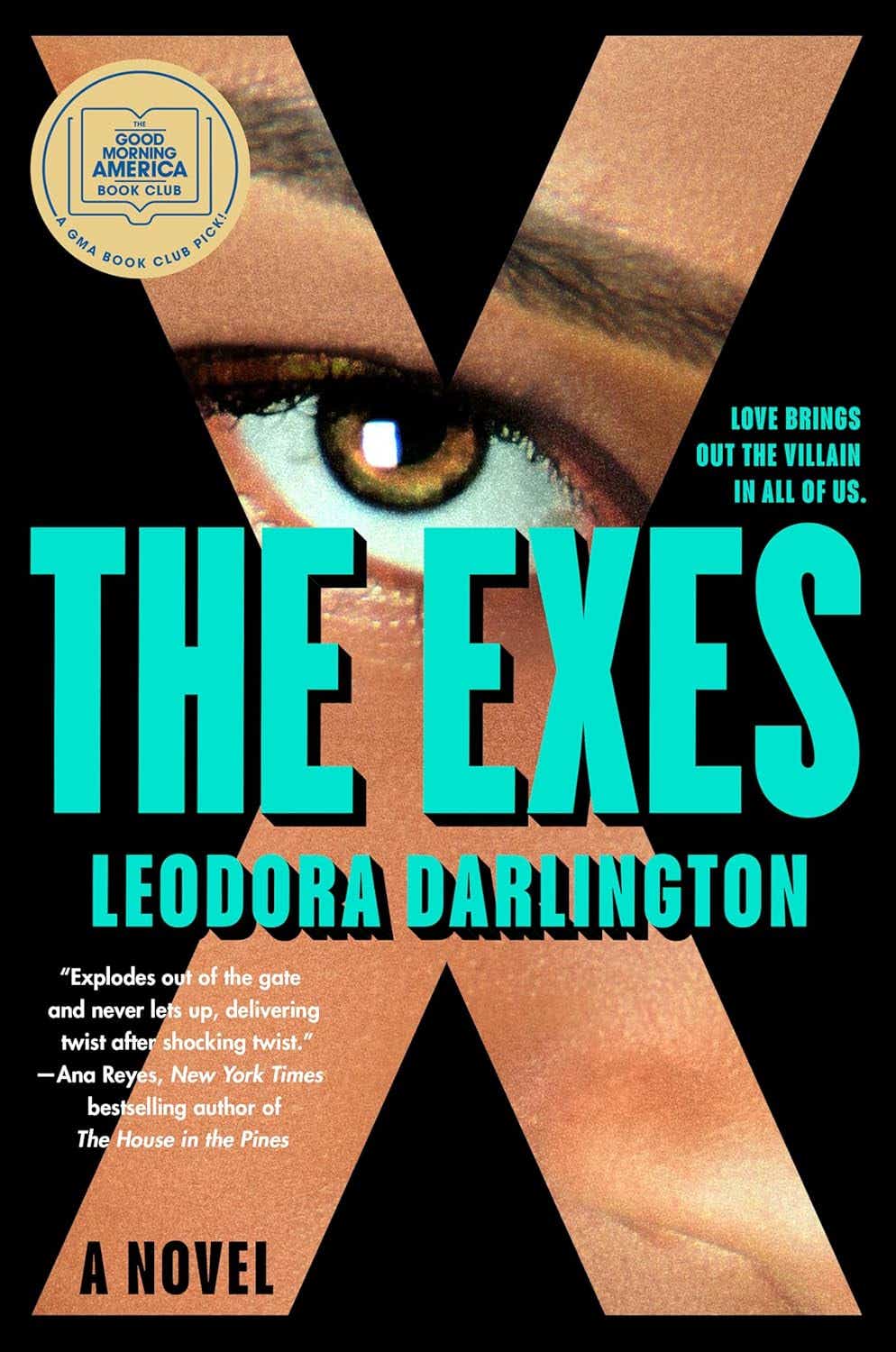
I average about a book a week, so they tend to blend together — and if you’ve followed some of my coverage, you know I have a penchant for by-the-numbers thrillers, which really become a blur. That is, until I picked up a copy of The Exes by Leodora Darlington.
Have you ever started reading a book and everything about it grips you right away? The Exes connected with my brain on a cellular level, and I was locked in from page one. In terms of the narrative, I’ve been telling people it’s like the show You, but from a female POV — only we’re not sure if the protagonist Natalie is actually a serial killer. It’s also not a murder-glorification book; it explores complex themes like generational trauma and strained family relationships.
All of that is to say that now, when I’m asked what books I recommend, I blurt out this title without hesitation. I chatted with the author of this debut hit, Leodora Darlington, about what (or, more specifically, who) inspired The Exes, how to write a likeable serial killer, and the trend that's taking over modern lit.
Katie Couric Media: This is your debut novel, but you’ve worked in publishing for 10 years. Did that career better prepare you to write The Exes?
In many ways, it did. For the past 10 years, I've been so focused on what readers want, which has been invaluable. There are a lot of important things I want The Exes to say about what it's like dating across different power dynamics and race, and dealing with generational trauma. My job has been useful for honing the skill of how to wrap that all up in a story that's still really fun.
Can you talk about the role that trauma plays in the book?
It's a huge element of the story. I've always loved the Delphic maxim "Know thyself." In Greek tragedies, we see the dangers that come out of not knowing yourself, or dealing with your issues on an intimate level.

I grew up in a Ghanaian household, mostly around other West African families when I was very small. I feel like for a lot of children living in the diaspora — second-generation immigrants, whatever you want to call us — we're often living with parents who are traumatized. Therapy is not commonly spoken about or accessed. At least, that was my experience.
The protagonist Natalie was a vehicle for exploring what could happen if you tried to ignore the pain of your past. The message is, if you don't deal with your stuff, eventually it will deal with you.
As a reader, I was rooting for Natalie, even though she might be a killer. How did you make her not-detestable?
If you don't understand your characters, you don’t care about them. So much of my focus was on how to get people to understand these tricky, sometimes wildly unethical characters, and then still care about what happens to them.
I think it's part and parcel of why the backstory of Natie's childhood, and her relationships with her exes, was so crucial to the narrative. It's difficult to see her as a small child who's just trying to survive the storm of her parents' marriage, or as a teenager who's looking for affirmation in all the wrong places, and not feel for her.
I also think it's quite helpful when readers "meet" some of her ex-boyfriends, even if they might not think they deserve to be murdered! But people might judge her a little bit less harshly.
Was there a real-life inspiration for the exes in the book…?
There are no specific exes from my life in the story. But there are things that I've experienced, first and second hand, that might, in very small ways, have woven themselves in.
The idea for the book started with a title, which was To All the Boys I Killed Before. I'm a big romance nut, but it's difficult not to notice the various ways in which heteronormative relationships have become less comfortable and safe for women. I wanted to play with the idea of love letters, but rather than a character who's writing to her previous partners out of love, I thought it'd be interesting to explore one who's writing out of despair.
I also thought it'd be interesting to take a female serial killer who's terrified of the violence she's capable of. Natalie evolved a lot over the course of my writing the story, but anxiety and rage were always at the core of it.
What did you read or watch that inspired your depiction of Natalie?
On the nonfiction side, The Body Keeps the Score speaks so well as to how trauma impacts our daily lives. I also really love literary dystopia, which uses the vehicle of story to say something about our current society. I get inspired by books like I Who Have Never Known Men or Tender is the Flesh, or writers like Margaret Atwood. The Exes is not dystopian, but when we're talking about themes like power disparity in relationships, I did draw inspiration from stories like those to help me explore those big questions.
Transitioning to the publishing side, which current trends are you excited about right now?
I'm noticing more romantic thrillers: Maybe there’s a certain excitement in that danger. Romance has certainly been booming over the last few years, and I think the fans are looking for something different — and that interest is bleeding into a different area of the market. I think we're still going to see epic love stories but I'm definitely noticing books that are willing to genre-bend.
What have you read recently that you loved?
I'm rereading The Dispossessed by Ursula K. Le Guin at the moment. It imagines that capitalists are still living on Earth, and that anarchists have gone off to set up a society on the moon. It's a great philosophical exploration of many big life questions.