






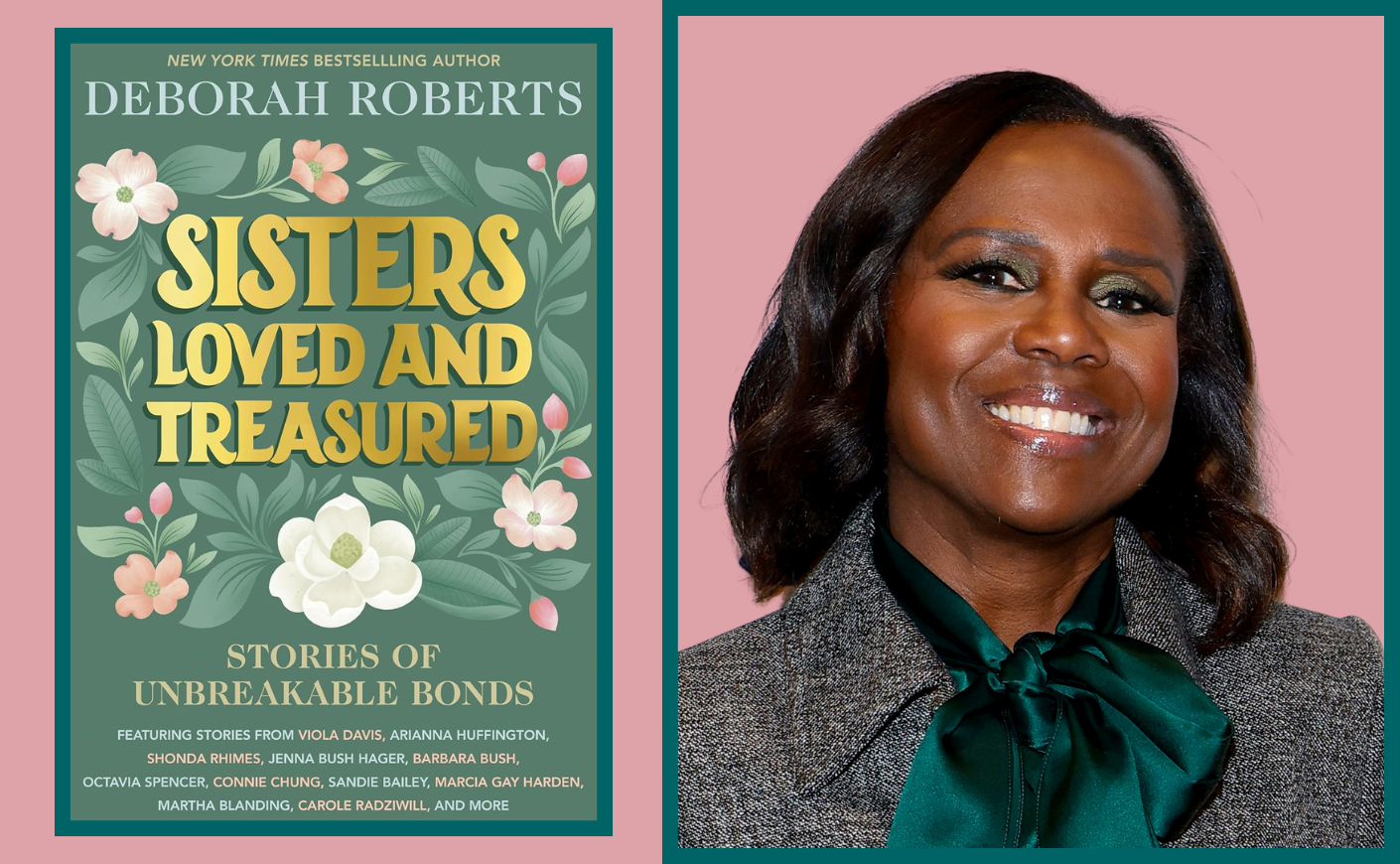
If you grew up with sisters, you already know: It’s a relationship that can feel like a lifeline one minute and a labyrinth the next. So when journalist Deborah Roberts told me she was writing a book about the power, complexity, and, yes, chaos of sisterhood — informed by her own experience growing up with six (!) sisters and two brothers — I couldn’t wait to dive in.
In her new book Sisters Loved and Treasured: Stories of Unbreakable Bonds, Deborah writes candidly about feeling lost in a big family, the joy and strain of sibling relationships, and the heartbreak of losing two sisters. But the book is also buoyed by light: the laughter around her childhood kitchen table, the healing conversations sparked decades later, and the powerful stories she gathered from women like Viola Davis, Octavia Spencer, Robin Roberts, and Jenna and Barbara Bush. What emerges is a reminder that sisterhood — whether by birth or by choice — is one of the most complicated, clarifying, and sustaining forces in a woman’s life.
Katie Couric: You grew up with six sisters and two brothers — that’s a full house! What was it like growing up in such a large family? Did you ever struggle to feel seen?
Deborah Roberts: It was indeed a busy and sometimes loud house, especially around the kitchen where two of my older sisters often joined my mom in cooking Sunday dinner and sang together or told funny stories. I was the seventh child and often felt lost in the crowd. I was also a bit shy and struggled to find a moment to shine. That didn’t happen for me until I was in junior high school, when I found some confidence and my older siblings were leaving home for college and marriage. Then I was the older sister and found a solid place among the kids still at home, and my two younger sisters.
You’ve lost two of your sisters, Bennie and Annette, and you share that you had a complex relationship with Bennie. Did writing this book offer any clarity or healing as you revisited those memories?
Writing this book with honesty and perspective was cathartic for me and a way of connecting with my sisters over difficult topics that we spent years avoiding.
Bennie was a bright light in the family, but also a troubled soul, emotionally. We didn’t understand mental illness 40 years ago as well as we do now. And I think it’s pretty clear that she was suffering and struggling in some way with her isolation and her ups and downs. Today I feel tremendous regret about how we all processed her situation. And my sisters do too. It was cleansing for us all to finally talk about Bennie and what she meant to us.
The book features essays from Viola Davis, Jenna Bush Hager, Barbara Bush, Octavia Spencer, and Robin Roberts, among other phenomenal women. What was the interview process like? Were there any particular essays in this collection that moved you?
To gather stories for the book, I did what I do best: interviewing people. After approaching the sisters I wanted to interview, I offered a Zoom date, promising just half an hour of their time.

Most gave me more time once we began talking, because they enjoyed revealing their journeys and the overarching lessons of sisterhood. Some were moved to tears. It was a beautiful unfolding story of the power of sisterhood that many hadn’t thought about before.
You organized the essays into chapters, including ones that focus on the ebb and flow of relationships over time, the magic of being a twin, and the bond of sisters who faced trauma together. How did you decide which themes best captured the complexity of sisterhood?
Over time, it was clear that some stories had clear overlap or similar themes. How much the age gap played a role in whether a sister connection was strong early on. How personality differences did too, or if a family trauma knitted sisters together. And after hearing my assistant talk about her unique bond with her twin sister, it was clear this was a different sister relationship worth exploring. Slowly, we realized that some essays just belonged together.
One of my favorite essays is the one featuring your daughter and stepdaughter, Leila and Courtney, who are 11 years apart. What did you learn about their relationship that surprised you?
I was so proud of the two of them for opening their hearts and sharing their private truths. I knew that they had struggled over the years. And the family dynamics of divorce played a big part. But I also knew that they enjoyed a nice bond now and I felt comfortable asking them to share the complex story of being step sisters. To my surprise, they opened up on a deeper level about the emotional difficulties of growing up with a challenging family situation. Courtney having to cycle in and out of her dad’s new family. And Leila feeling resentful that her sister wasn’t as warm as she wanted her to be. It was emotional for all of us. But watching the two of them share and embrace each other during this chat was extremely touching for me — and gratifying to see sisters who chose to form a tight bond, one that was forged in difficulty.
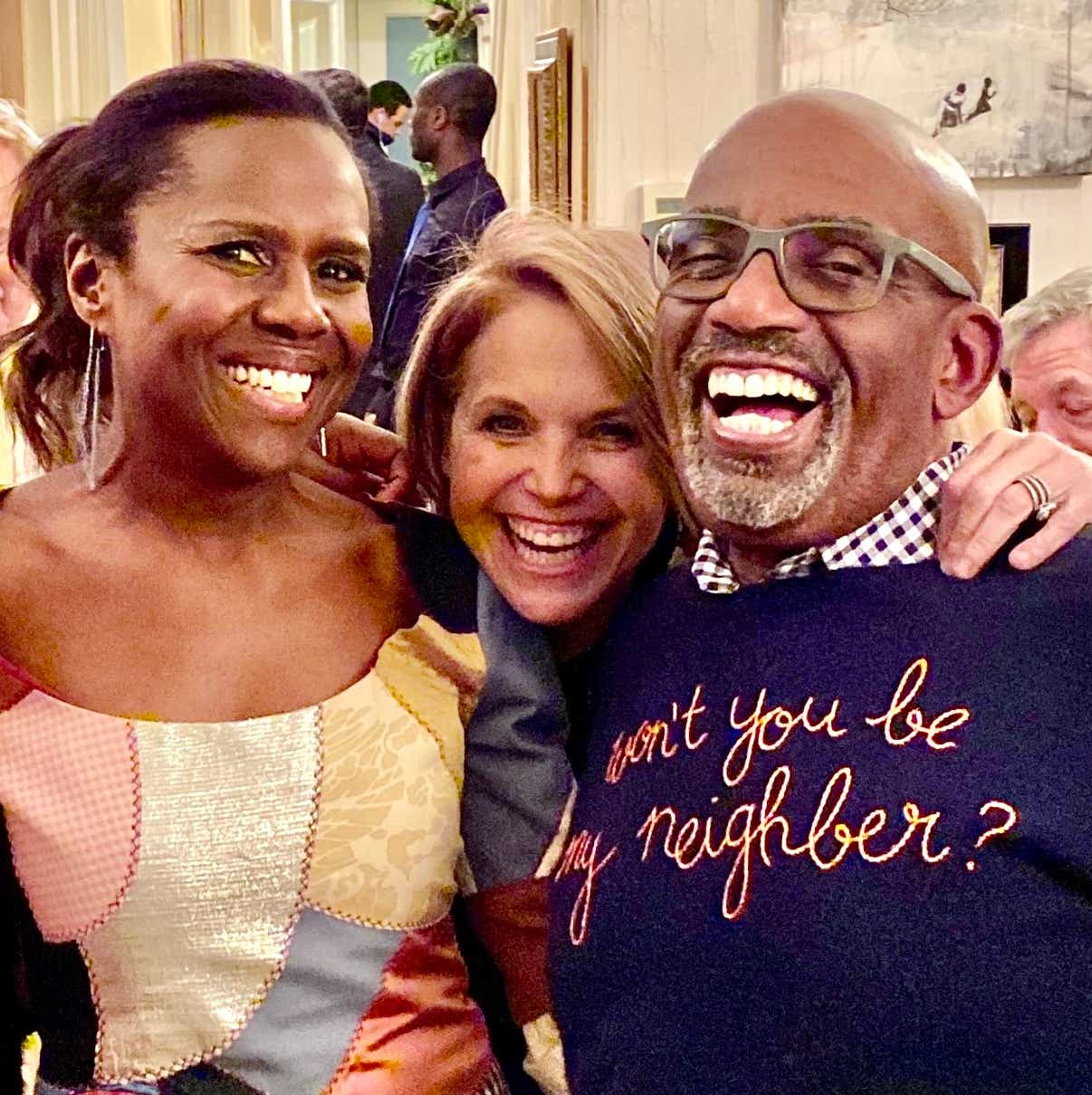
Two of your sisters, Janet and Tina, have battled cancer. At Tina’s last chemo appointment, you organized a girls’ weekend to celebrate. In her interview, Tina said that the love between you all is “the glue that holds you together.” How have these experiences changed or deepened your connections as sisters?
That gathering with Tina may have been my inspiration for this book. All of us were living our busy and disparate lives in different parts of the country. We tried to stay connected, but it’s difficult to do sometimes. I travel a lot, and my work is more intense and, of course, more public than my siblings'. We cared deeply for each other but found ourselves drifting in our connections. And we were all going through different stages in life. So when we gathered in Atlanta that weekend before Christmas to support and celebrate Tina’s final chemo treatment, we found ourselves giggling and embracing like old times.
It was medicinal, not just for Tina but for all of us. This was a pivotal moment for me — rediscovering the magic of the sister relationship to heal and strengthen us. It was still there. I wanted to explore this feeling in a deeper way, and the idea of Sisters Loved and Treasured was sparked.
What do you hope readers will get from this book?
I hope that sisters will see themselves in this book and realize how special their relationship is or can be. I also hope that those who don’t particularly get along can find some inspiration with these diverse stories of sisterhood. A sister can be frustrating and difficult, but also the source of strength, understanding, and optimism if you’re willing to work on the bond. And it does take work as we age.
And for those who don’t have sisters, this is a reminder that even among women friends, sisterhood is a powerful thing.
