






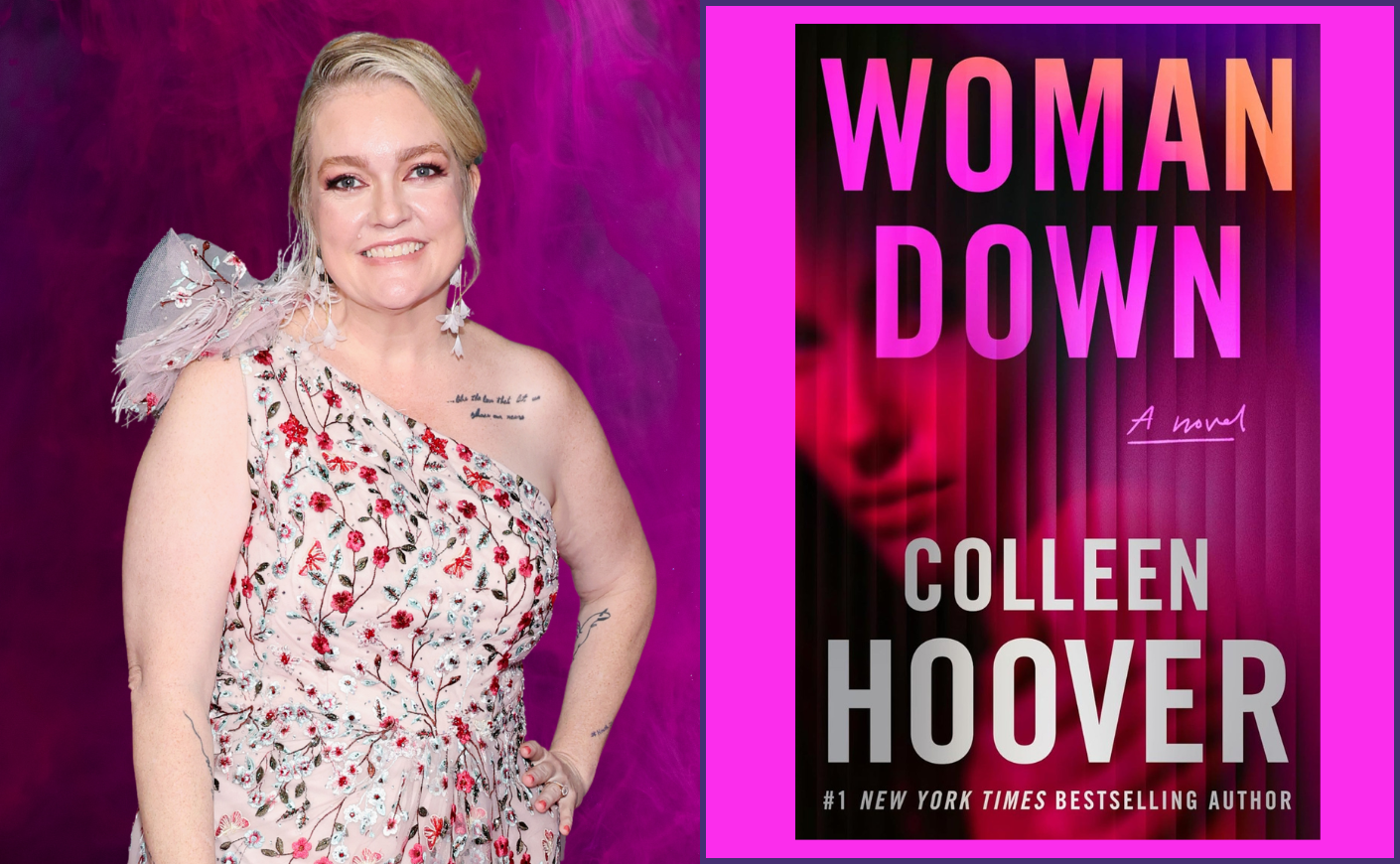
The film adaptation of Colleen Hoover’s It Ends With Us became one of the most-talked-about movies of 2024 — and not because of what happened on-screen. As you may know, the behind-the-scenes drama between the film's stars inspired exposés and lawsuits that are still playing out in court. Hoover’s newest book, Woman Down, sounds like it could’ve been inspired by Hollywood headlines. The thriller revolves around a famous author who receives such intense viral backlash for her novel that she goes into hiding in a remote cabin.
Hoover has already had an eventful 2026 — her newest novel came out on Jan. 13. The day before, the prolific author revealed that she’d undergone radiation for an unspecified cancer.
Luckily, Hoover has a lot to look forward to: The adaptation of her book Reminders of Him will hit theaters March 13, and the movie version of her novel Verity (which stars Anne Hathaway and Dakota Johnson) is slated for an October 2026 release. She’s clearly not slowing down anytime soon. We interviewed Hoover about the story behind Woman Down, why she’s put up boundaries on social media, and her attitude toward bad reviews.
Katie Couric Media: Where did the inspiration for Woman Down come from?
Colleen Hoover: I love writing thrillers that are grounded in reality. I’m not scared by the idea of ghosts or monsters — I’m scared of people. I first outlined Woman Down years ago before writing the short story it derived from, called Saint. I’m enthralled by the writing process of other writers, and while I do like to be alone when I write, I don’t know that I could ever go to a remote area to do it. I wanted to explore that dark side of the life of a writer and create something that would be scary to me, because that’s when books become fun to write — when the story itself is something that could happen to me.
What was the writing process like?
This one was very different because I had written Saint with a strict word count limit, so I had to keep the narrative contained. Then years later, when I decided to make it into a full-length novel, I had to open up the story to make room for more description, more characters, and more twists. I found the process of writing Woman Down fun and less stressful than my other books, since the bones were already there.
What do you do when you have writer's block?
I just walk away from writing and find other ways to be creative, or I consume other forms of art, or read other people’s books. I give myself a lot of space when it comes to creativity, because it’s very hard for me to step in and out of that headspace. I’ve never set myself up to have to rely on my next book to pay bills. I never overspent or assumed my next book would sell. Writing started out as a hobby for me, and I always want it to feel like a hobby, so writer’s block doesn’t stress me out as much as it probably would, had I not had another full-time career before I began writing my first book.
Your new book explores the negative impacts of social media — how do you deal with its downsides?
I've always had a very close relationship with my readers. I put my whole life out there [on social media] before I started writing books, so I feel like so many of my followers have been on this journey with me from the very beginning. I find a lot of joy in social media, but when things got bigger and louder and more negative, I had to start putting up boundaries. I miss social media, so I don’t have the answers yet on how to overcome the negativity. Other than write about it, I guess.
The novel also examines online criticism. Was that inspired by your own experiences as an author, and how do you deal with it?
Online criticism of my books has never bothered me much, so I did have to reach a little in order to allow it to bother the main character in Woman Down. I view art as subjective, and I think I’ve always had a healthy outlook and response to criticism of my work. I don’t know that I would ever be bothered enough to have to do what Petra did. I write what I feel like writing, and I hope some people like it and I know some people will hate it, and that’s OK.
