



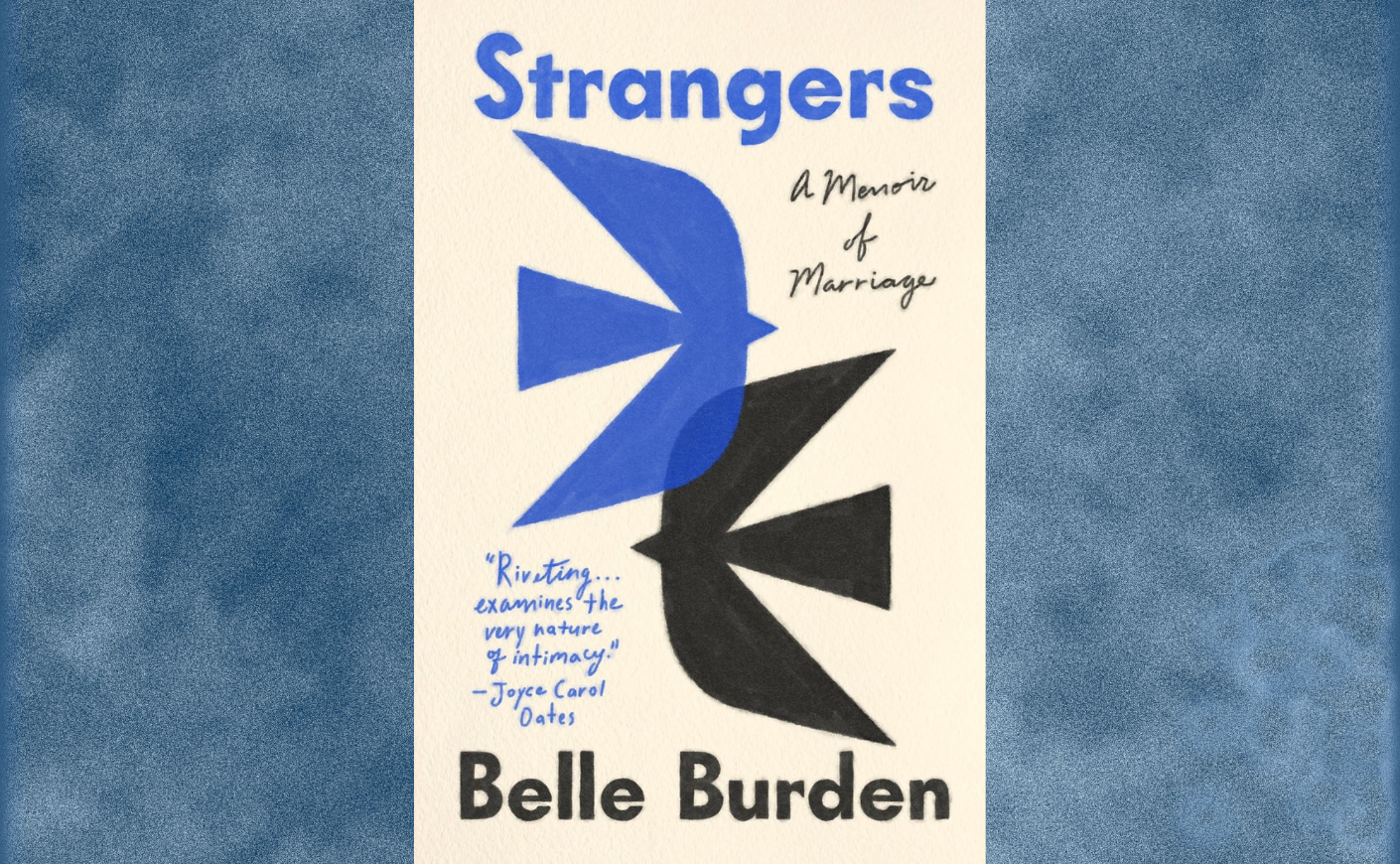
As part of my “less scrolling, more reading” New Year’s resolution, I just finished Belle Burden’s vulnerable and harrowing memoir Strangers about the jarringly sudden end of her marriage. Belle first wrote about this in a Modern Love column for the New York Times back in June of 2023. It was one of the most widely read columns of the year. Now she’s expanded it into a memoir that unpacks the devastation of divorce — the betrayal, the confusion, and the sense of abandonment that comes when one partner, unbeknownst to the other, decides to leave with absolutely no warning. It also tracks a woman in the depths of despair as she rises from the ashes and rediscovers herself.
Katie: Belle, your book officially publishes today — congratulations! How are you feeling?
Belle: I'm both elated and terrified! I’m starting the day by visiting my dad at a cemetery in the Bronx. He died in 1996. I wanted him to have the first copy.
Let’s start from the beginning, which is really the start of your memoir. Your world came crashing down, completely out of the blue. What happened?
I was with my husband and our two daughters at our house on Martha’s Vineyard. It was the second week of Covid lockdown in March 2020. We cooked, took walks, and built fires. I felt safe and secure. Then I received a phone call from a man who said, “Your husband is having an affair with my wife.” At first, my husband was apologetic, but by the next morning, he was ice-cold. He told me he wanted a divorce, walked out of our house, and left the island. I thought we were very happily married, so it was a terrible, horrifying shock.
This book chronicles an incredibly painful time in your life. How did the pandemic exacerbate the shock and isolation you felt when your husband told you he wanted a divorce?
It was such a strange time for everyone in the world, like we were living an alternate reality. And then the man I trusted more than anyone on earth turned into someone I didn’t recognize. So, the alien feeling that life was not what you thought it was became even more intense. I was also on an island with no one I knew. My family and friends couldn’t get to me, and I couldn’t get to them. There was no one to pick me up off the floor or help the girls. I had to rely on the phone (which I hate) and texting.
You're quick to point out your privilege. You were living on Martha's Vineyard during this. You're a child of privilege: You're Babe and William Paley’s granddaughter, your father was Carter Burden, and you're a descendant of the Vanderbilts. You take great pains in the book to point it out, and at times, you seem almost embarrassed and apologetic about it. Can you talk about the burden (no pun intended) this placed on you?
I know that my privilege cushioned the fall in many ways. I had access to resources that many women in my situation wouldn’t have had. It felt essential to acknowledge this in the book: both my internal awareness of it and so that I could be a reliable narrator. But what I hope people come to see from my story is that money cannot protect anyone from heartbreak.
I think for you, and frankly, for the reader, it was frustrating that we never really understood why your marriage fell apart and why your husband left. Having written the book, do you have any more clarity today? Or will this remain unknowable? And if so, how have you made peace with that?
I think where I land, where my brain rests, is what he said to me the first day: a switch went off for him, and there was no going back. It’s not much, but it feels true. I also think the metaphor of playing a role feels accurate. The role of husband and father became unsustainable for him. And when he left the stage, he couldn’t take off the costume gracefully. The key to making peace with it has been focusing on the kids and my own growth.

The center of your social life was a very old-money tennis club that you were a member of on Martha’s Vineyard. Some of these scenes made me happy to not be a member of a club like that (thank you, Groucho Marx), given its smug insularity. How hard was it to deal with some of the negative reactions you got, first when your Modern Love column came out (which was the impetus for the book) and now that your book is out in the world? And more importantly, what did those reactions tell you about the role of women and the expectations many of us face?
I think it’s natural for readers to focus on the negative reactions I received, but there was so much kindness too! And I learned from that kindness — it’s a roadmap for how I want to act when someone is going through something difficult: move toward them, ask about what happened, acknowledge their pain. The negative reactions also taught me a lot. There is an expectation that women should stay quiet and stay in our lane — that a “good” wife and mother quietly cleans up when something becomes messy. When we refuse to do that, when we talk or write about it, we often make people uncomfortable, particularly in very traditional settings. But I would argue that staying quiet protects men. And it doesn’t help us.
Looking back on the division of labor in your marriage, you clearly regret abdicating so many of the financial decisions and responsibilities to your ex-husband. You’re a lawyer, and while you took on a more traditional role in your marriage, is there a lesson for all women here?
A big lesson is to remain fully engaged in your financial life, never abdicate it, and understand what will happen if the relationship ends. Second, no matter what decision you make about taking care of kids, don’t abandon your own ambitions and talents. It’s very easy to lose sight of them if your spouse’s career seems more important to the family enterprise.
It was clear in this book that while you lost your husband and your marriage ended, you found yourself, and in some ways, it became a new beginning for you. Were there things you learned about marriage and about not losing yourself that might be applicable to other women?
After 20 years of marriage and kids, I felt all these layers of comfort and security. It felt good, but you lose yourself underneath it. When my husband left, the layers were stripped away, and I was able access pieces of myself that I thought I had lost for good — for me, one of those was writing.
What helped you survive this terrible time in your life?
During the immediate aftermath, walking really helped. It felt meditative and stabilizing. Longer term, it was shifting the focus from my ex to myself and what I wanted my life to look like. My stepmother gave me a helpful metaphor: We’re on a stage and I have to keep shifting the spotlight from him to me. This included looking at the decisions I made in our marriage and trying to understand how I ended up where I was.
You very movingly use the ospreys that come to your house on the Vineyard as a metaphor for mating for life. Can you tell us a little about that choice?
The ospreys gave me great comfort during the dark days because they are so predictable and optimistic in their cycle. But there was also irony — the male bird was feeding and caring for his mate and their three chicks while my husband was gone. It occurred to me that it was a good framing device for the book.
You’ve always wanted to write, but you were discouraged when you were younger. Do you think you’ll continue writing?
Yes, but not a memoir. I’m trying fiction. It’s a lot harder.
You wrote about how hard it is to trust after something like this happens. Do you think you’d be open to a new relationship or marriage again?
I am open to a new relationship. I would love to fall in love again. The universe hasn't delivered it, perhaps because I'm a bit guarded and focused on the kids and this book. But who knows? I know I don’t want to get married again or intertwine myself with someone financially. But there are a lot of other ways to have a relationship.
You're back doing legal work, and your area of expertise seems to be needed more than ever. Can you tell us about the cases you’ve been working on and how urgent it is to have people with your expertise representing your clients?
My law partner and I have five active cases; we just took on a new one. We represent children and teenagers seeking legal status. We’re supervised by a fantastic organization called Safe Passage Project. Our current clients are at different stages, ranging from no status to holding a green card. Our work has become much more difficult since January 2025. Roads are closing. But representation is still vital. I recommend it to any lawyer or translator looking for a way to contribute.