At 22, I was focused on starting my adult life, building a career, hanging out with friends, and figuring out who I wanted to be.
Then my periods stopped.
Naturally, I thought I was pregnant and went to Planned Parenthood for answers, like my mother always encouraged me to do when it came to reproductive health and birth control. When they confirmed I wasn't with child, they sent me to specialists to solve the mystery of my missing menses.
After a series of genetic tests, I soon learned I had primary ovarian insufficiency (POI), a condition that brought on symptoms that closely resembled perimenopause and meant I would likely enter menopause decades earlier than I ever expected.
At first, I felt relief that I wasn't about to become a young, unprepared mother with a boyfriend I didn't see a future with. But then I felt completely alone — although my best friends supported me as best as they could, none of them could relate to the symptoms I was experiencing, like hot flashes, vaginal dryness, weight gain, and hormonal changes that made me feel like I was on an emotional rollercoaster. My irritability was at an all-time high. I remember once telling my best friend, “You need to stop talking and I need the air conditioning at 65 degrees.” Another time, I screamed into the freezer.
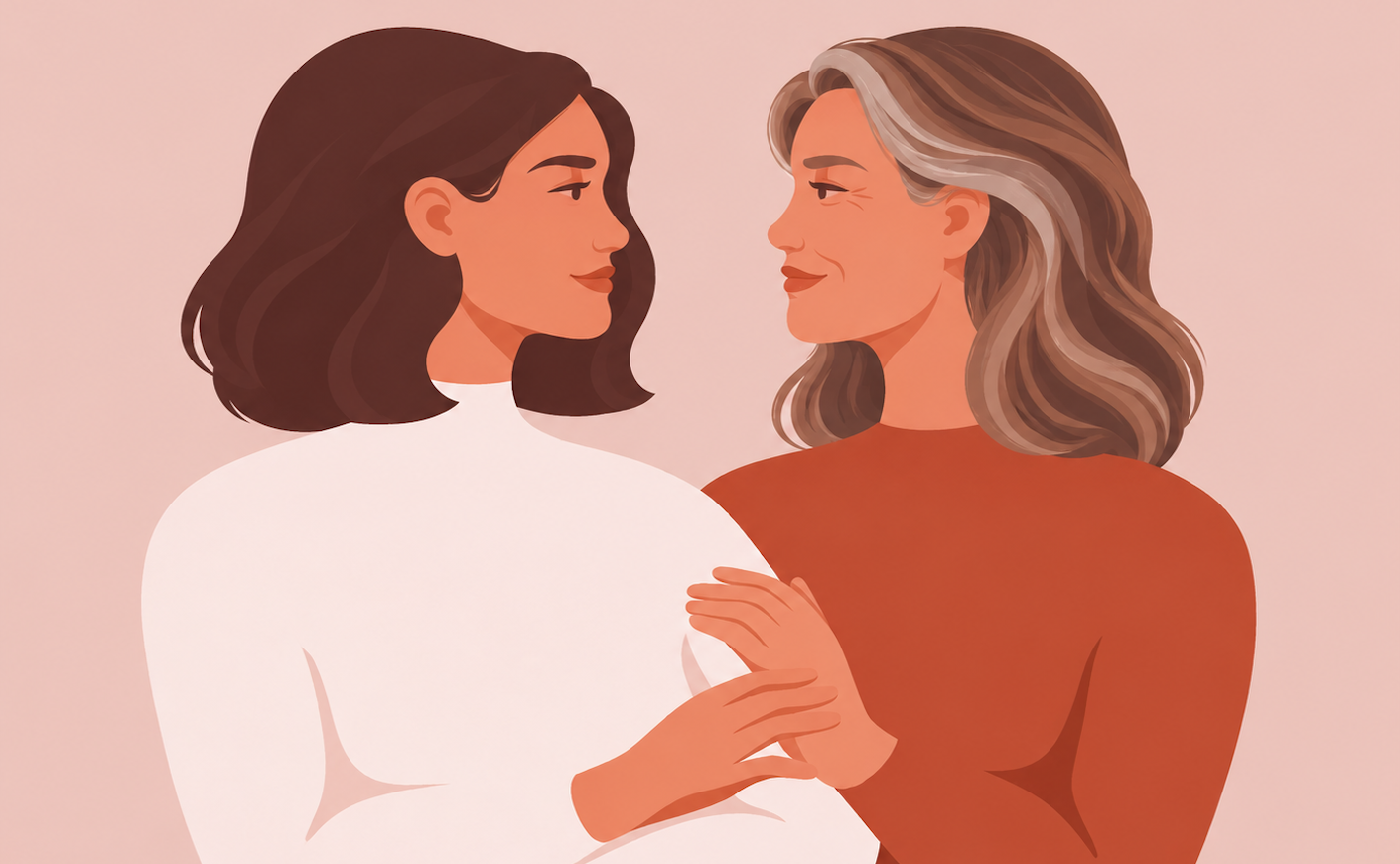
The last person I expected to bond with in my early 20s was my mother — but that's exactly what happened next. She was nearing 50, and on our car ride home from the appointment where I learned I had POI, she told me she was going through perimenopause too. Despite being at very different stages of our lives, we soon found ourselves talking through hot flashes and mood swings, and sharing advice on how to deal with all the drastic changes — both physical and mental. Neither of us had a roadmap for what to expect, so she couldn't really guide me through it the way she had for other life changes, like my first period.

This was about 20 years ago. I knew the basics of reproductive health, like the very little taught in high school biology and health classes. But growing up, my mom’s sex ed lesson was simple: “I’d prefer you wait until marriage, but if not, you know what to do to make sure you’re being safe. Take your best friend and go to Planned Parenthood.” She empowered me to make my own decisions about my body and health and nudged me toward the resources I needed to make them safely and get the care I felt was best for me. So, throughout my teen and young adult years, I'd come to rely on Planned Parenthood.
My mom and I were clashing a lot. Neither of us really understood how menopause could affect our moods and temperaments. There was no shortage of screaming and frayed nerves, which neither of us knew were a result of major hormonal shifts. At the time, there wasn’t nearly as much conversation about menopause as there is now, so for a while I thought my mom was just being difficult.
I eventually realized I was wrong.
While neither of us expected to enter this chapter of life at the same time, I’m so grateful I had my mom with me every step of the way. We knew little about this transition, and she didn't have the conversations with friends that people have now; I didn't have anyone in my life I could relate to other than my mom. We only had each other.
Now we look back and laugh at the absurdity of it and say, “We survived that. And somehow without physical violence.” In between the frustrated interactions, we forged a unique connection.
Still, there were parts of my experience my mom couldn’t share. There was a huge emotional toll in being forced to think about my fertility at such a young age. What did I want my prospective family to look like, and what would even be possible?
For a while, my diagnosis shaped my personal life. I dated casually, and when things started to feel serious, I let my partners know about my condition. I isolated myself emotionally from my friends as I dealt with big choices and changes they couldn't understand.
Two years into my menopause journey, I met my now-husband of 17 years, and we began building a life together. At 24, as I was trying to manage my symptoms, we also had to think about what my diagnosis meant for the family we wanted. I tried hormone replacement therapies in order to increase the .001 percent chance of getting pregnant. When that didn't work, we considered in vitro fertilization (IVF), but it was too expensive for us.
Coming to terms with not being able to have children of our own wasn't easy, but I’ve made peace with it over time. As I navigated that reality, my mom was always my biggest cheerleader. If I would break down, she would hug me and say, "Hold on, baby, we got this," and I believed her. I'm glad I did, because she was right. Today, I’m a proud aunt and stepmom to a son who calls me mom, and I’m happy with the family we’ve built and the decision we made together.
Now, years later, menopause is more openly talked about, and information is more accessible. My friends come to me when they start experiencing symptoms or have questions. Though none of us fully understood what I was dealing with at the time, my friends showed me a lot of grace, and now I finally get to return the favor.
I often wonder what could have happened if I hadn't been able to get the care that led to my diagnosis. I needed routine reproductive health care. And like every time I went before, I was met with kindness, empathy, and zero judgment.
Since then, the very Planned Parenthood health center where I received this care was forced to close due to anti-abortion state lawmakers “defunding” Planned Parenthood in Iowa. I marched against this attack, alongside loved ones, neighbors, and fellow patients who all understood what was at stake and were fighting for the care our community depended on. While a sole Planned Parenthood health center remains in Iowa, it’s heartbreaking to know that today, the place where I got answers is no longer there for someone else.
What happened to my health center in Iowa has unfortunately played out across the country. In 2025, President Trump and his backers in Congress “defunded” Planned Parenthood, stripping patients across the country of access to essential care like birth control, STI testing and treatment, cancer screenings, and more. For patients like me, Planned Parenthood isn’t political. It’s where we go for routine care and answers when something in our bodies doesn’t feel right.
Sara Robinson is a former Planned Parenthood patient who lives in Iowa.