


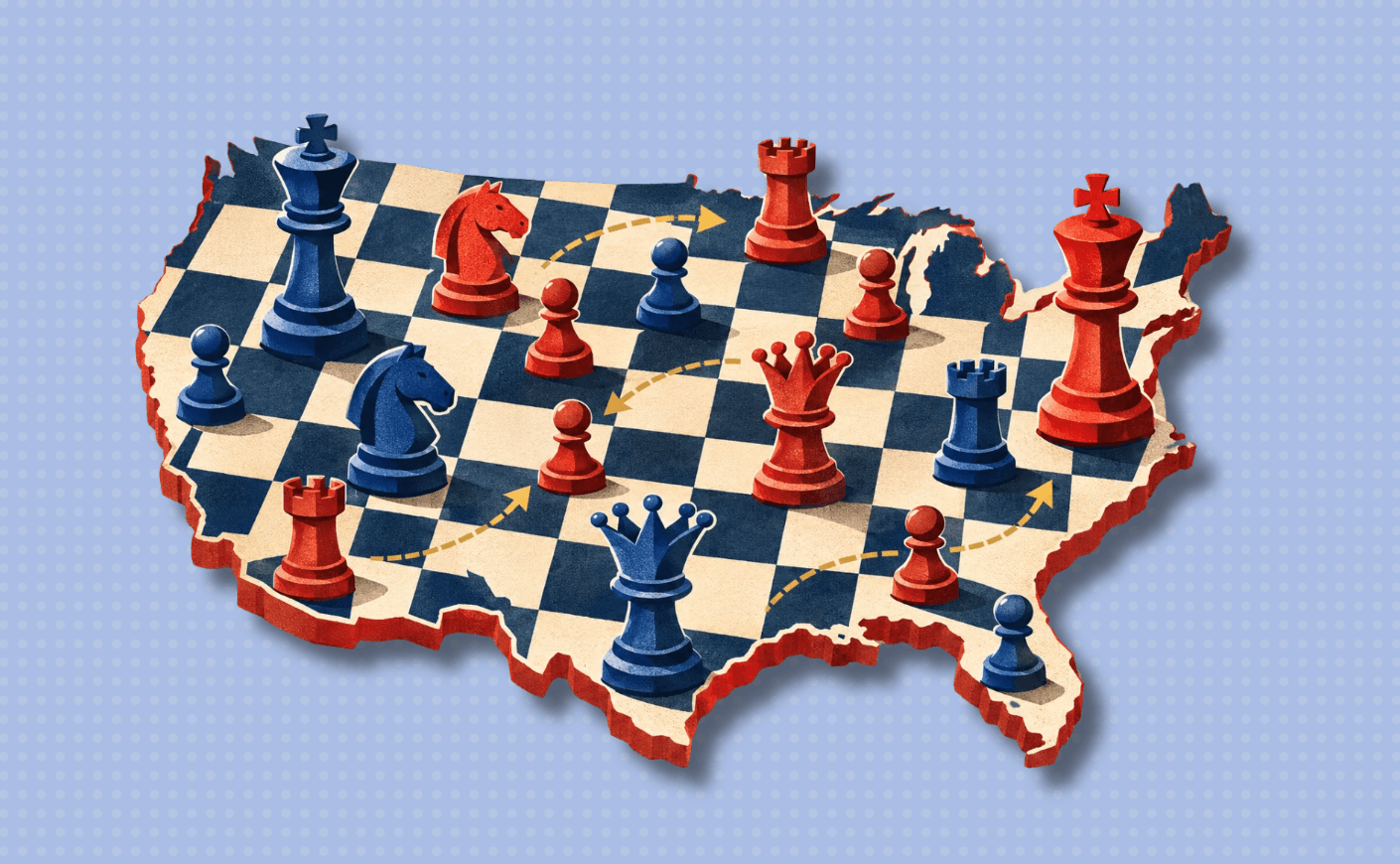
When election night rolls around, it’s easy to get caught up in the big races in Washington. But some of the decisions that touch our daily lives — from access to reproductive healthcare to paid family leave — are made much closer to home, in state legislatures.
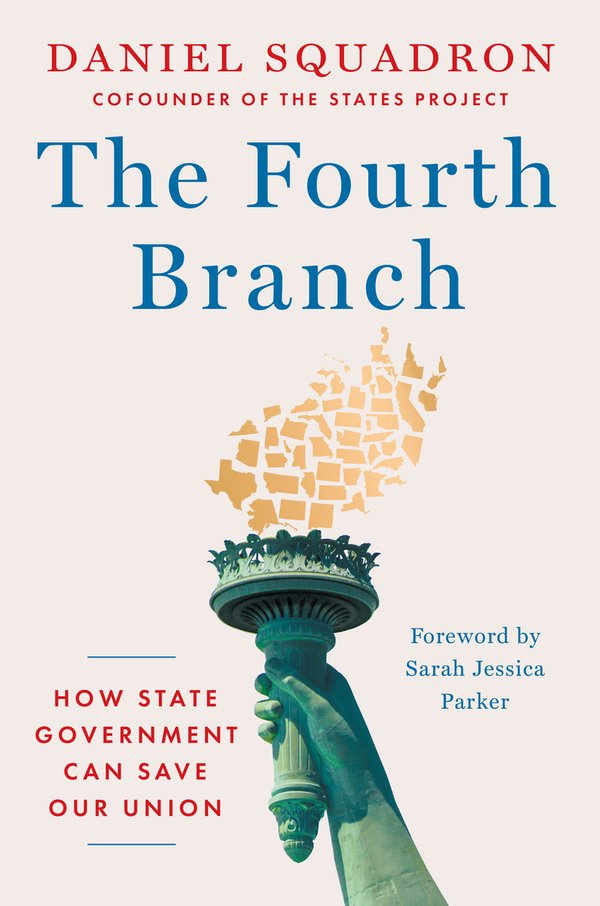
Daniel Squadron has spent years trying to get more people to pay attention to those races. A former New York state senator and co-founder of The States Project, he’s also the author of The Fourth Branch: How State Government Can Save Our Union. After this year’s history-making midterms, I asked for his take on what really changed — and what it could mean for the years ahead.
What is the States Project?
It's the largest national organization focused on both winning state legislative power and helping state lawmakers govern effectively to defend democracy, protect personal freedom, and expand economic opportunity.
I know from my experience in the New York State Senate that state legislatures are where the rightwing built its power in this country and where there’s the most potential for everyday people to build their own power to achieve our country’s founding ideals.
In my new book The Fourth Branch: How State Government Can Save Our Union, I talk about that history and how a few young adult authors took up my challenge to start the first Giving Circle in 2016 — right after Trump’s first election — and how that led me to resign my office to cofound The States Project with Adam Pritzker. Now more than 200 Giving Circles fuel our electoral work.
How do these Giving Circles work?
They’re groups of people who come together and pool their resources to target an overlooked and wildly powerful area of our democracy — state legislatures of course! A Giving Circle usually starts with book club leaders, school organizers, or someone who is just fed up with feeling powerless. They work with a close friend or two, and together engage their networks and communities to learn about the power of states, and what they can do about it.
The States Project gives these Giving Circles the tools and support they need to create their own strategic political group, with their own fundraising page and a list of strategically targeted states.
Giving Circles learn that flipping an entire chamber costs a fraction of a U.S. Senate race and is often won on the margins. It’s very common for a race to be decided by hundreds or even dozens of votes. We’ve seen multiple ties. So every living room, every backyard, every zoom call among individual Giving Circles could literally be the difference in an entire state.
How is that money spent?
Our evidence-based model helps ensure that state legislative campaigns are better funded and better run in every state where power is on the line. That means things like making sure there’s a staffer who knows how to help candidates in these overlooked races get local press so voters know them on election day, helping the candidates have enough time to go knock on doors personally, and making sure that the campaign message is authentic to the candidate. 100 percent of the amount that Giving Circles raise goes out the door to power this electoral program.
Not that many people pay attention to state legislatures, and the elections that choose who'll represent citizens at that level. Why are they so important?
Think of any issue that matters in the country: jobs, increasing costs, energy, healthcare, reproductive rights, early childhood and schools — even our democracy itself. On all of those issues and beyond, state legislatures have done more harm or good in the last fifteen years than Congress has.
With Trump still in the White House, a new Congress will do important oversight work, but it’s unlikely to get laws enacted to respond to people’s needs. Over that same time, states will pass literally thousands of laws.
What kind of successes did you see? Where were you really able to move the needle?
In 2026, we fueled five new trifectas — control of the Governor’s mansion and both chambers of the legislature — by winning legislative chambers in Arizona, Pennsylvania, Michigan, Minnesota, and Wisconsin. We protected another in Maine, and maintained both majorities in Nevada and Alaska to achieve a 6th and 7th trifecta with new Governors. We also helped flip the Georgia, Texas, and North Carolina Houses, and both chambers in New Hampshire to break four Republican trifectas.
We shattered every supermajority that matters for governing power across six more states: Iowa, Ohio, Indiana, Missouri, Kansas, and Nebraska.
Your Giving Circle chose Michigan, where we held the Senate and flipped the House, and Arizona, where we flipped both chambers after working there since 2018! So that’s where you and your people moved the needle, Katie.
What public policy do you think will change as a result of the work you’ve done?
Today, more than 15 years after it passed, the expansion of Medicaid so that more working families get access to healthcare has been blocked for nearly 100 million Americans. I hope that in Texas, Georgia, and Wisconsin they finally accept the money to expand Medicaid.
The last time Congress increased the minimum wage was around when the first iPhone was released. A number of the states that flipped will raise the minimum wage, so that a full time job gives people a better chance at a decent life.
Over the last decade, while some states have enacted paid family leave, others haven’t. After this year’s election, more states will enact paid family leave so that Americans will be able to care for a loved one without losing their job or being unable to pay rent or their mortgage.
It goes on! More affordable prescription drugs, cleaner and cheaper energy, reproductive healthcare, better customer service, less corruption, fairer voting laws. States can — and I believe now will — take them on.
How are you gearing up for 2028? Will you be active in the presidential race?
Before we get to our work in 2028, it’s important to note that state legislative victories this cycle have made it much more likely that the next presidential election will be fair and free. That’s because the tool that Donald Trump and his allies have used to try to undermine elections has been, you guessed it, states. His allies are no longer in control of any swing state in America; instead, those who are in charge are committed to a fair process that respects the will of the voters.
Beyond that, I believe that what happens — or doesn’t happen — in states over the next two years could be a model for what a Presidential candidate promises. The success of state governance will have the double benefit of improving lives and making the concrete case for a vision of delivering on our country’s foundational values to expand opportunity for all. Within our constitutional system, there’s nowhere else that will be able to build as powerful a case. You can learn more and get involved at statesproject.org.
