


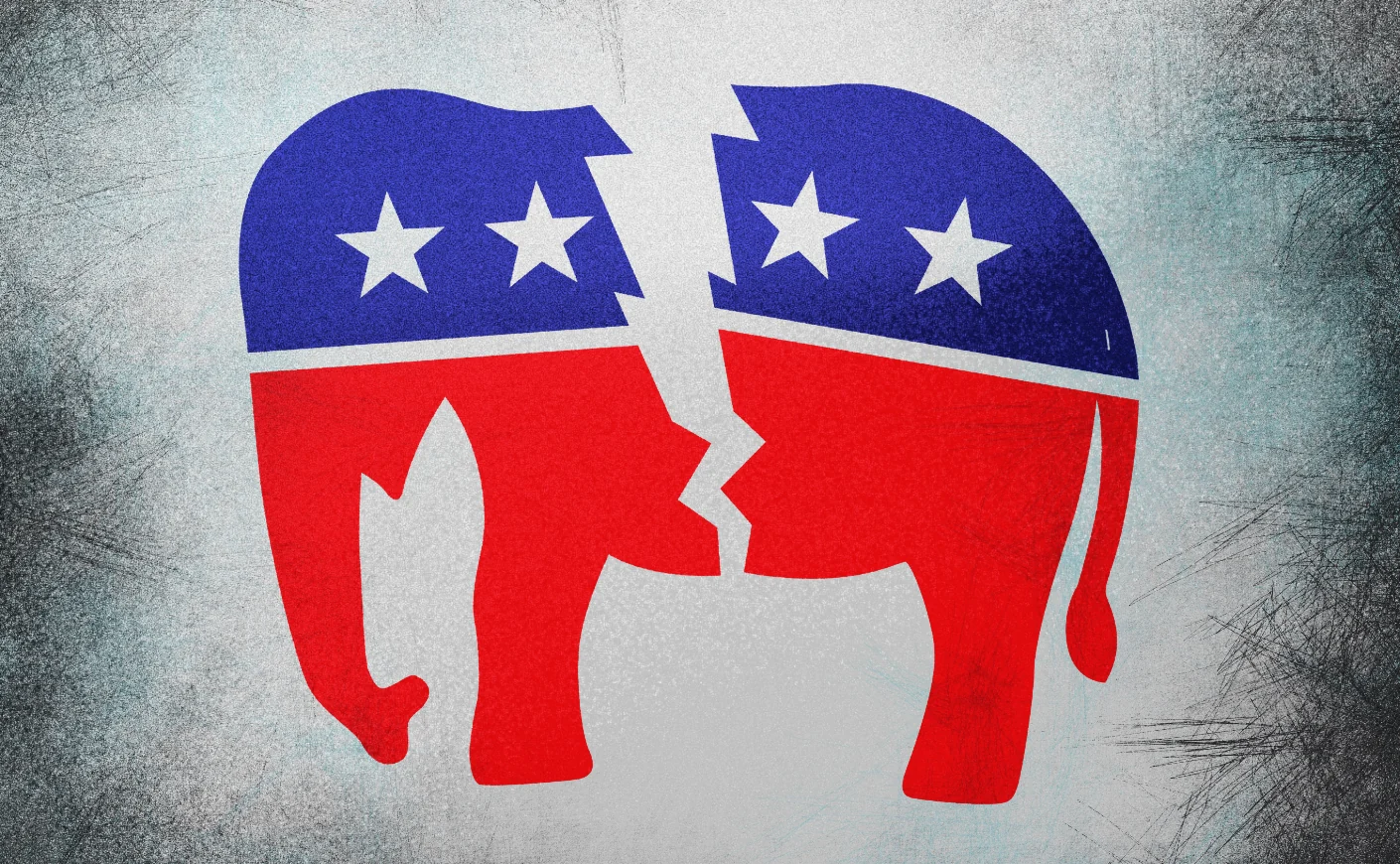
- Trump is weaker than two years ago but still holds decisive influence over the GOP, shaping primaries and candidates' prospects.
- Republicans face a shrunken, more conservative caucus and must convince swing voters on affordability and sensible immigration policies to regain ground.
- 2028 will force candidates to balance courting Trump loyalists with distancing from unpopular policies; outcomes hinge on the economy and foreign policy.
Republicans aren’t sugarcoating their midterm defeats. After the party lost control of both chambers of Congress, Texas Sen. Ted Cruz called the results a “Watergate-level repudiation,” while Florida Gov. Ron DeSantis described them as an “extinction-level event” for the GOP.
But facing failure won't be enough to turn things around. Republicans must be willing to change — and where they're flexible remains a question. Some may want to distance themselves from President Trump’s policies after the losses, but doing so could cost them valuable voters.
To understand what comes next for Republicans after the 2026 midterms, we spoke with GOP strategist Mike DuHaime and Boston College political science professor David Hopkins, Ph.D. They explain why Trump remains powerful despite the party's losses, what Republicans need to change to win back voters, and how the results could shape the 2028 presidential election.
How much power does Trump still have in the GOP?
Longtime conservative commentator Tucker Carlson called the midterms “the end of the Trump era.” So how much power did the president actually lose within his own party?
“He’s weaker compared to where he was two years ago, but he’s not weak in the context of Republican politics,” Hopkins tells us.
DuHaime agrees. Trump remains the party’s most powerful figure, he says, in part because Republicans who challenged him have lost their primaries. This year, Kentucky Rep. Thomas Massie and Louisiana Sen. Bill Cassidy both lost after Trump backed their challengers.

“Whether it’s fear or love or a combination, Trump has been able to have a real grip on the party,” DuHaime says. “And I think he still does.”
It’s too early to tell how much the midterms changed Trump’s standing in the party. But DuHaime is watching what Republican governors and members of Congress say as they gear up for reelection. If more of them openly break with Trump on issues like the Iran war, he says, that would be the clearest sign his grip is loosening.
What do Republicans need to change after the midterms?
DuHaime describes the GOP that emerged from the midterms as a “shrunken party.” Not a single Republican who has won a House race this year did so in a district Kamala Harris carried in 2024. That leaves the GOP on track to enter the next Congress with a smaller, more conservative House caucus.
Ohio Rep. Jim Jordan will lead House Republicans when they move into the minority in January, and South Dakota Sen. John Thune will stay in charge of Senate Republicans. Their challenge is to make the party’s case to voters in the swing and Democratic-leaning districts.
And affordability could be a good place to start: In a Reuters/Ipsos poll released on Election Day, 48 percent of voters named the cost of living as the top issue in deciding their vote. “Republicans had a hard time explaining to voters why they should be trusted on those issues,” DuHaime says.
He also believes Trump’s immigration crackdown went further than some of his supporters wanted.
“Strengthening the border or the promise to throw out criminals is not the same as saying, ‘OK, people are getting pulled out of their cars and shot,’” he says. “That’s not what people voted for.”
Hopkins points to another miscalculation. Republicans mistook Trump’s gains among Hispanic voters in 2024 for a lasting shift. Roughly 4 in 10 Hispanic voters backed Trump in 2024. In the midterms, about a third voted Republican for the House, while about 6 in 10 backed Democrats, according to AP polling.
“They got trapped into assuming that the world stopped the moment Trump got reelected,” Hopkins says.
DuHaime says Republicans can still run on parts of Trump’s agenda, including a provision in his 2025 tax law that lets eligible workers deduct up to $25,000 in qualifying tips from their federal taxable income each year through 2028. But the party needs to be willing to say where it would do things differently, including on policies it already questions behind closed doors.
What do the 2026 midterms mean for the 2028 elections?
DuHaime says the 2028 Republican primary will be a “high-wire act” for candidates who’ll need to win over Trump’s voters while spelling out which of his policies they’d keep and where they’d break with him.
Even a candidate with an independent streak can struggle to shake voters’ frustration with the party in power. DuHaime points to John McCain, who had a reputation for opposing George W. Bush but still lost in 2008 as voters turned against Republicans.
“He was still of the same party, and that is ultimately what mattered to voters,” he says.
For prospective candidates, there’s also the risk of Trump turning on them, which Hopkins calls a “true dilemma.” Trump’s unpopularity gives Republicans a reason to distance themselves from him, but he can still put their political futures at risk with a single social media post.
Hopkins says Vice President JD Vance has a plausible path as Trump’s heir apparent, particularly with the president’s support. But his ties to the administration could also leave him carrying its political baggage. Other ambitious Republicans may decide to wait until 2032.
Much will depend on the next two years: an improving economy or a resolution to the conflict in Iran could put Trump and his party in a stronger position. And both experts caution against assuming this election establishes a permanent Democratic advantage.
“We shouldn’t commit the same sin of assuming that this election is now the new normal,” Hopkins says.
