






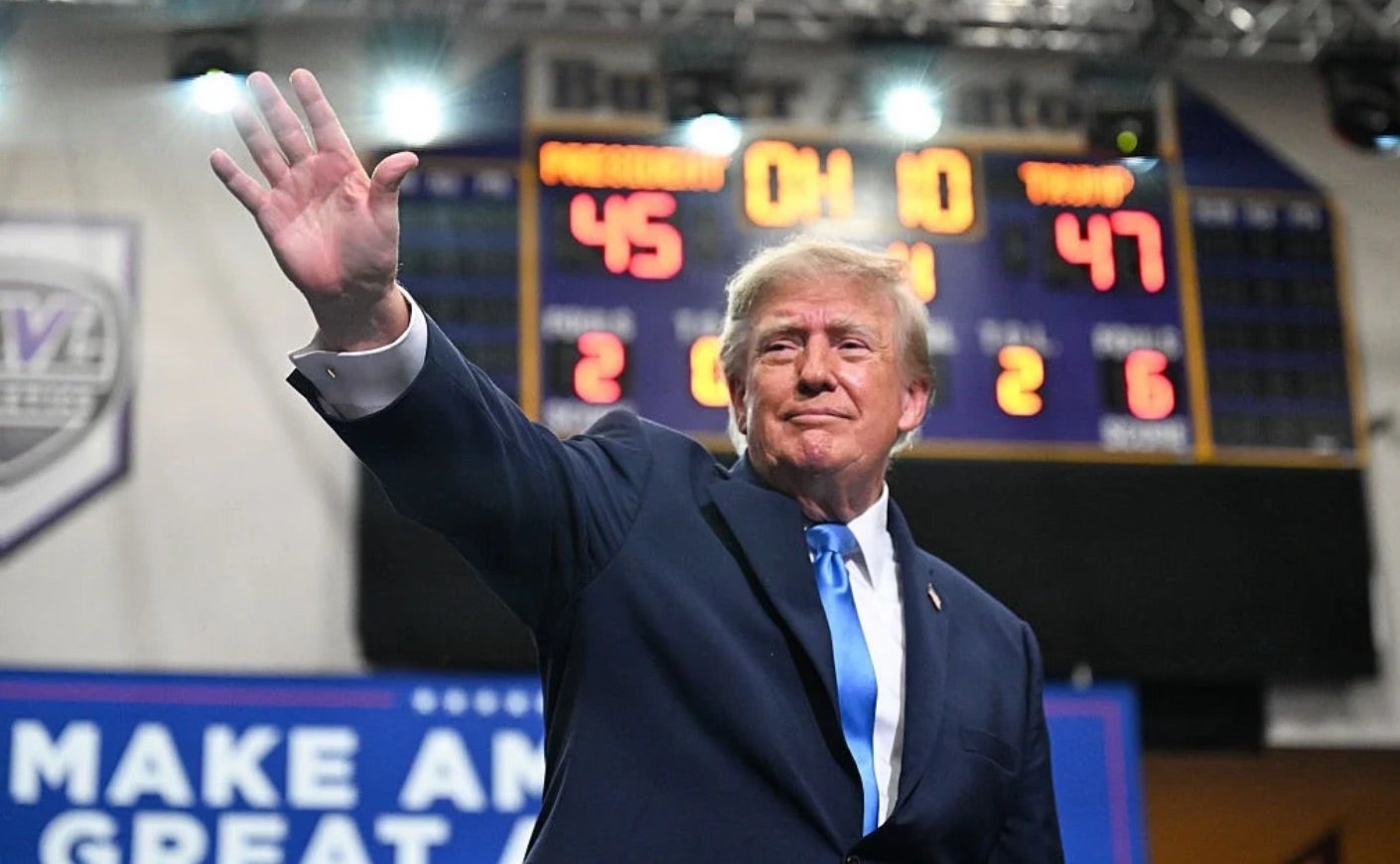
- Trump is campaigning across red states like Ohio, Texas, Oklahoma, and Alabama to shore up unexpectedly tight GOP races.
- New polls show Democrats competitive or leading in several reliably Republican states, creating possible paths to retake the Senate.
- The White House is promising payments: $90 Medicare checks, $500 ACA refunds, and a floated $5,000 "Trump dividend" to sway voters.
- Voter frustration over the economy, inflation, and the Iran war combined with low approval ratings is hurting GOP prospects.
President Trump is spending precious campaign time in places Republicans usually don't have to worry much about.
Over the weekend, the president stopped off in Ohio to rally support for Republicans facing unexpectedly tight races. The visit capped a three-day swing through red territory as the GOP scrambles to shore up support with just a month to go before the midterms.
Republicans have reason to be nervous. New polling from The New York Times/Siena University suggests Democrats are gaining ground in a string of states Trump won comfortably just two years ago, giving the party new potential paths to retake the Senate, where the GOP holds a narrow 53-47 majority.
Trump, meanwhile, is putting cash at the center of his closing pitch to voters. He’s promising a new round of payments for millions of Medicare recipients ahead of Election Day. The timing is hard to ignore: Voters remain frustrated by the cost of everyday necessities, while Trump continues to get weak marks for his handling of the economy and inflation.
So why is Trump spending the final stretch of the campaign defending Republican turf — and how worried should the GOP be? Here’s what to know.
Why is Trump campaigning in red states?
Ohio is perhaps the clearest example of why Trump is spending time in traditionally Republican territory. He won the state by roughly 11 points in 2024, but the Senate race there has become unexpectedly competitive.

Republican Sen. Jon Husted, who was appointed to replace Vice President JD Vance, is facing former Democratic Sen. Sherrod Brown, who represented the state for three terms before narrowly losing his seat in 2024. The latest numbers suggest Husted has a real fight on his hands: Decision Desk HQ currently gives Brown a 51 percent chance of winning and rates the race a toss-up. That’s turned what would normally be friendly territory for Trump into places where Republicans could use his help.
But Ohio isn’t the only red state getting Trump’s attention. During the three-day swing, the president also traveled to Texas, Oklahoma, and Alabama — all states he won by double digits in 2024. And the red-state swing isn’t over yet: Trump is headed to Nebraska on Monday.
So why spend valuable campaign time there? Trump told supporters at his Friday night rally in Alabama that he’s focusing on historically red states like Alabama and Oklahoma as a “sign of respect” ahead of November’s midterms.
But there may be another reason: Republicans are suddenly facing tighter-than-expected races in places they didn’t used to worry about. A New York Times/Siena University poll released Oct. 3 shows Democrats leading or running competitively in five reliably Republican states where they’re trying to flip Senate seats. These are Texas, Alaska, Ohio, Iowa, and Kansas, the latter of which hasn’t elected a Democratic senator since 1932.
So, what’s going on? The polls suggest Trump himself may be part of the problem. Voters are unhappy with his handling of the Iran war, while high gas prices and the cost of living remain major concerns. Trump’s own numbers aren’t helping, either. The New York Times’ polling average puts his approval rating at 36 percent, roughly in line with other polling averages. Among Latino voters, it’s even lower: A new NBC News/Telemundo poll puts his approval at just 27 percent.
Put it all together, and Democrats suddenly have several possible paths to the four-seat net gain they need to retake the Senate — a major shift from earlier in the cycle, when the map looked much more favorable to Republicans.
Trump is also promising voters more money
The White House announced Friday that more than 20 million eligible Medicare Part B enrollees will receive a one-time $90 payment this month to help cover the cost of their premiums.
Most eligible recipients will get the money through direct deposit, while others will receive a check in the mail. The roughly $2 billion needed for the payments will come from the Medicare Improvement Fund, which Congress created in 2008.
It’s not the first time Trump has promised voters a check ahead of November. His administration has also begun sending $500 Affordable Care Act refund checks to nearly 1 million people across 30 states. Those payments started going out this week, along with a letter touting Trump’s record.
Then there’s the biggest promise of them all: Trump has also floated a $5,000 “Trump dividend” for every American adult if Republicans keep control of Congress.
Democrats have accused Trump of using the payments as an election-year stunt and questioned whether the administration has the legal authority to tap government accounts to send money directly to Americans. Democratic Rep. Jamie Raskin even went so far as to call the promise a “political bribe.”
There’s another reason to be skeptical: Trump has floated big checks before — and not all of them have materialized. In early 2025, for example, he said his administration was considering giving Americans a share of the savings generated by DOGE, his controversial government cost-cutting initiative. The proposal could have amounted to roughly $5,000 per taxpayer household. But the effort has since been disbanded, and those checks never happened.
Whether the latest $5,000 proposal will fare differently remains to be seen. Trump hasn’t laid out a detailed plan for how it would be funded, and House Speaker Mike Johnson said the payments would require congressional approval. Sending out the checks could cost more than $1 trillion and fuel inflation. The move reportedly caught lawmakers in both parties by surprise and could complicate end-of-year negotiations, according to The Washington Post.
With Republicans fighting to hold onto Congress, Trump appears to be betting that a mix of direct payments and promises of more money could help turn things around.
