






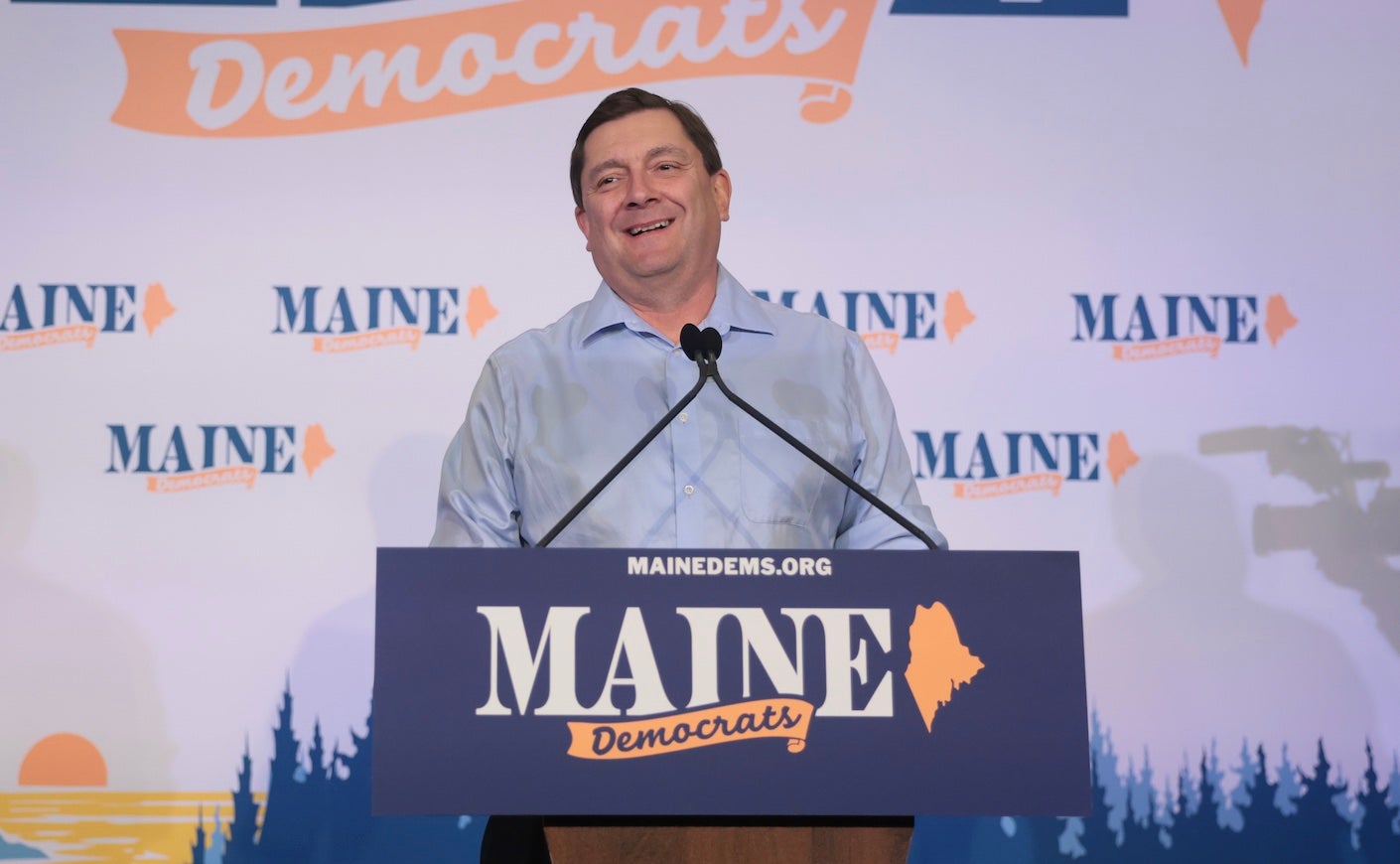
I wasn’t always right about abortion.
Early in my career, I opposed abortion rights. I grew up in small towns in the North Woods of Maine, and I came into politics carrying many of the beliefs I grew up around. But then I did something that we should expect more of our elected officials to do: I listened.
I listened to women in my life and women I represented. I listened to health care providers. I listened to colleagues in the legislature. And the more I listened, the clearer something became to me: abortion is health care. And the decision about whether and when to have a child belongs to a woman — not to me, and not to any man, judge, or politician sitting hundreds of miles away.
Being a leader doesn’t mean you’ve never been wrong. It means listening to the people you represent, having the humility to admit when you were wrong, and then using the power you have to do something about it.
So, I changed my mind.
I don’t say that with embarrassment. I say it because I believe there’s a lesson in it about what we should expect from people who hold public office.
Being a leader doesn’t mean you’ve never been wrong. It means listening to the people you represent, having the humility to admit when you were wrong, and then using the power you have to do something about it.
For more than a decade, I’ve tried to put those beliefs into action. I’ve earned a 100 percent rating from Planned Parenthood Maine Action Fund every year they’ve scored me, since at least 2017. I opposed efforts to force women to wait 48 hours before receiving abortion care, undergo unnecessary ultrasounds, and receive biased counseling designed to interfere with their decisions. I sponsored legislation requiring insurance plans to cover contraception without out-of-pocket costs, because no one should have to choose between paying the rent and getting birth control.
And when the Supreme Court overturned Roe v. Wade, we didn’t wait around to see what would happen next. As Senate President, I helped lead the fight to ensure Maine remained a place where reproductive freedom would be protected. I sponsored one of the strongest abortion protection laws in the country, which stripped away criminal penalties targeting abortion care and protected the ability of doctors to provide care based on their medical judgment — not the judgment of politicians.
That record is why I’m proud to have earned the support of Planned Parenthood and why Reproductive Freedom for All endorsed my campaign for the United States Senate on Aug. 26. Their support means a great deal to me, not because it erases where I started, but because it reflects what I’ve spent the last decade fighting for.
And that matters to me because there’s another lesson in what has happened to abortion rights in this country.
In 2018, Susan Collins faced one of the most consequential decisions of her career when Donald Trump nominated Brett Kavanaugh to the Supreme Court. Women across Maine warned her what was at stake. Reproductive rights organizations warned her. Mainers pleaded with her not to cast the vote that would help put abortion rights in jeopardy. She voted to confirm him anyway.
Four years later, Kavanaugh joined the Supreme Court majority that overturned Roe v. Wade. A constitutional right American women had relied on for nearly half a century disappeared.
The consequences weren't theoretical. Women in states across the country have been forced to travel hundreds of miles for care. Doctors have faced the prospect of criminal penalties for providing it. Women experiencing devastating pregnancy complications have had politicians and courts inserted into some of the most painful and personal moments of their lives.

Here in Maine, we chose a different path. When Roe fell, we got to work protecting the freedom that the Supreme Court had taken away. I was proud to be part of that fight.
But state-by-state protections aren't enough. A woman’s freedom shouldn’t depend on her ZIP code. And Mainers shouldn't have to wonder whether a future Congress or administration will come after the rights we have protected here.
That’s one of the reasons I’m running for the United States Senate.
Susan Collins was recently asked whether, knowing everything that happened after Kavanaugh's confirmation, she regrets her vote. She said she does not. [Editor’s note: Collins has said she does not regret her 2018 vote to confirm Brett Kavanaugh, but she has also said she disagrees with his vote in Dobbs overturning Roe v. Wade.]
I keep coming back to that answer. Because there's a profound difference between saying, “I was wrong, I listened, I learned, and I changed,” and looking at the consequences of a decision that helped strip millions of women of a fundamental freedom and saying you would not change a thing.
I know which kind of leader I want to be.
If Mainers send me to the Senate, I will fight to restore a federal right to abortion. I will defend access to contraception. And I will oppose efforts to let politicians interfere in medical decisions that belong to women, their families, and their doctors.
But this is about something bigger than any one election. We live in a country where admitting you were wrong is too often treated as weakness. The opposite is true.
I spent much of my life working in the Maine woods. One thing you learn doing that work is that stubbornness and strength aren't the same thing. When the facts in front of you change, when somebody knows something you don't, or when you realize you're headed in the wrong direction, you had better be willing to listen. Our politics could use a little more of that.
Women in Maine helped me understand what was at stake. I listened to them, I changed my mind, and I’ve spent the last decade fighting for their freedom. I intend to keep fighting for it in the United States Senate.
