






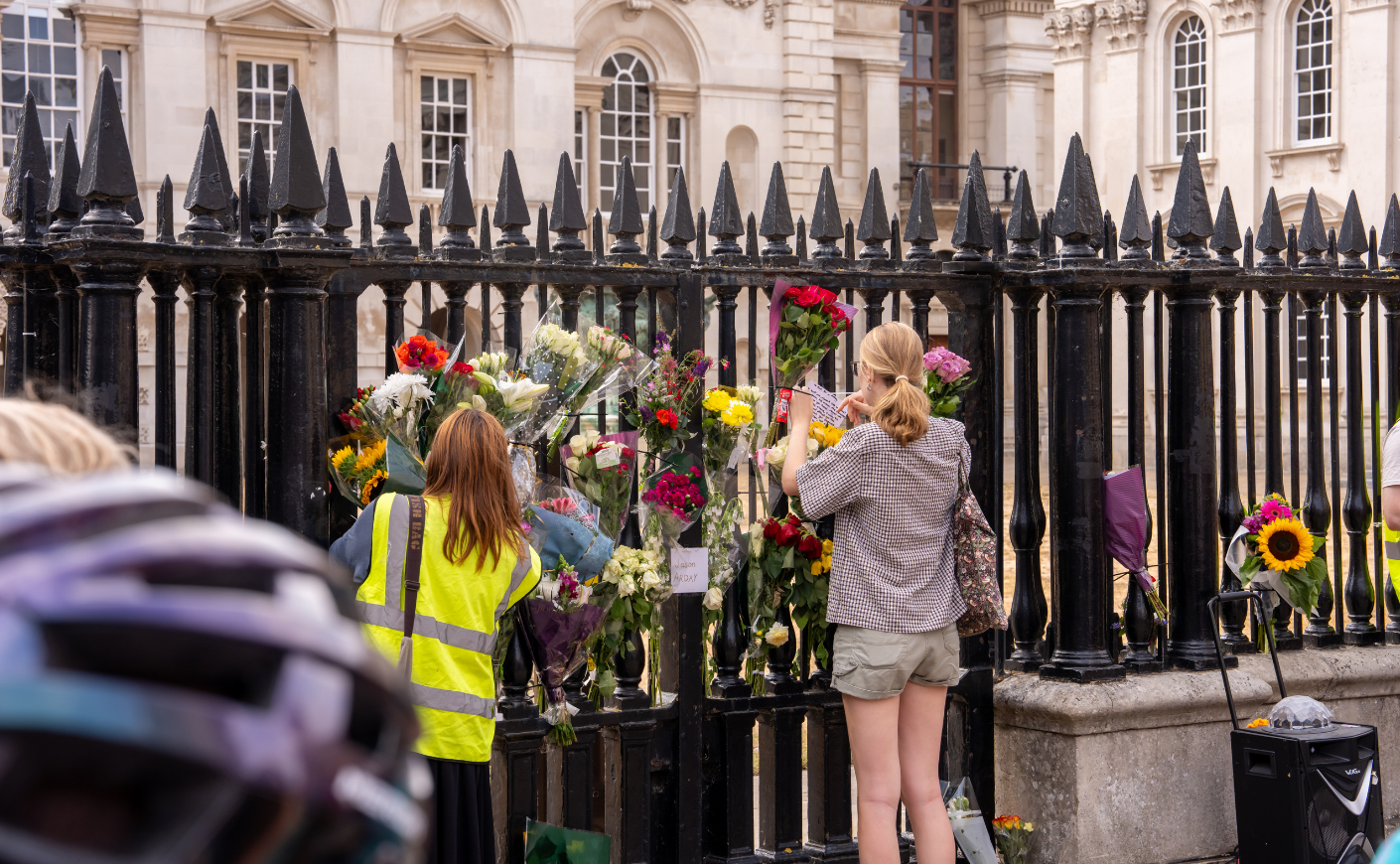
Days after resigning from Cambridge University amid a growing controversy around his academic qualifications, Jason Arday, Ph.D. — the youngest Black professor in the school's history — was found dead.
Dr. Arday, 41, resigned from his position as a professor of sociology of education last week after Cambridge announced it would investigate the scholar over accusations of plagiarism and other instances of academic misconduct. The latest round of scrutiny intensified after another scholar, whose writings on race and intelligence have been widely condemned as racist, published doubts about parts of Dr. Arday's remarkable rise, per the New York Times. In the weeks since, Dr. Arday found himself at the center of a very public debate around DEI, with some calling him a "poster boy for diversity" and others saying he's the victim of a "witch hunt."
"Jason was subjected to a campaign of sustained abuse," his family wrote in a statement after his death. "The campaign of misinformation was too much for Jason, who was a gentle man and who always wanted to see the best in everyone."
Here's a closer look at what happened, the media firestorm that resulted, and what it reveals about hiring practices at Cambridge and higher education at large.
Who was Dr. Jason Arday?
When Dr. Arday was hired by Cambridge in 2023, becoming the storied university's youngest Black professor at 37, he was immediately thrust into the spotlight — and for good reason. His story was nothing short of remarkable: Dr. Arday, the child of Ghanaian immigrants, had said that he was mute until 11, couldn't read until he was 18, but managed to earn his doctorate by 30. He had also claimed to have run 30 marathons in 35 days, and once said he ran 600 miles in six days for charity — which would've put him among the world's top ultra marathon runners.
Dr. Arday had detailed all of this in his memoir, Great and Unfortunate Things, which was published in the U.S. last week, days before his death. The book's release prompted fresh scrutiny of the scholar's life and work. This included a Substack post written by Nathan Cofnas, a researcher who was terminated from Emmanuel College (a constituent college of Cambridge) after publishing a blog in which he argued that in a meritocracy, the number of Black professors "would approach zero percent," the Times reports. In the newsletter, Cofnas accused Dr. Arday of plagiarizing several passages of his 2015 Ph.D. dissertation and cast doubt on parts of his life story.

Initially, Cambridge stood by the sociology professor, and an investigation by Liverpool John Moores University (which awarded Dr. Arday his Ph.D.) did not uphold the allegations of plagiarism, attributing the citation issues to “honest and reasonable error.”
But after receiving "new information," the university announced earlier this month that it had opened a fresh investigation into Dr. Arday's academic qualifications and honorary appointments. The probe had not yet concluded when Dr. Arday resigned soon after, writing in a statement: "I no longer wish to feel as though I am living under a constant spotlight, where every aspect of my life is subject to public examination and judgment."
He was found dead in his South London home on Aug. 14. Authorities have not released a cause of death, but said it's "being treated as unexpected" and is "not believed to be suspicious."
Cambridge comes under scrutiny
The tragic case has also put the spotlight on hiring practices within higher education, with many left questioning how officials at one of the most well-respected academic institutions could have failed to thoroughly vet a candidate put up for such a prestigious post.
The New York Times reported that Dr. Arday was "underqualified" based on the university's own hiring criteria, but that he was hired anyway during a time when Cambridge was under pressure to diversify. The Times also reports that his "supposedly remarkable trajectory from nonverbal preteen to Ph.D. had no precedent in medical literature," and "should have set off alarm bells" among the hiring committee.
Mathew Goodwin, a former professor at the University of Kent and a critic of DEI, told the Washington Post that this case should prompt a wider review of hiring practices among academia. Heidi Mirza — a former mentor of Dr. Arday's and an emeritus professor of education at University College London — said Cambridge's carelessness in its push to demonstrate its dedication to diversity left the sociologist exposed.
"He's a pawn," she told the New York Times, "whose ambition made him vulnerable."
A media "witch hunt"
In the weeks leading up to Dr. Arday's death, the media — particularly in the U.K. — breathlessly covered the controversy. Right-leaning publications and commentators seized on Dr. Arday's fall from grace as an example of what was wrong with diversity and inclusion efforts. Other outlets doggedly reported on the discrepancies in the scholar's resume and memoir, which critics have viewed as unfair considering how frequently academics are accused of plagiarism.
London Mayor Sadiq Khan said Dr. Arday faced "an unacceptable public hounding and campaign of abuse."
"Jason Arday was the victim of a pernicious public shaming that other people in his position simply wouldn't have faced," Khan said. "His death was a tragedy, but once again it should be a wake-up call for all of us."
More than 30,000 people have signed a petition demanding a public inquiry into the media coverage surrounding Dr. Arday. The letter states that "a significant element in the harassment was the color of his skin," and that despite warnings that the scholar was especially vulnerable given his autism, he endured "two weeks of relentless harassment" from the media.
U.K. Prime Minister Andy Burnham called Dr. Arday's death "a tragedy on so many levels" and called for "a moment of reflection... on how things came to this."
