If you love freshly baked bread but aren't jazzed about cultivating a sourdough starter or fussing over an impossible brioche recipe, Rebecca Eisenberg of The Practical Kitchen would like to introduce you to the easiest solution for a fragrant, homemade loaf: her overnight no-knead crusty bread.
"It doesn’t get more basic than this," Eisenberg writes in her cookbook Small-Batch Breads. "If you’re looking for a classic white crusty bread with a moderately open crumb, this is the recipe for you. Four ingredients, no kneading, and you can totally ignore it while the yeast gets to work overnight."
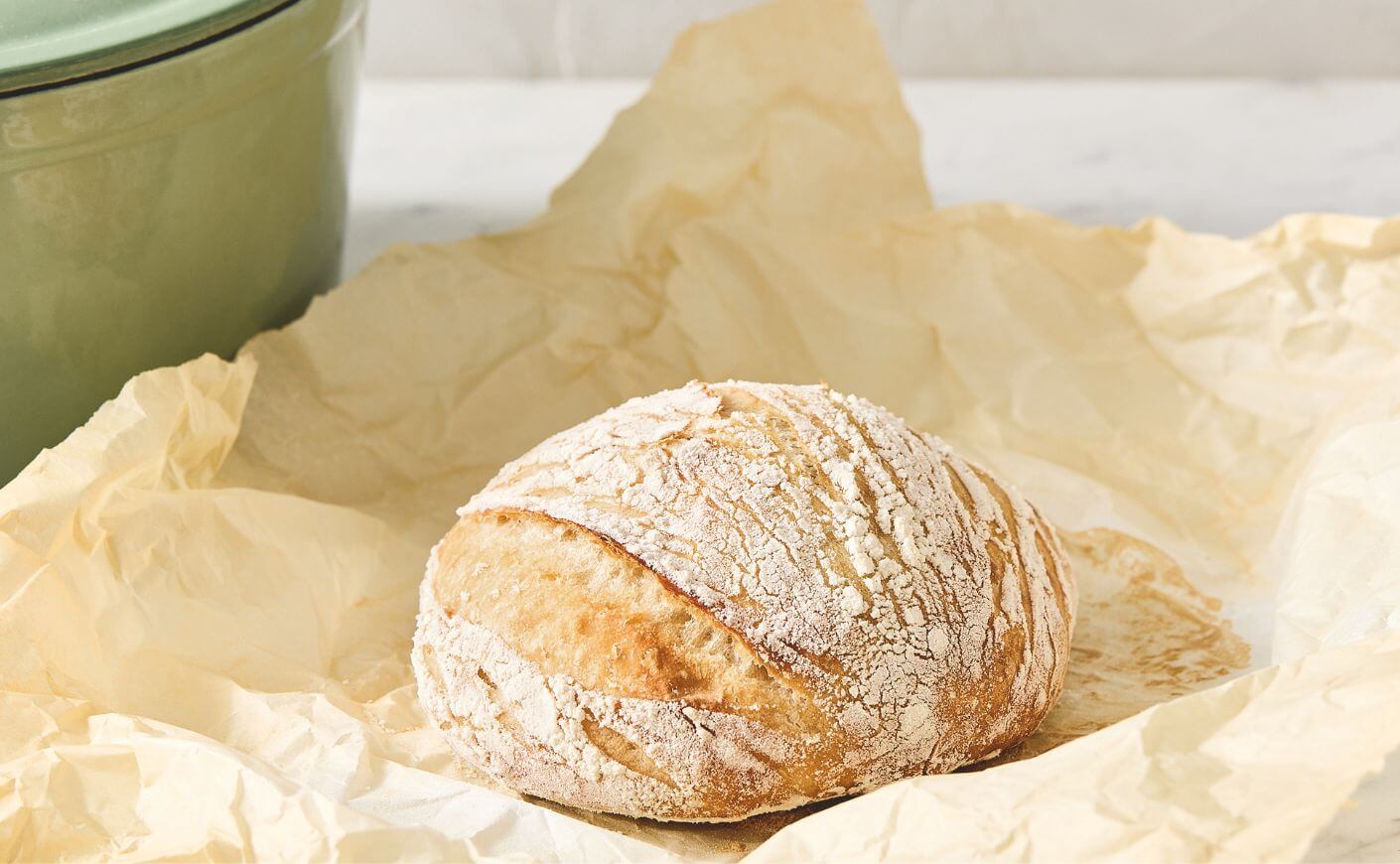
"This is the easiest, most hands-off method for developing your dough’s gluten network," Eisenberg continues. "It’s also the longest, as you’re relying on time to develop strength and structure in your dough. It’s almost like magic — you mix up a messy ball of dough at night, and the next day it’ll have a bubbly, flat top, ready to be shaped and baked. The final loaf bakes up about the size of a large grapefruit and is great for snacking, dipping, and dunking — it can even work as a bread bowl for soup." We recommend this cream of gouda and broccolini for optimal coziness.
Overnight No-Knead Crusty Bread
Author: Rebecca Eisenberg
Prep Time: 479 min
Cook Time: 28 min
Calories: 115 calories per serving
Servings: 4 servings
Ingredients
- 1 cup (120g) all-purpose flour, + more for dusting
- 1 teaspoon (3g) Diamond Crystal kosher salt
- Heaping 1⁄4 teaspoon (1g) instant yeast
- ⅓ cup + 4 teaspoons (100g) cool water (70°F)
Directions
- Mix and rest. In a medium bowl, whisk together the dry ingredients. Add the water and use a dough whisk or a fork to mix until a sticky dough forms. Gather the dough in a messy ball in the bowl. Cover the bowl and let the dough rest at room temperature for 8 to 12 hours (overnight) OR in the refrigerator for at least 24 hours or up to 5 days. Perfectly proofed no-knead dough will have a bubbly top that is flat or slightly domed and stretches across the entire bowl.
- Preheat. When you’re ready to bake, preheat the oven to 450°F with a covered Dutch oven inside for at least 30 minutes. Crumple a sheet of parchment paper, flatten it out, and set it aside nearby.
- Shape. While the Dutch oven preheats, generously flour a clean surface. Release the dough from the sides of the bowl and turn it onto the floured surface. Dust the top lightly with flour, just enough so your hands don’t stick. Shape the dough into a ball.
- Second rest. Use a bench scraper to help lift the ball of dough onto the parchment paper. Dust the surface of the dough lightly with flour, cover it with a clean kitchen towel or invert the bowl over it, and let it rest until the Dutch oven finishes preheating, 20 to 30 minutes.
- Score. Immediately before baking, score the top of the loaf with one deep slash and any decorative slashes you desire. If the dough seems too sticky to score, refrigerate it, uncovered, on a sheet pan for 15 to 20 minutes before scoring—the gluten will tighten up in the cold.
- Bake. Carefully remove the Dutch oven from the oven. Gather the corners of the parchment paper together, pick up the loaf, and place it inside the Dutch oven. Put the lid back on and bake, covered, for 20 minutes (don’t peek!). Remove the lid and bake, uncovered, until browned on top, about 10 minutes. Transfer the loaf to a wire rack and let it cool completely before slicing.
Reprinted with permission from Small-Batch Breads by Rebecca Eisenberg, copyright © 2026. Published by Ten Speed Press, a division of Penguin Random House, LLC. Photographs copyright © 2026 by Linda Campos.