






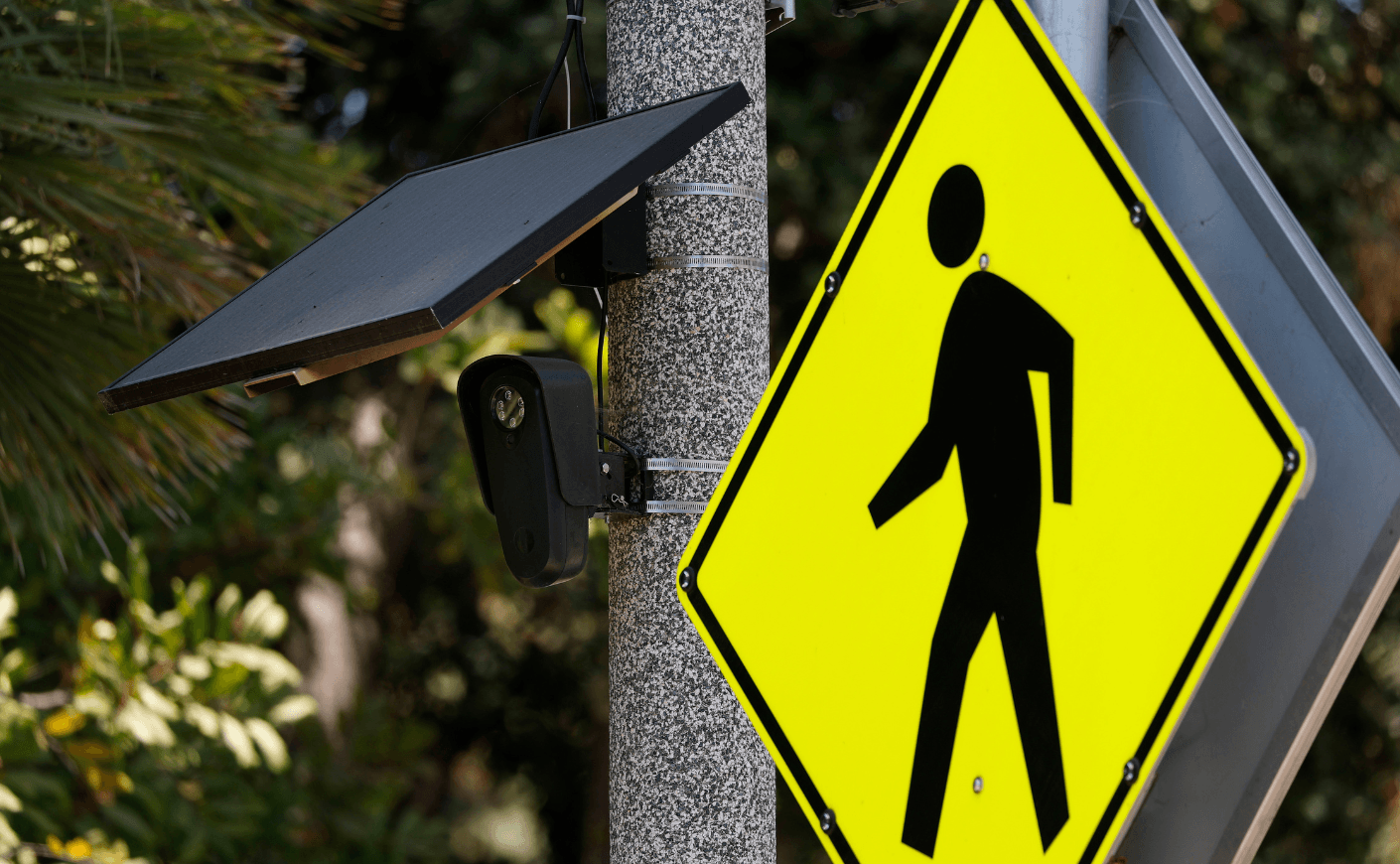
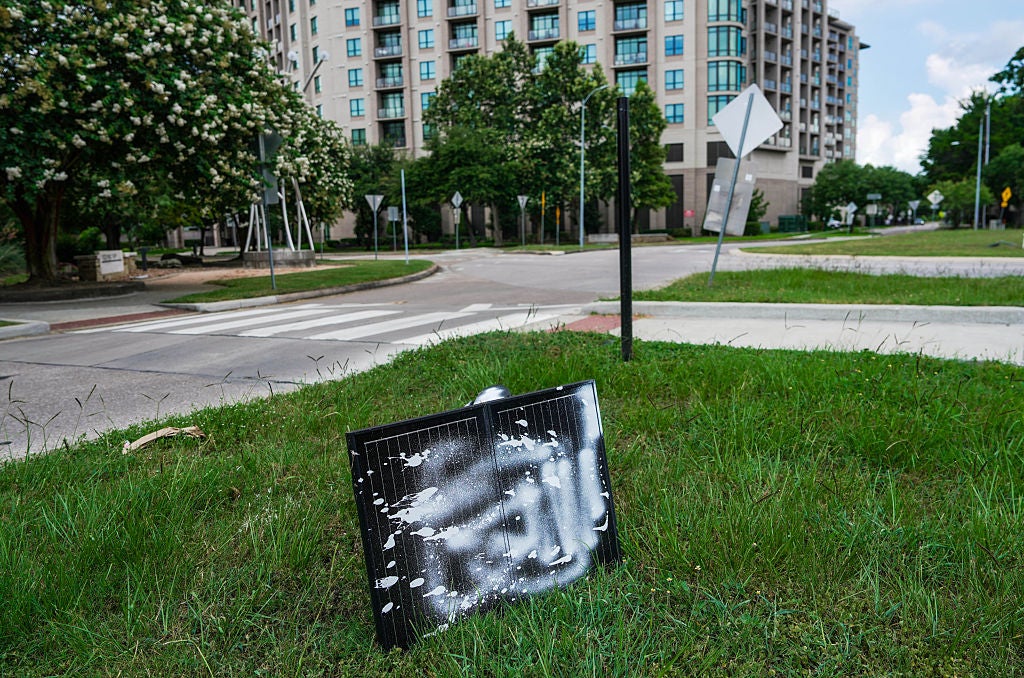
You might've seen recent headlines about the use (and proliferation) of Flock license-plate-reading cameras, at least 100,000 of which are installed in public places across 49 states. These surveillance cameras are intended to catch and prevent criminal activity by recording vehicle data, but privacy concerns are leading to activists nationwide destroying and disabling the devices. Their worries may be warranted: There are numerous cases of the data from these cameras being inaccurate, misleading, and used for nefarious purposes — even by police officers themselves. (There's evidence that Flock data was used in 2025 to conduct an "abortion investigation" by deputies on a woman in Texas.)
To understand what's at stake — and how concerned you should be about how your information could be shared — we reached out to Woodrow Hartzog, a law professor at Boston University who's an expert on the intersection of privacy and technology. He explained why a network of cameras like these could make a violating Americans' personal freedoms "very easy and very possible."
What makes these Flock cameras different from the security cameras that we've all gotten used to seeing at the bank, or on the side of a building downtown?
Woodrow Hartzog: So technically speaking, the Flock cameras aren't that different from the CCTV cameras that exist everywhere. Of course, Flock does have new facets, mainly artificial intelligence and machine-learning capabilities. The Flock cameras also lower the cost of following and finding people, and tracking them over time.
The fear behind this network of Flock cameras is that they then could start to interact with each other. And the disparate ways in which we're watched, which might be completely innocuous by themselves, could get combined and centralized in ways that expose much more. Then it's not, "Well, I know that Woody walked into the CVS at 12:10 and then he walked out at 12:20 — and after that, who knows?" Instead, it's, "Woody walked out of his house at 9:00 AM, and then these are the 12 places he went that day, and this is how fast he drove. These are the times that he left the state, and here's who was with him."
We don't think about the ways in which everything that we do, if someone were following us and monitoring our behavior, would reveal all sorts of information about us. But with enough Flock cameras, you can be followed everywhere you drive and walk. And that creates a surveillance super-structure that provides a level of monitoring — and therefore a level of oppression and a risk for abuse — that we just haven't seen before.
And what becomes possible when all of that information is gathered alongside other data?
The fear is that governments get this information from these cameras, and can combine it with all other sorts of information that they have on us. For example, there are many states seeking to surveil people and punish them for leaving the state to receive abortion care from different states. This camera network makes that sort of surveillance very easy and very possible. It's just turnkey monitoring for any government that wants to keep people under its thumb. And in the current environment, that's really scary.
There was a story in the Washington Post about approximately 50 police officers who were accused of using Flock information to stalk people for personal reasons. An LAPD audit revealed that 32% of the stolen-vehicle identifications that Flock made were false positives. And we've seen it discussed as a possible way of tracking immigration violations or abortions. Is that kind of "mission creep" inevitable once we have a surveillance system like this?
Yes, there are various worries when you're building out surveillance systems, one of which is the concept of probabilistic surveillance systems — in other words, systems that say, "I'm pretty sure this is Woodrow Hartzog or his car." Because there are error rates that we have to worry about. You also worry about abuse of these systems, for example, for harassment or stalking or just idle curiosity of people to pry into the lives of others.
And then finally, there's a worry about the normalization of surveillance. CCTV cameras are a good example: People used to be really concerned about those cameras being put into every building. But we stopped talking about them because we've become fully acclimated to them. There's a psychological phenomenon known as “favorably disposed normalization.” That means we internalize a behavior and rationalize, Oh, well, it must be good if everyone else is doing it. So the real danger is that surveillance creeps in without any meaningful social pushback, because it happens so slowly and incrementally.
All of these stories about governments using Flock cameras in ways that weren't anticipated — for stalking, harassment, or just idle curiosity — that's a byproduct of building a surveillance system. And I think that rightfully scares people. Surveillance only goes in one direction without meaningful legal intervention, and that's "more."
Some people argue that Flock cameras are valuable because they've helped find missing people and recover stolen vehicles. Is there a version of this technology that you'd find permissible?
To me, the question is, "What are the laws that we need to establish that don't allow for surveillance creep over time?" And I do think that there's a world in which those laws can exist. Because, of course, there are important reasons why you need to be able to collect information about people's activities — in order to gather evidence to demonstrate that people committed a crime, or to ensure public safety.
So I don't mean to say that all surveillance is always bad — rather, that all surveillance is very tempting for those in power. Because law enforcement will always say they want more information, no matter what. If magically a technology were invented overnight that allowed governments to read everyone's minds, you would see the exact same argument: "Well, this is going to help us catch the bad guys. Why would you not want us to read your minds if you've got nothing to be ashamed of?" But once parts of our lives become subject to surveillance, history shows us that it's incredibly difficult to claw our privacy back, even if we've realized that we've made a mistake.
I recently watched the Lord of the Rings trilogy with my son. And spoiler alert for anyone who hasn't seen it, but one of the characters has a "seeing stone" with which he can observe anyone, anywhere. The underlying lesson is that when you're given the power to observe, it becomes very difficult to resist.
Also, in The Lord of the Rings, that seeing stone is called the Palantir. So think about a company that named itself after the tool that bends people's souls toward malice, because of the corrupting nature of surveillance. Maybe they didn't read the whole book.
Which rules would be most important to create in an ideal system, do you think?
Some of them are around when the technology can be used at all. So for example, you might say that you cannot search any database for someone's identity or their geolocation without a warrant. That provides the right amount of friction to make sure that that surveillance is justified and proportional to a demonstrated need.
Or you could have set deletion times so that we ensure that information isn't just stockpiled over years, but regularly deleted once it's become clear that there's been no incident related to it. In other words, "you never know" isn't a good enough reason to store data indefinitely. You'd also want to make transparent who is doing the searching and who's doing the watching, and that the watchers are held accountable. That's important in making sure that the government isn't abusing the tech.
How do you think the outrage over the Flock cameras will come into play, in terms of their use in the future?
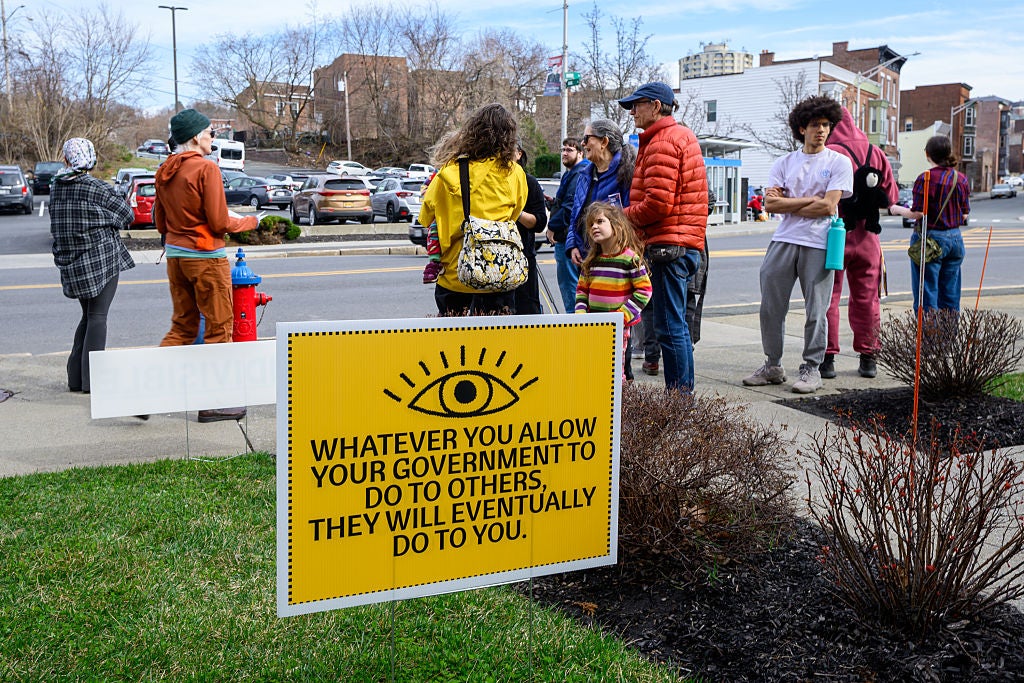
The protests and public outcry against Flock that we're seeing are so important, because not only do they provide the necessary accountability for these systems, but they're also an indication to everyone else watching that these sorts of tools aren't consistent with what we view to be socially acceptable or democratically feasible. We're supposed to push back when governments and industry and other people go too far. Then we have a consistent recalibration on society's terms, not just based on what the powerful want.
