



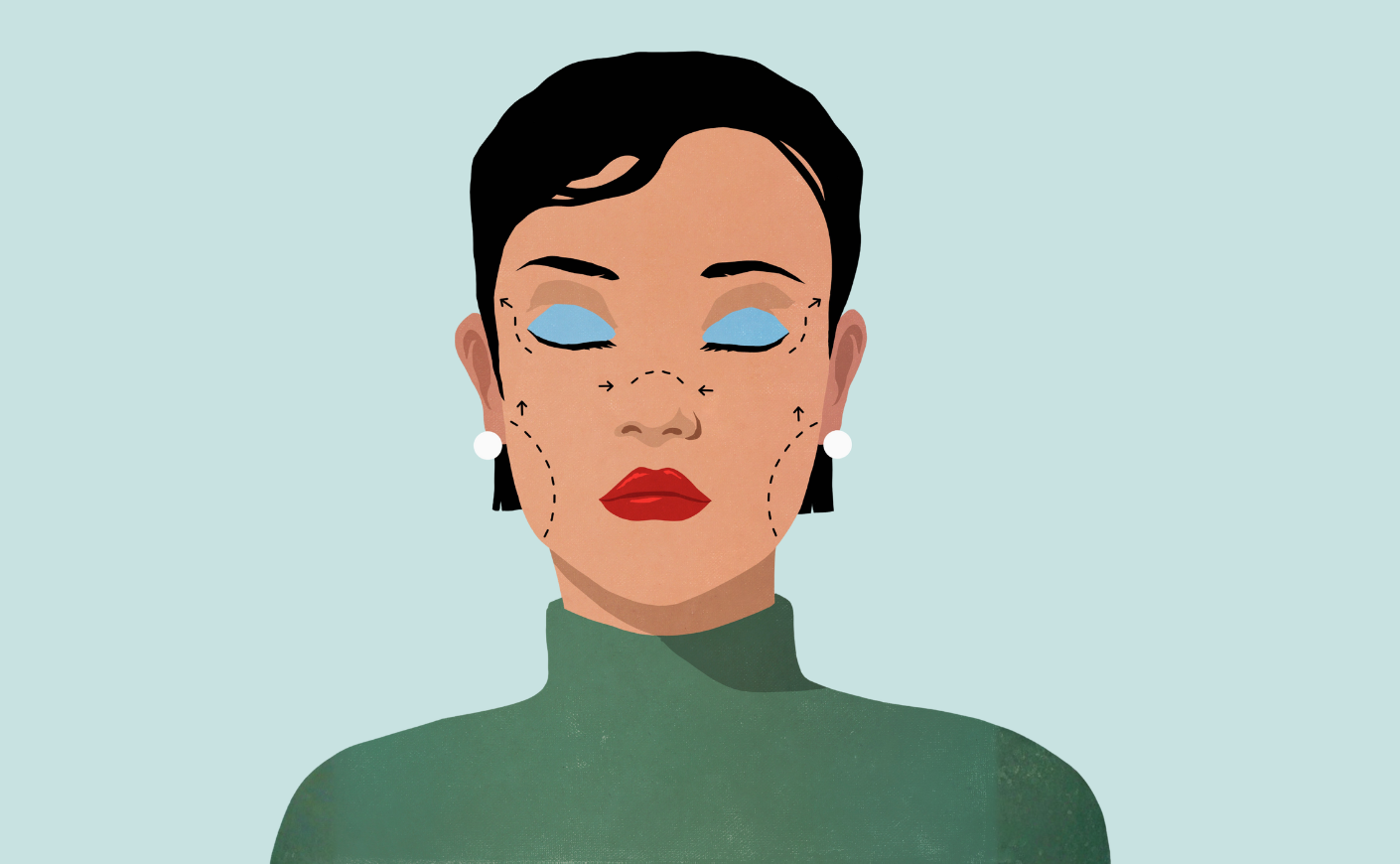
Facelifts used to be a hush-hush procedure celebrities would stealthily undergo when they hit 70 — and then vehemently deny. But much like other plastic surgery treatments, stars are getting them younger and talking about them more openly than ever. And as with any beauty trend embraced by public figures, it's catching on.
Pop star Sia got a facelift at 47 and described the results as “amazing,” and Denise Richards opened up to Allure about recently getting one at 54. "I talked to some other actresses who had their faces done, and I was shocked that they did. I always thought it was something you do when you’re older — not our age.” The actress and former Real Housewives of Beverly Hills cast member was initially hesitant to share her plastic surgery journey, but ultimately decided, “it's good to be open and honest… It's not just serums. It's not just eating right and working out and doing all these lasers and stuff like that.”
As public figures have become more candid about their procedures, there has also been a rise in non-public figures getting facelifts at a younger age than before. The American Society of Plastic Surgeons reports that an increasing number of patients in their 30s are considering the procedure. A 2024 report from the American Academy of Facial Plastic and Reconstructive Surgery that 32 percent of facelift patients were between the ages of 35 and 55, up from 26 percent in years past. Two-thirds of plastic surgeons surveyed agreed that the average age of facelift patients is trending younger.
There are many potential factors driving this trend. Social media fuels a preoccupation with our faces and looking as young as possible. Remote work enables more people to undergo surgery without worrying about taking medical leave or showing face at the office during recovery. Technology improvements mean procedures aren’t as invasive. And, yes, celebrities celebrating their results can also influence others to follow in their footsteps. To better understand this cultural moment and its risks, we chatted with Mark R. Murphy, MD, founder of Palm Beach Facial Plastic Surgery.
Katie Couric Media: What's the average age of a patient getting a facelift these days? Have you been seeing it trend younger?
Dr. Mark Murphy: Yes, absolutely — we've seen a noticeable shift toward younger patients. While facelifts were once associated with patients in their 60s or older, that's no longer the reality.
We're seeing two younger groups in particular. The first is patients who were never genetically blessed with a sharp jawline or defined neck. They've always felt their lower face looked softer or fuller than they'd like, and they're looking to achieve a contour they've never naturally had.
The second group is millennials entering their late 30s and early 40s who are starting to experience the first "joys" of aging — loss of jawline definition, early sagging, and subtle volume changes. Rather than waiting until those changes become significant, they're choosing to intervene earlier when the tissues are healthier, and the results can be incredibly natural. Today's facelift isn't about looking different — it's about preserving your best features and aging on your own terms.
What's the sudden motivation that wasn't there years ago?
I'd say there are a few reasons driving this trend. First, patients in their 40s are taking a much more proactive approach to aging rather than a reactive one. Instead of waiting until facial aging becomes dramatic, they're choosing to address subtle changes — like early skin laxity, loss of jawline definition, or volume shifts — while they still look like themselves. For these people, the goal isn't to look like a different person; it's to stay ahead of the aging process and maintain a refreshed, natural appearance.
The second reason is that facial rejuvenation has evolved beyond simply treating the effects of aging. Many younger patients are seeking a more sculpted jawline or refined neck contour because of genetics, not age. It's really no different than why someone chooses rhinoplasty — to enhance a feature they were born with and create better facial balance and harmony. But rather than relying on temporary treatments, they're choosing a surgical solution that provides a more natural, structural, and longer-lasting result.
What makes today’s facelifts different?
Today's procedures are designed to restore natural facial structure — not create an overdone or "pulled" appearance. We've also made tremendous advances in recovery by incorporating skin preservation techniques that minimize trauma to the tissue, resulting in less bruising, less swelling, and a much smoother recovery than many people expect. As the results have become more natural and the downtime has improved, patients are increasingly viewing facial rejuvenation as a personalized investment in themselves rather than a procedure reserved for a certain age.
Can you explain why some people say facelifts are preventative?
I refer to it as early intervention rather than prevention. Having a facelift in your 40s or 50s often allows for better healing and more refined results because we're working with healthier skin that has greater elasticity [than when having the procedure in your 60s or beyond]. The recovery can also be more manageable.
What makes a "good" facelift?
So much of it comes down to the details. Incision placement is critical — well-hidden incisions along natural creases and the hairline keep scarring discreet and make the work far less detectable. Advanced techniques matter too. Skin pulled too tight reads as artificial, while properly supporting the underlying tissue restores definition without that telltale "done" look. The goal is always something natural, balanced, and appropriate for the individual.