






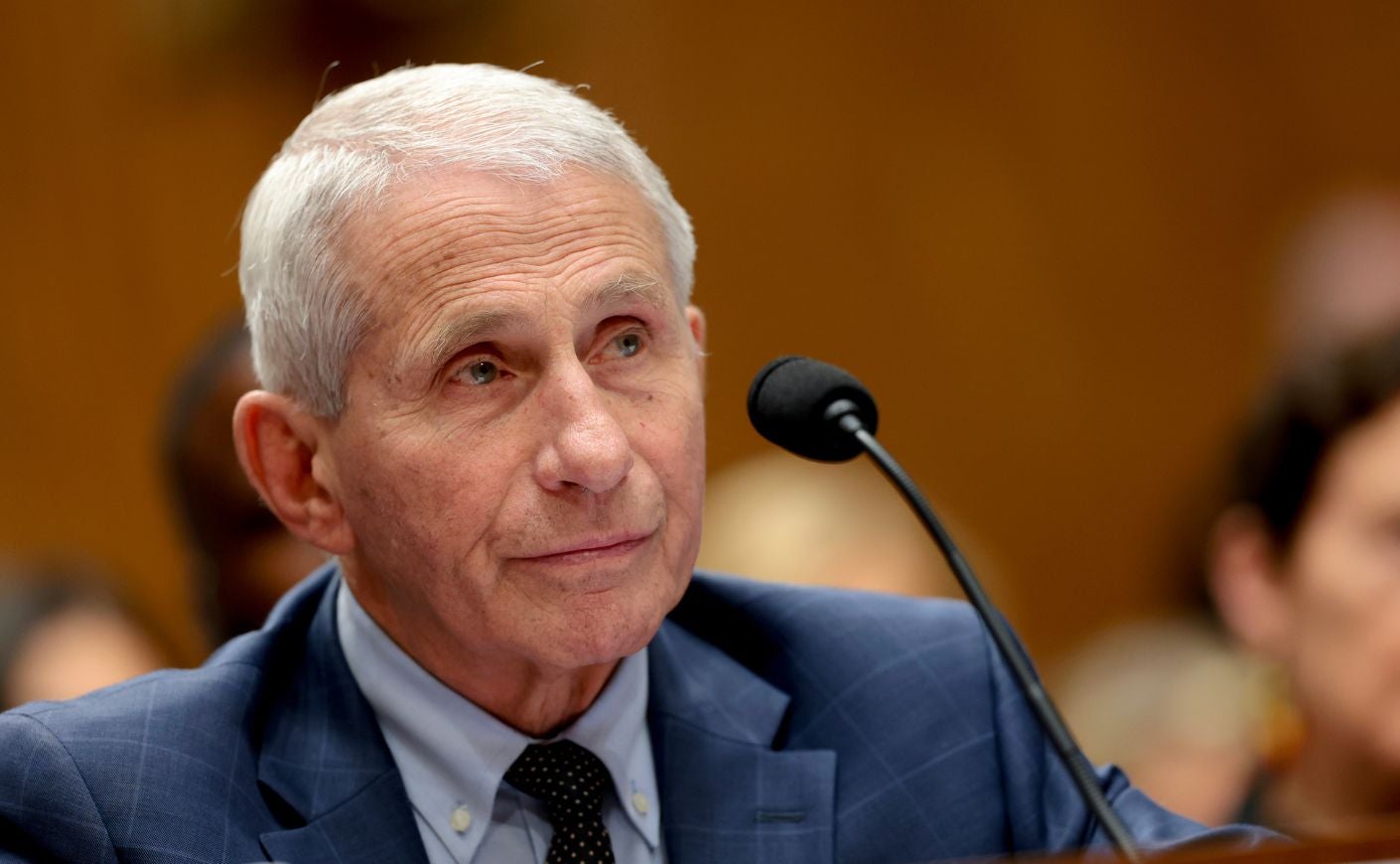
- Dr. Fauci repeatedly invoked the Fifth Amendment over 100 times, saying he feared the hearing was building a criminal case against him.
- The hearing stemmed from a yearslong feud with Sen. Rand Paul over alleged Wuhan research funding and accusations Dr. Fauci misled Congress.
- Paul released over 1,000 pages of Fauci's journals, citing candid Trump critiques and early virus origin notes Republicans used in questioning.
- A presidential pardon did not eliminate all legal risk, so lawyers advised silence; committee may seek contempt citations and investigations continue.
Dr. Anthony Fauci returned to Capitol Hill Wednesday for one of the most closely watched hearings since ending his over five-decade career. But instead of answering senators' questions, the former top infectious disease official repeatedly invoked his Fifth Amendment right, saying he believed the hearing was designed to build a criminal case against him.
So why is this happening now? While the worst of the Covid-19 pandemic may be over, the political battles surrounding it never really ended. Wednesday's hearing was just the latest chapter in Dr. Fauci's long-running clash with GOP Sen. Rand Paul, who has spent years accusing the former health official of misleading Congress about U.S.-funded coronavirus research in Wuhan, China — allegations Dr. Fauci has consistently denied.
The proceedings also underscored how dramatically Dr. Fauci's standing with many Republicans has shifted since he led the National Institute of Allergy and Infectious Diseases during the pandemic. As you might recall, President Trump awarded him a Presidential Commendation for his work on Operation Warp Speed in January 2021. But in the years since, he has become a frequent target of congressional investigations into the federal government's pandemic response.
The showdown came just days after Paul publicly released more than 1,000 pages of Dr. Fauci's pandemic-era journals, which Republicans repeatedly cited. Here's a closer look at what Dr. Fauci said (and didn't say) during the questioning.
What happened at Dr. Fauci's hearing?
After accusing committee Chairman Rand Paul of having an "unhinged obsession" with him in prepared remarks, Dr. Fauci announced he would plead the Fifth on the advice of his lawyers. By the end of the hearing, he had done so over 100 times, according to NBC News.
Dr. Anthony Fauci, the government scientist who became the face of the U.S. response to the Covid-19 pandemic, accused Sen. Rand Paul of having an "unhinged obsession" with him at a Senate committee hearing.
Senate Homeland Security Committee Chairman Paul (R., Ky.) issued a… pic.twitter.com/t1xly532Qm— The Wall Street Journal (@WSJ) July 29, 2026
Much of the questioning centered on the same disputes that have defined Paul and Dr. Fauci's ongoing feud, including allegations that the former health official helped conceal the possibility of a lab leak in Wuhan and misled Congress about government-funded coronavirus research there. Republicans also repeatedly pointed to entries from his recently released pandemic-era journals, arguing they raised new questions about the government's Covid-19 response and his decision-making. But again and again, Dr. Fauci declined to answer.
The repeated refrain seemed to frustrate Republicans. GOP Sen. Josh Hawley called Dr. Fauci a "megalomaniac" and "a liar," while Paul warned there would be "repercussions" if he continued refusing to answer questions.
The confrontation soon extended beyond Dr. Fauci's testimony. At one point, Paul ordered Capitol Police to remove one of his attorneys, David Schertler, after the lawyer repeatedly attempted to speak on his client's behalf without being recognized by the committee.
"Another word, and you're gone," Paul warned before directing officers to escort Schertler out.
The dramatic exchange prompted Democratic members to walk out in protest, accusing Republicans of turning the proceedings into a political spectacle rather than a legitimate oversight hearing.
What was in Dr. Fauci's pandemic-era journals?
The journals themselves became a major focus of Wednesday's proceedings. Last year, Paul subpoenaed 14 federal agencies, including the National Institutes of Health, as part of his investigation. Health and Human Services Secretary Robert F. Kennedy Jr. said Monday that his department spent months locating the records across 11 government servers before turning them over to the committee.
The collection includes more than 1,000 pages of near-daily entries from the pandemic's most critical months, offering a behind-the-scenes look at how Dr. Fauci navigated the nation's Covid-19 response under both the Trump and Biden administrations. Kennedy has argued the documents reveal a "striking contrast" between Dr. Fauci's public statements and private reflections, a characterization the former health official has not publicly addressed.
But they do reveal some of Dr. Fauci's early thinking about the virus itself. In a January 2020 note, he suggested Wuhan's seafood market may have acted as an "amplifier" of the outbreak rather than its original source. At the same time, he wrote that he believed the virus most likely spread naturally from animals to humans.
But the entries weren't limited to scientific observations. He described Trump at various points as "rambling," "out of control," and a "total embarrassment." The documents also reflect on the intense attention Dr. Fauci received during the pandemic, with him writing that his national and international fame had become "explosive."
Why did Dr. Fauci plead the Fifth?
Dr. Fauci argued that answering lawmakers' questions could expose him to future legal jeopardy.
His legal team said Sen. Paul had become fixated on Dr. Fauci after the pair's high-profile clashes during the pandemic, including a heated 2021 exchange in which the two accused each other of lying. Schertler argued the hearing was intended not to conduct oversight but to punish the 85-year-old and see him imprisoned.
"The accusations that Chairman Paul continues to propagate are false and disgraceful, and we will examine all options to hold him accountable," Schertler said in a statement shared with news outlets.
Some readers may wonder why Dr. Fauci invoked the Fifth after receiving a preemptive presidential pardon. In the final hours of his presidency, President Biden granted Dr. Fauci a pardon covering potential federal offenses committed before Jan. 20, 2025, saying he wanted to protect him from what he viewed as politically motivated prosecution.
But the pardon had limits. It did not prevent Congress from investigating Dr. Fauci, subpoenaing him, or requiring him to testify under oath. And according to his lawyers, it did not eliminate all potential legal risks associated with answering lawmakers' questions, which is why they advised him to repeatedly invoke his Fifth Amendment right against self-incrimination.
Legal experts say that approach was not unusual. The Fifth Amendment protects people from being compelled to provide testimony that could incriminate them in a criminal case. Attorneys often advise witnesses to invoke the privilege broadly rather than answer some questions but not others because selective testimony can create additional legal risk. As criminal defense lawyer Steven Clark told USA Today, witnesses generally can't "pick and choose" which questions to answer.
Invoking the Fifth, however, is not an admission of guilt. The U.S. Supreme Court has repeatedly held that a person cannot be found guilty simply because they exercised their Fifth Amendment rights. As the Court wrote in Ohio v. Reiner, "one of the Fifth Amendment's basic functions is to protect innocent persons who otherwise might be ensnared by ambiguous circumstances."
What happens next?
The hearing may have ended without answers, but the investigation is far from over. Afterwards, Paul told reporters he plans to hold a committee vote next week to recommend holding Dr. Fauci in contempt of Congress for refusing to testify.
Whether that effort ultimately succeeds — or whether prosecutors take any further action — remains to be seen. It's also unclear whether Fauci will be called back before the committee. But Wednesday's hearing underscored one thing: More than three years after the Covid public health emergency ended, Republicans' scrutiny of the government's pandemic response — and Fauci's role in it — is far from over.
