






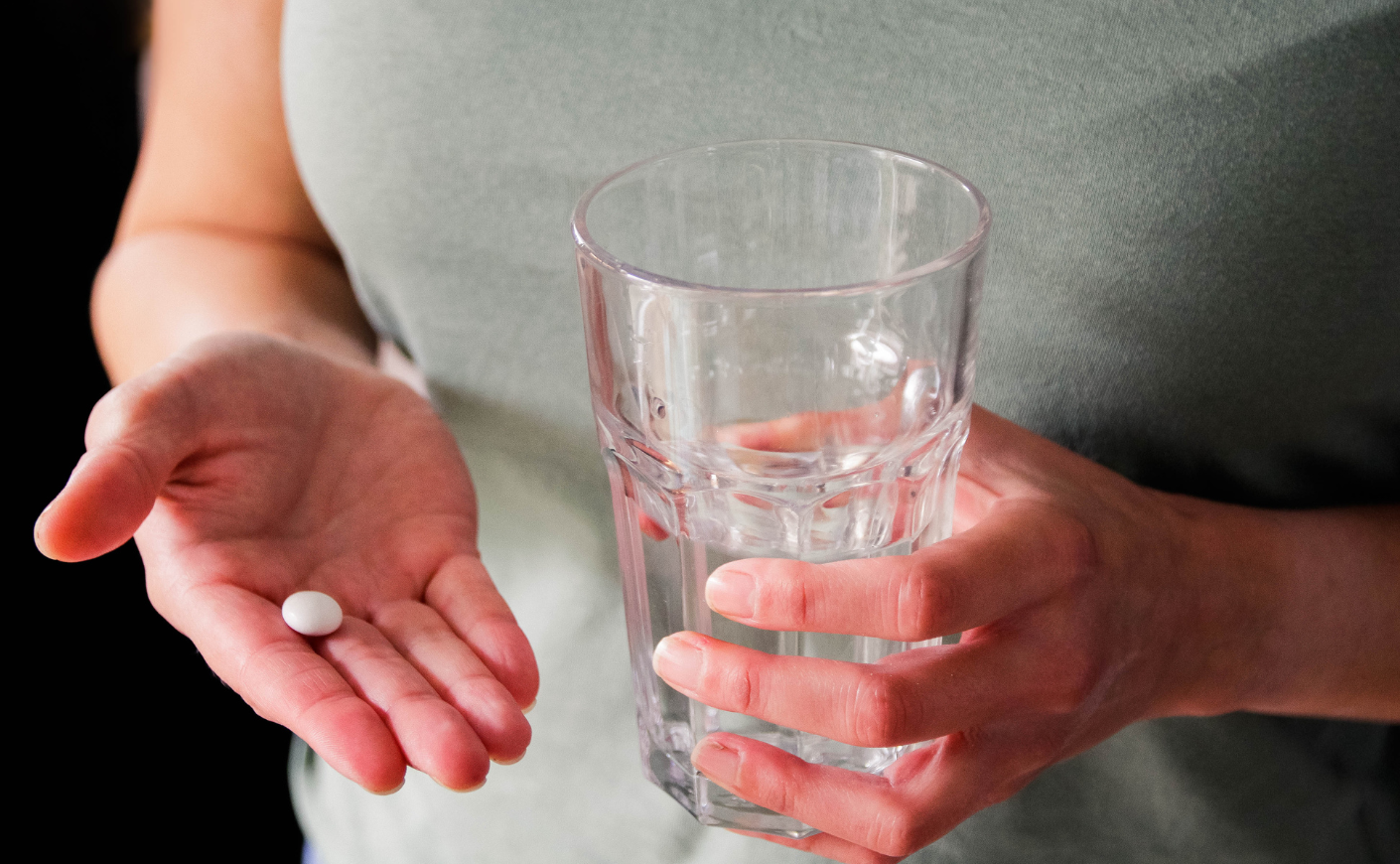
The Food and Drug Administration has approved a new pill that's been proven to significantly reduce levels of "bad" cholesterol.
Clinical trials showed that Lipfendra, manufactured by Merck, lowered LDL cholesterol by up to 60 percent, and the medication has been hailed as a powerful new tool to help Americans lower their risk of heart attack, stroke, and other cardiovascular conditions. Here's what you need to know about the new drug, from how it works to how much it's expected to cost.
What is the new cholesterol pill, Lipfendra?
Last week, the FDA approved enlicitide, an oral medication whose brand name is Lipfendra. The drug is a PCSK9 inhibitor, which works by blocking a protein that slow the body's ability to clear cholesterol, says Laxmi Mehta, MD, the director of women's cardiovascular health at the Ohio State University Wexner Medical Center. This class of medication isn't new: A couple of PCSK9 inhibitors have been on the market for about a decade, but Lipfendra is the first formulated as a once-daily pill. Others, like Repatha and Praluent, are injectables that are taken either biweekly or monthly.
In one clinical trial, Merck found that Lipfendra reduced LDL cholesterol levels in participants already taking statins by an average of 56 percent after 24 weeks. A second trial analyzed the drug's effect on people with a genetic condition called heterozygous familial hypercholesterolemia, which causes dangerously high cholesterol levels. In that study, researchers found that Lipfendra — in addition to statins — lowered LDL by an average of 59 percent. Those results are about on par with the injectable PCSK9 inhibitors, says Brett Sealove, MD, the chair of cardiology at Hackensack Meridian Jersey Shore University Medical Center.
"People are very excited and bullish about this new approval," Dr. Sealove tells us. The drug is "incredibly well tolerated" and provides an important alternative for the needle-shy or those otherwise reluctant to take an injectable, he says. According to the New York Times, only 1 percent of the six million eligible patients use the injected drugs, despite their proven effectiveness.
That's partly because of the expense. When Praluent first came to market in 2015, its annual list price was $14,600, per the NYT. Prices have dropped considerably since, but the injectables are still listed at between $500 to $600 a month. Lipfendra's list price is $10.50 a day, or about $315 for a 30-day supply.

Who should consider taking Lipfendra?
Statins are still considered the first-line therapy for high cholesterol, but the medication alone might not be enough for some patients with stubbornly high LDL levels, Dr. Mehta says. For those people, a PCSK9 inhibitor may be prescribed alongside a statin. The drugs are also a good option for those who can't tolerate statins, which in rare cases can cause severe muscle damage, known as rhabdomyolysis, or liver disease, Dr. Mehta says. The therapy has also been shown to lower Lipoprotein(a), a cholesterol-carrying particle, which doesn't respond to statins.
Earlier this year, the American Heart Association released aggressive new targets for LDL cholesterol, advising people at above-average risk of heart disease lower their levels to 70 and that those at high risk aim for LDL of 55 and below. Excess LDL can build up within the walls of arteries, restricting blood flow and potentially leading to blood clots — increasing the risk of heart attack or stroke. It's estimated that one in four adults in the U.S. have high levels of "bad" cholesterol.
Lipfendra's most common side effects have been dizziness and diarrhea. The medication is currently being studied to determine whether it — like the injectables — not only lowers LDL, but reduces the incidence of heart attacks, strokes, and cardiovascular deaths.
