






A patient came in a few years ago for what she called "an overdue checkup." She laughed a little when she said it. Overdue was doing a lot of work in that sentence. She was 52. She hadn’t had a mammogram in four years and had never had a colonoscopy. She knew it wasn’t good. She knew I knew it. Before I could say anything, she said, "I know, I know. I just kept pushing it back. My mom was having her hip done, and then Christopher needed his sports physical, and my husband had that thing with his cholesterol, and I just..."
She trailed off. I intuitively understood what she meant: There was always another appointment to schedule. It just was never hers.
In my nearly two decades of clinical practice, I hear some version of that sentence almost every day.
A study published this past May in JAMA Network Open analyzed data from more than 68,000 women between the ages of 45 and 64, and found that only about half were current on all three recommended breast, cervical, and colorectal cancer screenings. Nearly 18 million women in this age group are estimated to be overdue for at least one of these tests. That number is hard to sit with, but once you see who these women are and what their days actually look like, it is not hard to understand why.
About 60 percent of sandwich generation caregivers are women. We're not only carrying our share of the mental load. We're carrying most of the whole family’s.
The period between 45 and 64 is not a quiet stretch of life. For a huge number of women, it is the most logistically demanding period they will ever navigate. These are the sandwich generation years, caring for aging parents on one side and still actively parenting children on the other, often while working full-time and managing a household's worth of other people's needs. About 60 percent of sandwich generation caregivers are women. We're not only carrying our share of the mental load. We're carrying most of the whole family’s.

And this is also the window when women's own bodies are in significant transition. The hormonal shifts of perimenopause begin, on average, in the mid-40s and can stretch across a decade. What most women don't realize is how much of the body estrogen was quietly protecting all along. Estrogen receptors are not confined to the reproductive system. They line the walls of blood vessels, live in bone, and are distributed throughout the brain, to name a few of the areas the hormone touches. As estrogen declines, cardiovascular risk rises, bone density begins to drop, and cognitive changes that were once dismissed as stress or distraction turn out to have a biological basis. It is a critical window, one where what gets caught early and what gets missed has consequences that compound over time.
What that looks like in practice shows up in the data too. A 2024 Deloitte Center for Health Solutions survey of roughly 2,000 U.S. consumers found that half of women reported delaying or skipping some kind of health care in the past year, compared to 37 percent of men. Thirty-four percent of women specifically reported delaying or skipping a women's health visit, like a screening. Some of that gap comes down to cost and access, which are real and worth their own reckoning. A mother who is faithfully getting her kids to the pediatrician through WIC coverage may have no comparable coverage for herself. A woman managing her father's appointments with his internist is not automatically plugged into a primary care practice of her own; parents and children are typically seen by entirely separate physicians, on different insurance plans and schedules.
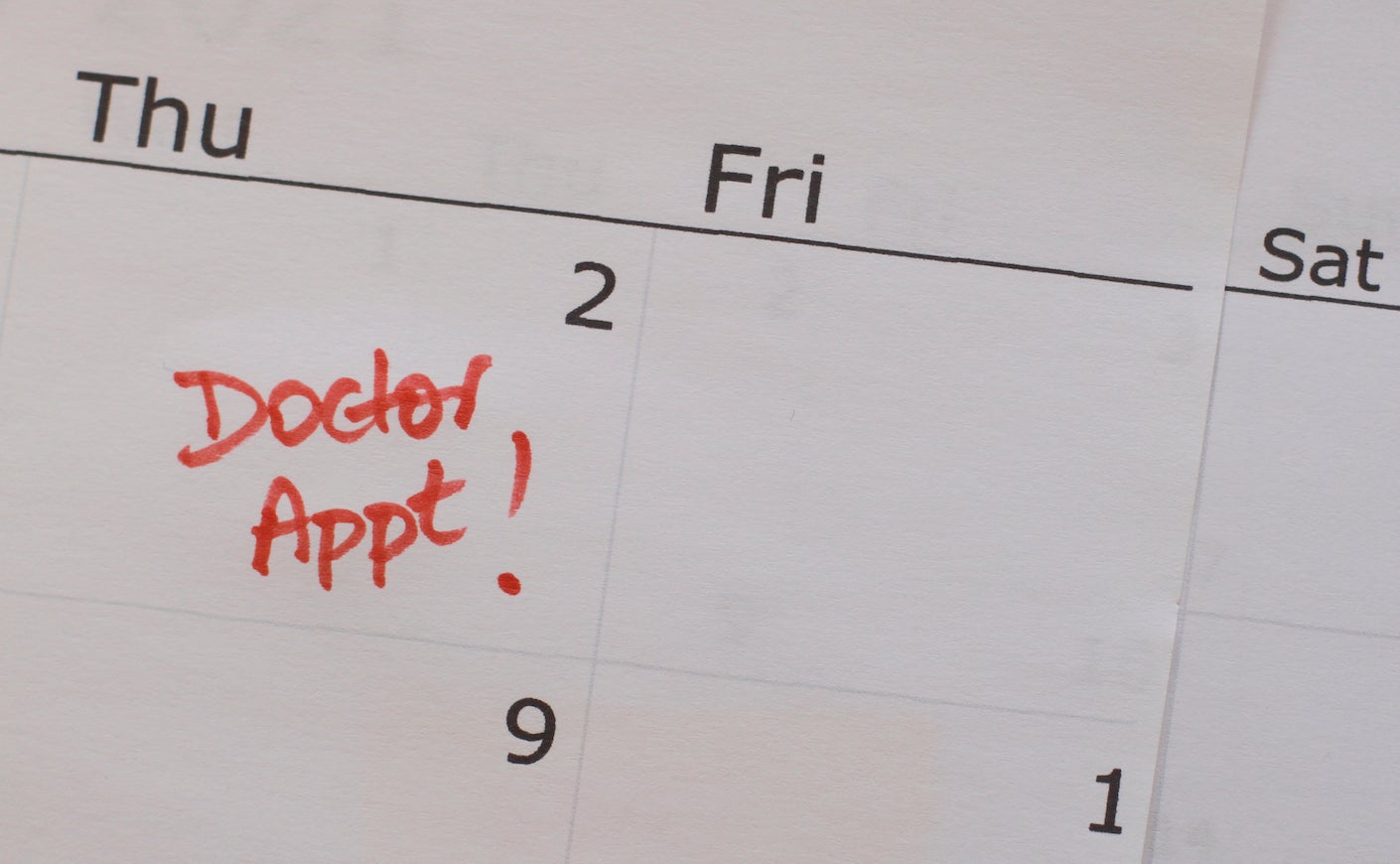
But when I asked women in this age range why they push their own appointment back, cost was rarely the first thing they’d say. It was at the bottom of the list after the colonoscopy for a parent, the dermatology follow-up for a spouse who doesn't love the phone, the sports physical for the kid, the dentist for the dog. All of it jotted down in the calendar and confirmed and followed up on — except the appointment for her.
Your turn is always next. But “next” never seems to arrive.
I am a physician. I understand these screening guidelines and the mortality data behind them. I also understand, from my personal life and not just my clinical one, the particular arithmetic of midlife, when the hours demanded by everyone around you exceed the hours you have. I have postponed my own appointments. I have told myself I would get to it after. My training did not make me immune to this. The knowledge did not protect me from what the culture taught all of us: that tending to others is the measure of a good woman. That your turn is always next. But “next” never seems to arrive.
What we have here is not a deficit of knowledge or intention. It is the logical outcome of what we have taught women to believe about whose needs count.
Cancer is the leading cause of death among women aged 45 to 64. Not heart disease. Not accidents. Cancer. And for three of the most common cancers in this age group, we have screening tests that catch things early, when they are treatable and when outcomes are dramatically better. They are evidence-based, guideline-supported, and covered by most insurance. Nearly 18 million women who should be getting them are not.
Your children's pediatrician is getting the follow-up call. Your parent's cardiologist has the appointment on the books. Your husband's dermatologist is seeing him next month.
When is your mammogram?
