




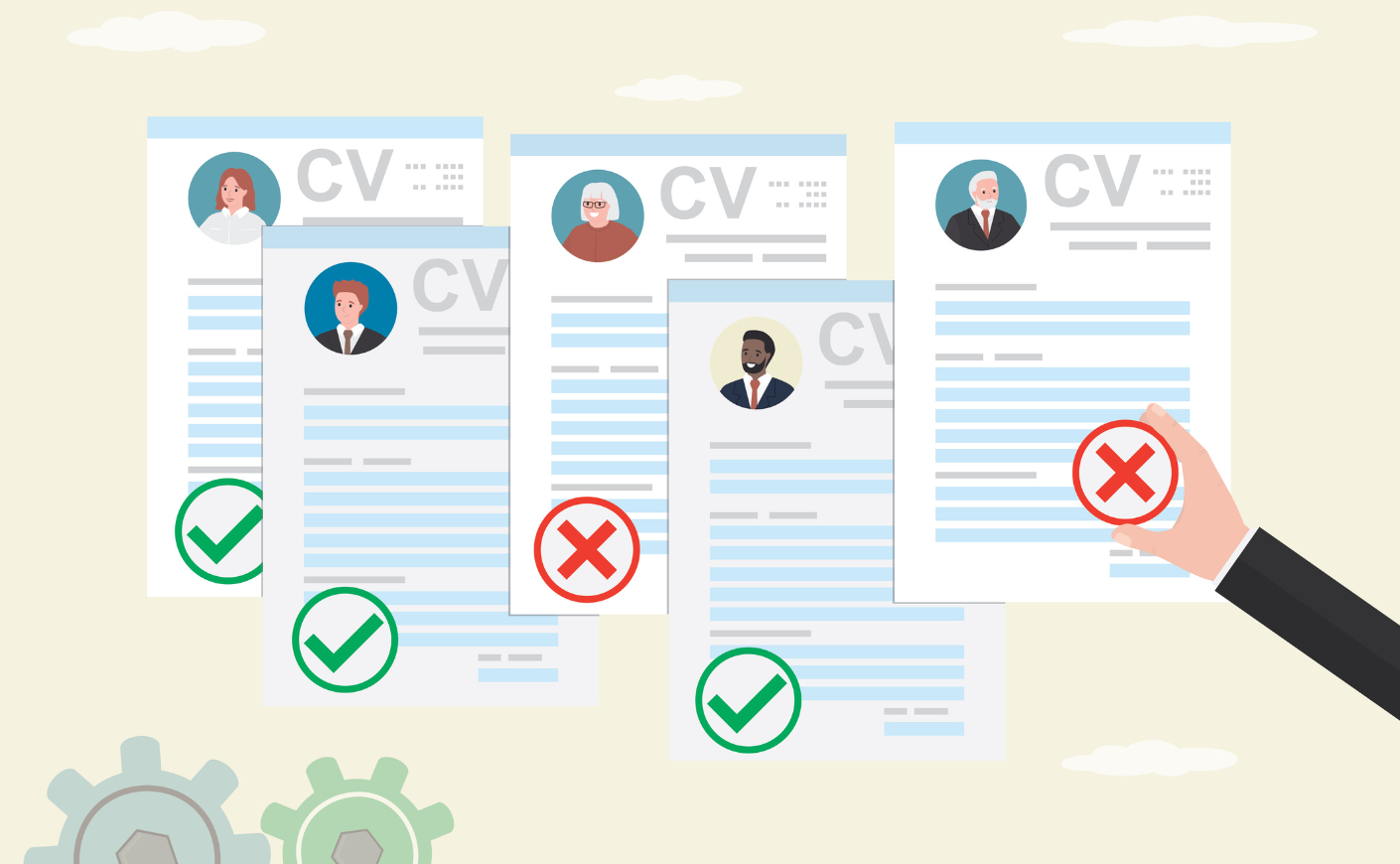
Ageism in hiring isn't always obvious, but like a curious kid, it leaves fingerprints everywhere — you can see it in job postings, on a company's website, or in the questions you're asked in an interview. As an ageism and inclusion expert who's helped experienced professionals regain a foothold in the workforce, here are three questions I hear constantly about age discrimination at work.
"How can I tell if a job posting is ageist?"
Look for the code words. Ageist job postings rarely say "no one over 40 need apply." What they say is "digital native," "high energy," "culture fit," "recent graduate," or "early career professional." These phrases work like a velvet rope at the door of an exclusive club, signaling to experienced professionals that they aren't welcome. Research from the National Bureau of Economic Research found that ageist language in job ads predicts discrimination by the employers who post them. If the posting reads like it was written for a 25-year-old, the hiring process will probably feel that way.
"Digital native" may be the most insidious phrase of all. It sounds neutral — technical, even. But it's a generational marker dressed up as a job requirement. Ramona Schindelheim, editor-in-chief of The Future of Work(ers) newsletter, put it perfectly: "Despite the old tropes, older workers are NOT tech-averse or tech-incompetent, and we adapt to change. Older adults were the first to use computers on a regular basis." The data backs this up. A 2025 AARP–LinkedIn report found that disruptive tech skills among workers 50 and older — cybersecurity, data science, human-computer interaction — grew 25 percent over five years, nearly double the 13 percent growth among younger workers.
What employers get wrong: Many teams believe "digital native" describes a skill set, when what it really describes is when you were born. A 2023 Federal Reserve Bank of San Francisco study confirmed that subtly ageist language discourages qualified, experienced candidates from even applying — shrinking the talent pool before a single resume lands. Worse for employers: coded language like "digital native" can fuel age discrimination complaints and lawsuits. The fix is simple: If you’re an employer, list the specific skills you actually need.
Your move: Pull up three job postings that interest you and scan for "digital native," "culture fit," "fast-paced environment," "recent grad," or "up-and-coming." Spotting these phrases doesn't mean you shouldn't apply, but it should alert you to go in informed. Check the company's website, too. Do you see people of all ages represented? If not, that may be a red flag.
"Should I remove my graduation dates from my resume?"
Yes — and do it today. Graduation dates are one of the fastest ways hiring managers and screening algorithms calculate your age. A 2024 ResumeBuilder survey found that 42 percent of hiring managers admit they consider a candidate's age when reviewing resumes. Let's be honest — your graduation year isn't a qualification, it's a timestamp. And it's being used against you. That's exactly why advocates (myself included) pushed to get Colorado's Job Application Fairness Act passed — a law that now prohibits employers from requesting graduation dates or other age identifiers on initial applications.

What employers get wrong: Some hiring managers say graduation dates help them "understand your trajectory." The ResumeBuilder data tells the real story: 79 percent of those who factor in age said they learn it from graduation dates. The bias doesn't vanish when you remove the dates, but removing obvious markers slows it down.
Your move: Open your resume right now, delete every graduation year, and cap your work history at 10 to 15 years. Then add a brief "Career Highlights" section at the top spotlighting your most impressive, quantifiable wins — especially at name-brand companies. Led a product launch at a Fortune 500? Grew revenue 40 percent? That goes up front, stripped of dates and framed as proof of impact. Lead with what you’ve accomplished, not when. Then update your LinkedIn profile to match.
"I'm almost 60 — a recruiter asked how long I plan to keep working. Is that legal?"
Here's the thing: Nobody asks a 32-year-old about retirement plans. That question is a red flag. Questions about how long you plan to work or when you might retire can constitute evidence of age discrimination. Under the Age Discrimination in Employment Act (ADEA), employers cannot treat applicants 40 and older less favorably because of their age. Several states, including New York, have additional protections.
What employers get wrong: Interviewers think asking about "long-term plans" is practical — gauging tenure, projecting ROI. The logic collapses under its own weight. The U.S. Bureau of Labor Statistics (2024) reports that workers aged 55 to 64 have a median tenure of 9.6 years — more than three times the 2.7-year median for workers 25 to 34. The people employers worry will "leave soon" actually stay three times longer than those they never question.
Your move: Prepare a confident pivot: "I'm fully committed to this role and excited about contributing long-term. Let me tell you what I'd accomplish in my first year." This way, you redirect to show your value. After the interview, document exactly what was asked, who asked it, and when. If you don't get the job, that record matters — whether you file a complaint with the EEOC or simply keep it for yourself.
Ageism in hiring starts before you walk through the door — in the language, the algorithms, and the assumptions. But so does your power to recognize it, name it, and refuse to internalize it. Your experience is your edge. Dreams don't have an expiration date — and neither does your right to be judged on what you bring, not when you were born.
Janine Vanderburg is an ageism and age inclusion expert and the CEO of Encore Roadmap.