






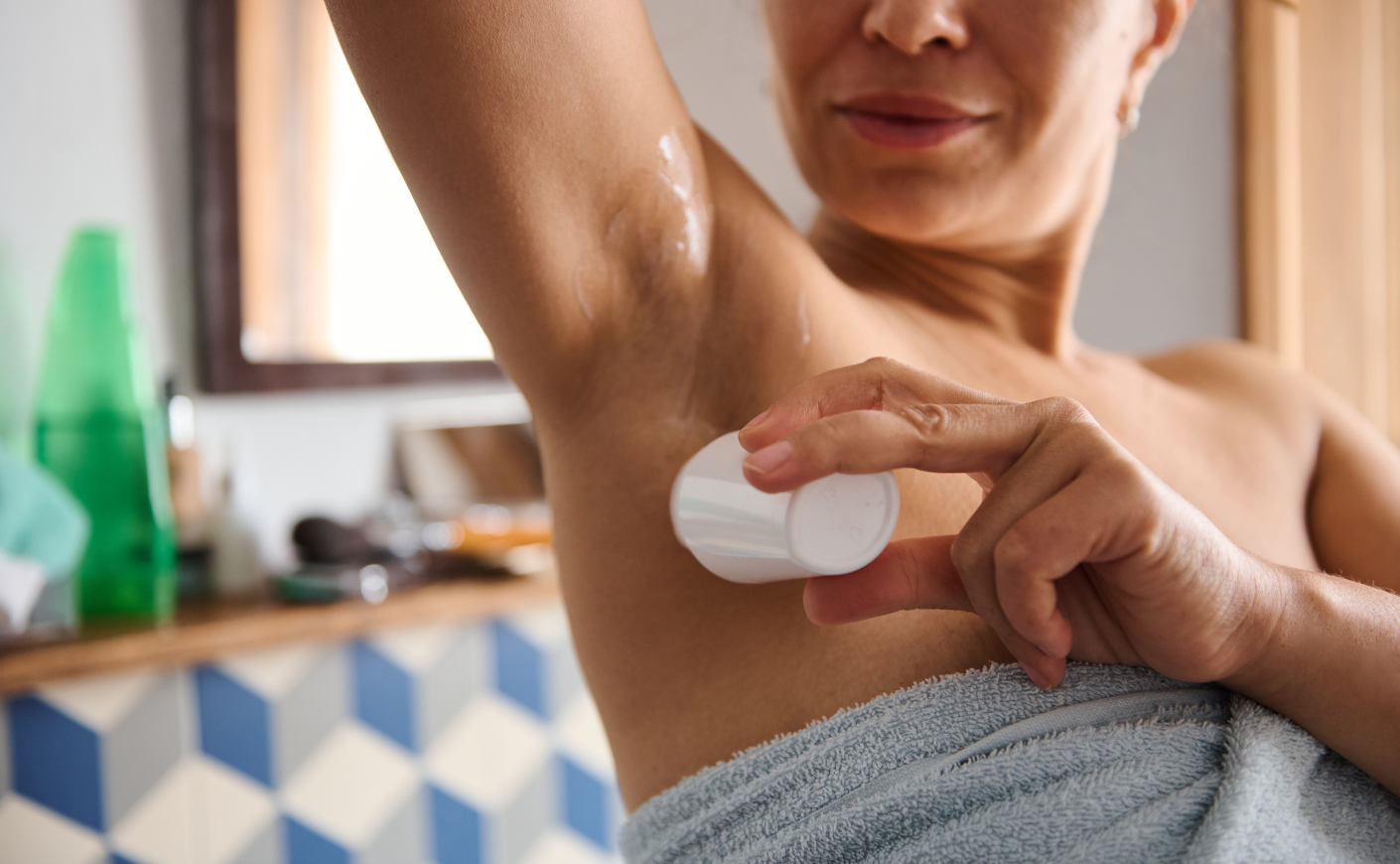
It’s not your imagination: If you're experiencing "the change," you may notice some changes to how you're smelling, too.
Any type of hormonal shift can alter your own unique musk (think back to puberty and your newly smelly armpits), but we're taking a closer look at what's behind that uptick in body odor you may be experiencing with menopause — and some simple tips to help you reclaim your signature scent.
What causes body odor during menopause?
Specific changes are occurring within your body that can lead to body odor becoming worse during perimenopause and menopause. That's primarily due to the sharp decline (or total absence) of circulating estrogen, which has a distinct impact on the balance and functionality of your largest organ: your skin, the chief way you interface with the outside world. This hormone is linked to things like how oily your skin is, its thickness, and elasticity — all of which can impact body odor.
Plus, as we age, the pH level of our skin tends to rise. Youthful skin in its prime state of health tends to be slightly acidic, with a range of 4.8 to 5.5. This acid mantle, as it's known, protects the skin in many ways, one of which is to deflect the presence of odor causing bacteria. During perimenopause (and middle age for both men and women), the skin's pH can shift higher, becoming more alkaline. And when that protective acidity is altered or lost, it can lead to the proliferation of odor-causing bacteria or other microbes, such as yeast. The result is a more pungent smelling skin surface.
This shifts the microbiome, the ecosystem of bacteria and other microbes inhabiting the skin. When you cultivate more of these odor-inducing bacteria, they end up nudging out the "good" bacteria, the species inherent to the skin that actually protect you from odors. Different body parts have distinct microbial inhabitants, and with age and hormonal changes occurring during menopause, the microbiome may shift on skin sites like underarms or other skin folds which are known to harbor musty odors.
The impact of dry and thinning skin
The skin loses its elasticity with every decade starting in your thirties, becoming less resilient and more prone to injury. That leads to a disruption of the barrier function. While your skin once acted as armor against irritating elements, as you age it becomes more sensitive to agents it may come in contact with.

For example, you may notice that the deodorant you've used for decades suddenly causes you irritation. It may be that the skin in your armpit has become less tolerant because of its diminished protective layer, and the combination of harsh chemicals or fragrances often found in deodorant products now causes your skin to turn red and causes itchiness or even a rash. This breach in the protective barrier can, once again, also allow odor-causing bacteria to thrive.
The skin also loses moisture as we age, which is due in part to hormonal changes that affect what is called transepidermal water loss. This means the skin doesn't retain built in moisturizing factors and can lose critical oils and fats that keep it plump and smooth. The loss of these substances, such as ceramides, can give older skin a dry or flaky appearance and feel, which can lead to irritation and inflammation — another factor that tips the scales, allowing more "bad bacteria" to inhabit the skin's surface.
One more thing to keep in mind
Here's some good news: You may not actually smell as bad as you think. Studies in odor perception have shown that age may alter your olfactory system. In other words, you may not smell all that different, but your brain could be perceiving odors differently. So you may think that you reek, when it could actually be your perception that's miscued.
How do I combat changes in body odor?
- Shower with gentle cleansers. Use pH balancing formulas that help maintain the skin's acidity. Typical soap has a pH of eight to 10, which is alkaline and can alter your skin’s natural ability to prevent body odor. Look for skin wash products that are pH balancing or have acidic ingredients and little or no added fragrance.
- Pat skin dry with a soft clean towel after your shower. Then, using a hair dryer on a cool setting, air dry your skin folds. This is a gentle way to quickly banish residual water to ensure dampness doesn't linger all day.
- If you suffer hot flashes, keep a small fan nearby to cool yourself off. Sweat on its own isn't the cause of body odor. It's only when moisture is trapped in skin folds for a period of hours that odor-causing bacteria gain a foothold and create stinky skin.
- Wear loose-fitting clothing that allows air to be in contact with skin, as tight-fitting or occlusive clothing traps moisture and causes irritation — both of which can invite body odor.
- Choose fragrance-free deodorant. Perfumes and added fragrances can cause skin irritation and, ironically, make you smell worse by disrupting the skin barrier.
- Change out of damp clothing whenever possible. Do not sit in a wet bathing suit or damp workout gear.
- Acidic but gentle skincare products that contain glycolic acid, lactic acid, or citric acid can help maintain the skin’s acid mantle, which aids in repelling odor-causing bacteria.
- Drink plenty of water throughout the day to stay hydrated.
- If you think a product is drying your skin or causing irritation, get rid of it right away.
- Squeaky clean is a bad thing. If you wash your skin and it feels tight, you’ve eliminated the wonderful moisturizer built into your skin. Be sure to replace moisture lost from your skin by applying a body lotion or cream that provides ceramides, hyaluronic acid, shea butter, or other hydrating ingredients.
Alicia Zalka, MD, has been practicing dermatology for 25 years and is an associate clinical professor of dermatology at the Yale University School of Medicine. She's also the founder and CEO of Surface Deep.
