






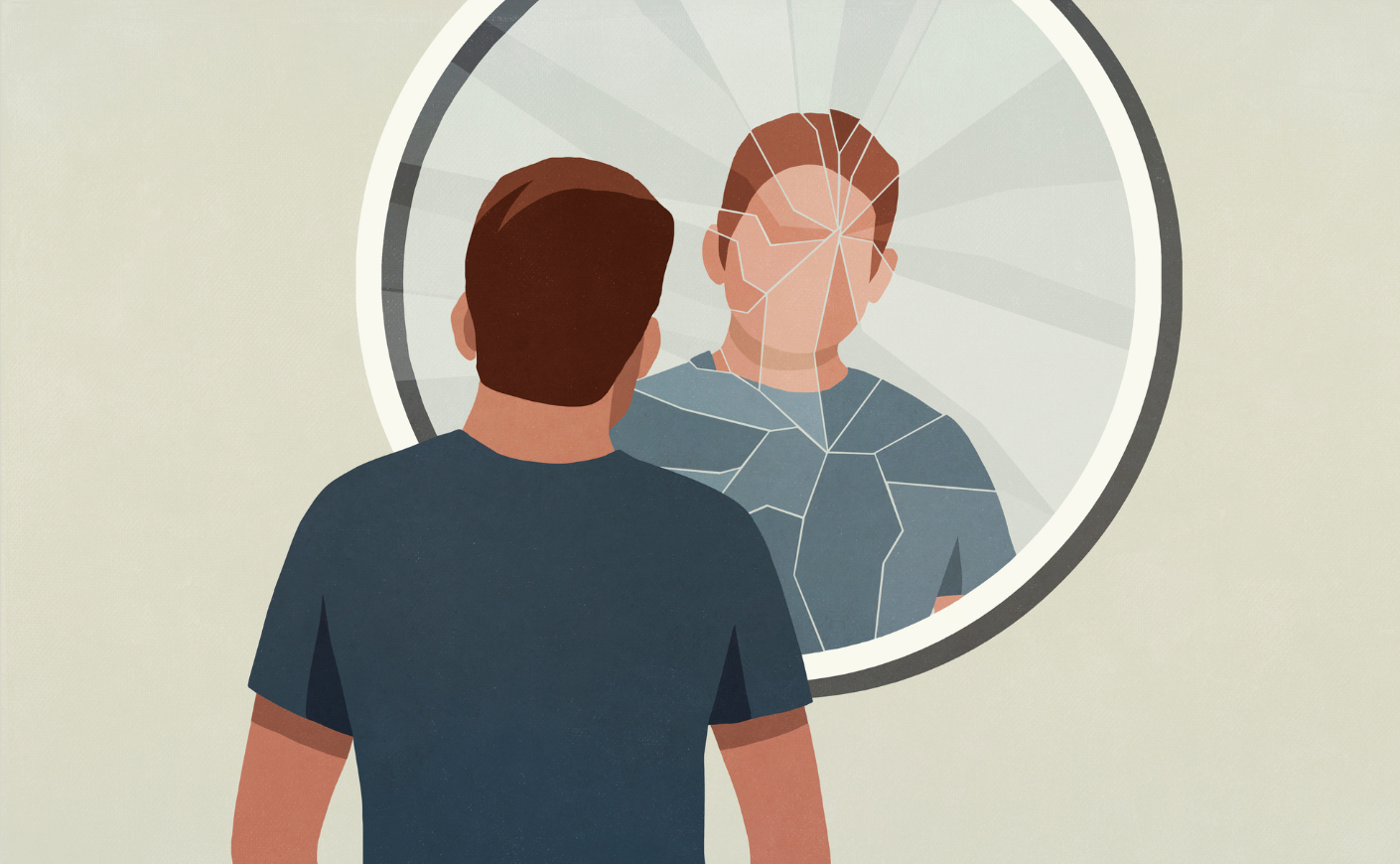
One morning at work, I looked in the men’s room mirror and started stammering gibberish in a voice that wasn't my own.
I was a 38-year-old businessman. My life was stable. I was happily married to my wife, Rikki, for 12 years and a father to a young boy. I felt like I was in a rowboat on a lake — oars in the water, breeze at my back.
But it wasn't the first time something odd had happened. I’d recently gotten lost on my way home from the store. I’d worn two different shoes to a business meeting. I felt like things were shifting in my head, and I had an overwhelming sense of impending doom.
And then the mirror.
I went to the doctor for a physical. She said there was nothing wrong with me medically.
On to a therapist. At the first meeting, I told her I'd been having recurring thoughts that something terrible had happened to me, but I didn't know what. The therapist was fully prepared to help me through that and began to dig into my past.

And then one Saturday morning, Rikki found me in my son's closet drawing pictures of a sad little boy. I'd made a line across my fingers with a red marker, as if I'd cut them off. But it wasn’t me in the closet. It was the first of my alter personalities to appear — a young boy named Davey, who told Rik and my therapist he'd been abused by my grandmother, who'd died when I was five. Before long, a second alter — an older, calm, and wise man named Per — emerged, with knowledge of things I did not remember. Davy and Per were distinctly different from me and from each other. When, over time, they repeatedly took control, my therapist made the diagnosis: Dissociative Identity Disorder.
The psychiatric disorder was previously referred to as multiple personality disorder and symptoms include the existence of two or more distinct identities and ongoing gaps in memory about everyday events, personal information, and/or past traumatic events.
I'd never heard of DID, but Rikki had. She had a degree in psychology and had been the director of a treatment center for emotionally disturbed children. She was fiercely protective and undaunted.
Now my rowboat was stuck in the desert, oars dragging through sand, and within a few months, I had 24 alter personalities cohabitating my body — young boys, grown men, twin girls — fragments of a mind that had shattered to protect me from emotional pain. Some were angry, some sad; some held the memories of horrific abuse I didn't remember. DID is now widely understood to be a trauma-based condition resulting from early and repeated childhood abuse, and far more common than anyone realized.
While my alters arrived in fairly rapid succession, the therapeutic process was slow and emotionally brutal. Meanwhile, I tried to be a regular person in the world and a regular dad for my son. Fortunately, I had co-consciousness with my alters, my guys — I was always present somewhere in the back of my mind when alters came out. They knew what I was doing. I knew what they were doing. We could communicate. I made pacts with them: who could drive (me), who could play with my son (me). But things didn't always go as planned.
As hard as I was working to come to grips with my condition, Rikki was working twice as hard, being mom to a little boy who knew something was really wrong with dad, managing child alters who filled the grocery cart with popsicles and peanut butter cups. She waved to the neighbors, pretended everything was great, tucked our son into bed, then read picture books to my young alters.
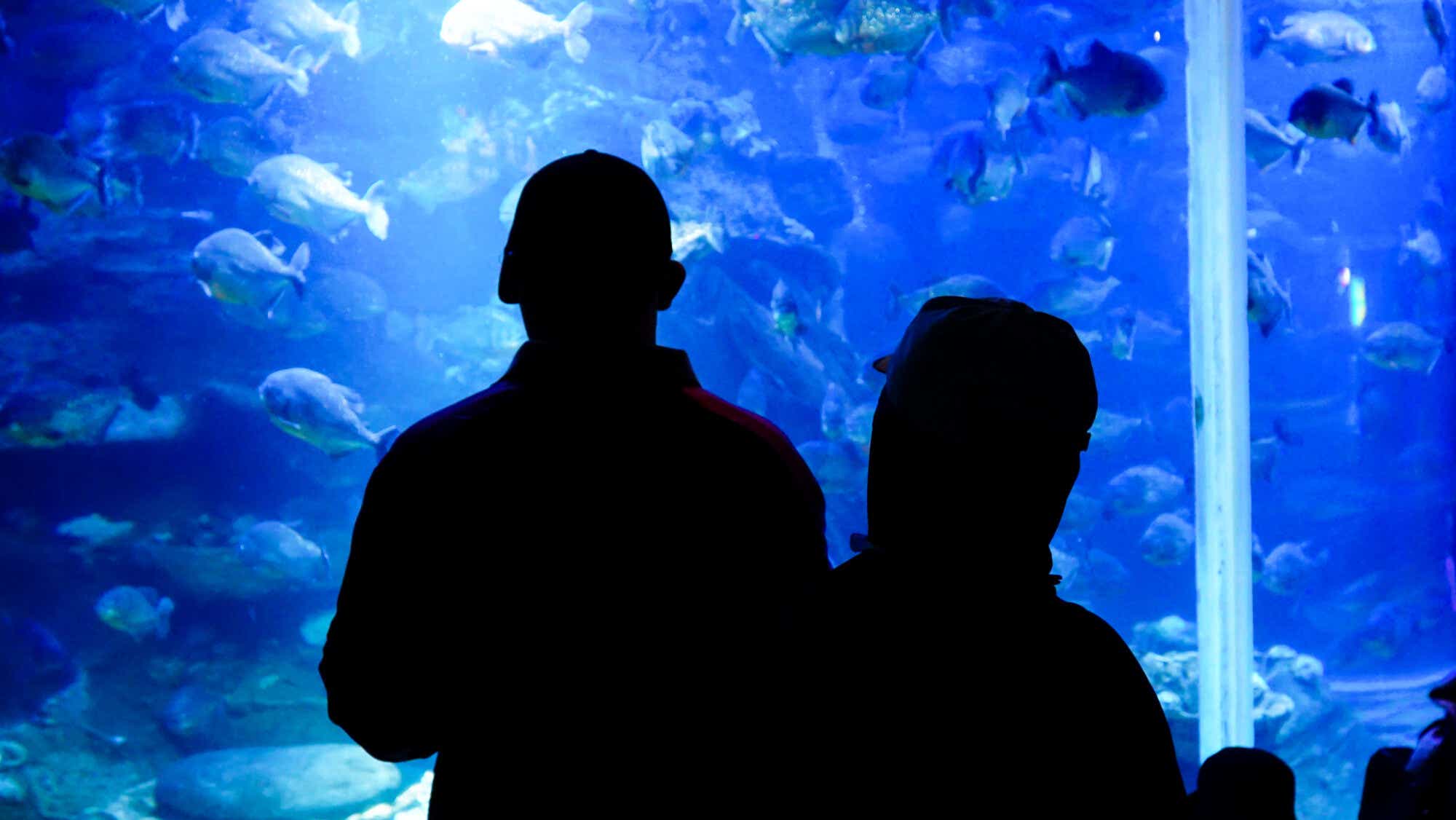
One weekend Rik decided we should get out of town for a day. We took a drive down to the Monterey Bay Aquarium, as though being with a million sea creatures doing business as usual would somehow balance out the unusual business our family of three was doing.
We wandered through the dimly lit rooms, stopping at glass tanks to watch the schools of colorful fish, the sharks, the octopi — nature doing its thing. But then the crowds of people, the darting fish, the eerie darkness began to disorient me. The switch came fast — an internal tremor, a loosening of my mental floorboards. I quickly lost control of my thoughts, feelings, and actions as an alter emerged. I was there and aware, but I was no longer in charge.
My body began to rock back and forth.
My son saw it instantly. He always knew when I was “out.”
"Mom?" he called to Rikki.
She was at my side within seconds, grounding me with her hand on my arm.
"I like the fishes and colors and other fishes!" my young alter, Clay, announced to the room.
From the bleachers in my mind, I helplessly watched my son's immediate reaction: wide-eyed shock, crimson embarrassment, the struggle not to cry. It broke my heart. I wished that Clay would go back inside and let me be Dad, but at that moment, he was out front.
"Yes, the fish are beautiful," Rikki said gently. "But it would help if Cam came back right now. He was doing something important with us."
She always treated my alters with dignity, always patient, never dismissive.
"One fish, two fish, red fish, blue fish!" Clay sang loudly. My son turned away, pretending to study a tank, trying to be invisible.
"It's nice to see you, Clay," Rikki said, "but inside with the others for now, please. We'll read One Fish Two Fish later tonight. OK?"
"OK," Clay said, both of us feeling her kiss on the side of the head.
And just like that, her force helped me regain control. Clay and I silently passed each other as we exchanged places. My legs grew weak and I sat down hard on the aquarium floor. Switching is exhausting, like putting a Prius through 10 laps at Le Mans. Rikki slid down next to me, whispering soft words that pulled me fully back.
When I could stand again, we went to find my son. He stood before a tank, acting as if nothing unusual had happened. "I'm so sorry," I said to him.
"You don't have to apologize, Dad," he mustered. "It's OK. Really."
But it wasn't OK. Not for my son. Not for me.
That day at the aquarium didn't turn out to be the diversion we'd hoped it would be.
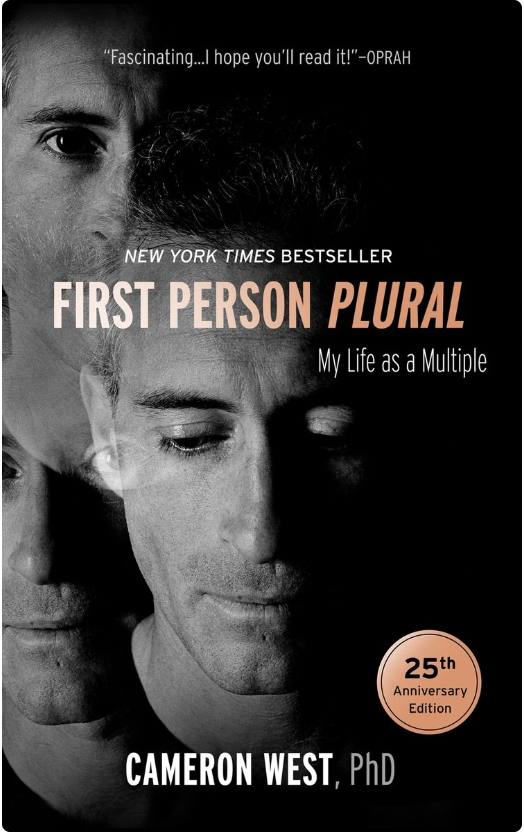
Looking back now, as Rikki and I await the release of the 25th Anniversary Edition of my memoir First Person Plural: My Life as a Multiple, I recognize that the day at the aquarium was both brutal and beautiful. Brutal because my disorder seeped into my son's childhood in a way no child should have to navigate. Beautiful because even in that moment — especially in that moment — my family showed me something that would become the cornerstone of my healing: love that doesn't flinch.
All I ever wanted was to be a good husband and dad, and now I want to be a good granddad to a little boy who calls me Poppy. I'm still a multiple, but most of my alters are now a part of me, and the few that still reside in the corners of my mind have healed from the trauma they experienced for me and are at peace.
Like everybody, I'm still in life's rowboat. But my boat is back on the lake, my oars in the water, the breeze at my back.
Cameron West (with Rikki West) is the author of First Person Plural: My Life as a Multiple, a New York Times and USA Today bestseller, published in 22 countries. The 25th Anniversary Edition — featuring new material, including the first physiological evidence of alter personalities via EEG brain wave patterns — is releasing May 26, 2026 by Blackstone Publishing in print, paperback, eBook, and audiobook.
