






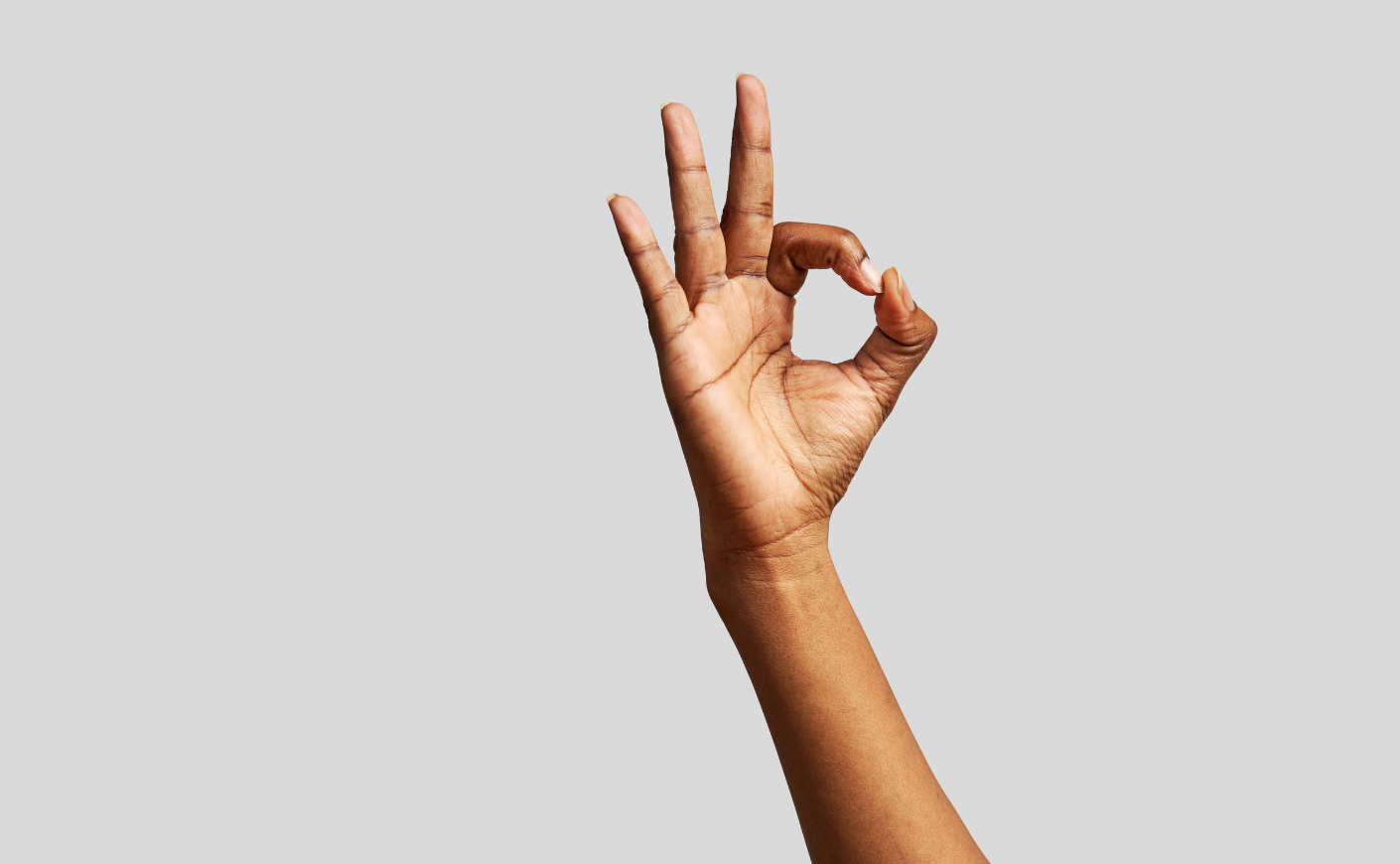
Spend enough time on social media and you’re sure to come across one of these videos: In it, someone performs simple, repetitive hand movements. It could be the coordinated pointing of the pinky and index fingers, or clapping twice before bringing the backs of your hands together. The point is that regularly doing these exercises can help prevent Alzheimer’s and dementia — or, at least, that’s the claim.
Big, if true.
Imagine spending two minutes twiddling your thumbs (or something not far off) in the shower to reduce your risk of developing a devastating neurodegenerative disorder. But if I’ve learned anything as a health journalist, it’s this: Simple hacks and quick fixes don’t usually work.
So I decided to consult an expert, Majid Fotuhi, MD, Ph.D., a Johns Hopkins professor and author of The Invincible Brain. He explains that there is some evidence that hand exercises could be associated with better cognitive function — but that’s not the whole story.
Can hand exercises prevent Alzheimer’s?
Like most viral health trends, there’s a kernel of truth at the center of the claim. In this case, it can be traced back to a cluster of studies mostly conducted among older adults in China. In traditional Chinese medicine, finger and hand exercises are believed to stimulate acupuncture points, which are thought to enhance the flow of energy and restore an overall balance within the body.
A review of this research, which was published in Brain, Behavior, and Immunity — Integrative in 2023, found that people with mild cognitive impairment saw some benefit from these exercises. But the review’s authors noted that the studies were small, the types of training varied widely, and the potential intervention should be more rigorously researched.

In general, challenging your brain by learning new things is good, Dr. Fotuhi says.
“Studies have shown that if you take 72 hours of golf lessons, the parts of the brain that are important for hand-eye coordination grow. The same thing goes for dance lessons — the parts of the brain associated with specific movements will grow,” Dr. Fotuhi says. “That’s a good thing, but it’s a mistake to claim that if you do this, you won’t develop dementia.”
The other issue is that these exercises may prove tricky at first, and while that could help you grow new connections in the brain, over time you’ll probably get to be pretty good at the movements and probably be able to do them on autopilot — at which point you won’t really see a benefit, Dr. Fotuhi says.
Proven strategies that prevent dementia
When it comes to brain health, Dr. Fotuhi is an advocate of the five pillars: exercise, getting quality sleep, eating healthy, keeping your stress levels in check, and brain training. This viral trend of hand movement training does address one of these pillars, but there are plenty of other types of training that may be more beneficial, like learning a new language or instrument, or picking up pickleball, Dr. Fotuhi says.
Additionally, evidence suggests the most important factor when it comes to Alzheimer’s prevention may be exercise. “If you could do only one thing, it should be to stay active,” he says. “You don’t have to run a marathon, just walk 3,000 to 5,000 steps a day. Several studies have shown that even 10 minutes of exercise can make a measurable difference in the brain.”
