






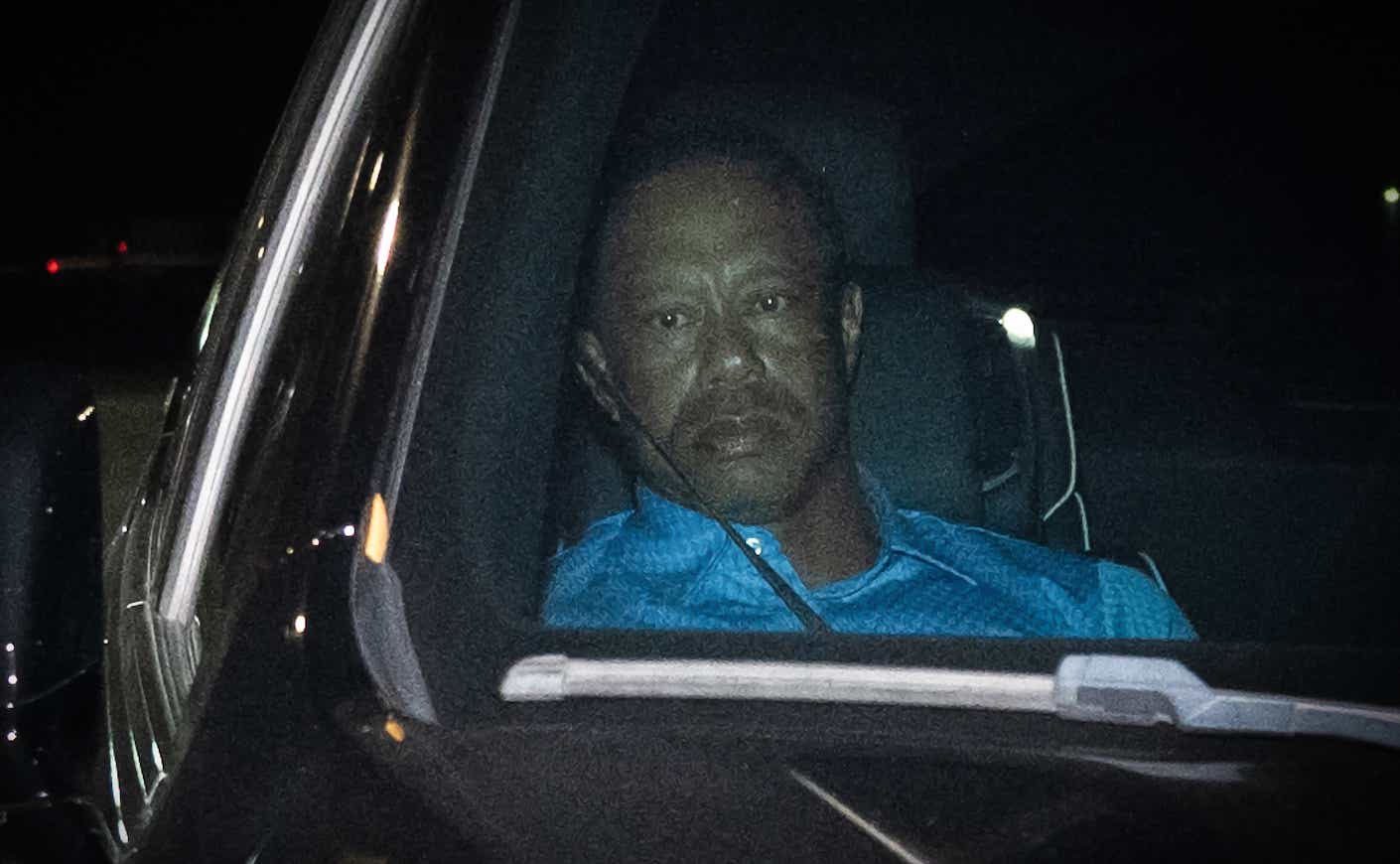
Tiger Woods is once again in the spotlight — this time after an incident near his Florida home.
On Friday, the golf legend crashed his SUV and pleaded not guilty to DUI and related charges days later. With a court hearing expected in the coming weeks, his legal troubles may be far from over.
As speculation grows about his future — and with the Masters at Augusta National just weeks away — the 15-time major champion addressed the situation, saying he’s stepping away from the sport for now to focus on his recovery and well-being.
But he hasn’t ruled out a comeback. Here’s what he’s said — and what the police report shows.
Tiger Woods releases statement after DUI arrest
For now, his career is on hold. Woods says he’ll return only when he feels fully ready. When that might be remains unclear — he’s said only that he’s stepping away for a “period of time.”

“This is necessary in order for me to prioritize my well-being and work toward lasting recovery,” Woods wrote.
“I’m committed to taking the time needed to return in a healthier, stronger, and more focused place, both personally and professionally," he added.
The crash
The crash happened around 2 p.m. Friday in Jupiter Island, Florida, when Woods tried to pass a pickup truck pulling a trailer at the last minute. According to the affidavit, he crossed over a double solid line into oncoming traffic, struck the trailer, and lost control of his SUV, which flipped onto its side.
The driver — identified as 43-year-old Jeromy Bullard — told authorities he had begun making a turn when he looked in his mirror and saw Woods traveling “at high speeds,” according to the sheriff’s office.
No one was injured, but the crash caused about $5,000 in damage to the trailer. Woods was subsequently charged with driving under the influence, property damage, and refusal to submit to a urine test, and was released on bail about eight hours later.
This isn’t the first time Woods has faced scrutiny for his actions behind the wheel. He was cited for careless driving in 2009 after hitting a fire hydrant and a tree outside his Florida home. In 2017, he pleaded guilty to reckless driving following a DUI arrest involving prescription drugs. In 2021, he was hospitalized after a serious rollover crash in Los Angeles County that investigators ruled an accident.
Despite that history, he has reportedly resisted hiring a driver. An unnamed source told PEOPLE he “doesn’t want anyone to watch over him or know what he is doing.”
Tiger Woods' signs of impairment
According to the police report, Woods was “sweating profusely” while being questioned in the back seat of a patrol car, despite the air conditioning. He told deputies he had been driving from his residence and didn’t realize the vehicle ahead had slowed because he was looking down at his cellphone.
Officers said they observed “several signs of impairment” during the interaction, prompting a DUI investigation. When Woods removed his sunglasses and hat, deputies noted his eyes appeared bloodshot and glassy.
Woods said he had not consumed alcohol — consistent with a breathalyzer test that showed none in his system — but told officers he had taken “a few” prescription medications earlier that day.
He also said he has limitations, including seven back surgeries and more than 20 operations on his leg, and was wearing a compression sleeve over his right knee. During field sobriety exercises, which were adjusted to accommodate those limitations, Woods made multiple errors, including “limping and stumbling to the right” during one test, according to the affidavit.
After he was placed under arrest, deputies searched him and found two white pills in his pocket with markings indicating they were hydrocodone, an opioid used to treat chronic pain.
Martin County Sheriff John Budensiek told reporters that Woods was cooperative after the crash but “chose his words carefully” when speaking with investigators and declined a urine test that could have helped determine whether any substances were in his system. Woods had the right to refuse, but doing so led to an additional charge under Florida law.
“We will never get definitive results about what he was impaired on at the time of the crash,” Budensiek said.
What’s next
Woods’ arraignment is scheduled for April 23, though he's not expected to appear in person after waiving his appearance.
From a legal standpoint, experts say the case will hinge on what deputies observed at the scene. Even without a urine test, Florida defense attorney David Hill told the Associated Press that prosecutors can build a DUI case using officer testimony, body camera footage, and field sobriety results.
At the same time, some analysts say the lack of toxicology evidence — combined with Woods’ 0.00 breathalyzer and documented medical history — could complicate efforts to secure a conviction. “Seems like they have no case, no DUI case. Period, full stop,” Florida defense attorney Robert Reiff told Yahoo Sports.
As for his career, the focus now shifts to how he navigates this time away from the game.
Earlier this month, the 50-year-old said he was working to get into shape for the Masters and was days away from deciding whether to serve as the U.S.’s Ryder Cup captain for the 2027 matches in Ireland.
Now, both plans are uncertain. There is technically no deadline to enter the Masters, though players typically notify Augusta National Golf Club of their plans in advance.
Even if he doesn’t compete, Woods had been expected to be in Augusta during tournament week, according to The Athletic — including attending the Champions Dinner and appearing at the opening of The Patch, a newly renovated course at Augusta Municipal that features a short course designed by Woods and his firm.
For now, it’s a wait-and-see moment. As The Athletic notes, the Masters does not have formal character rules, but players have historically opted out while navigating personal challenges or public scrutiny.
Even as questions swirl about what comes next, some in the golf world say Woods’ presence still matters. Two-time U.S. Open champion Curtis Strange, speaking during ESPN’s Masters Week coverage, said Woods “still has a lot to offer the game just by being out there.”
“We wish him well,” Strange added. “You hate to see anybody in a situation that is tough and struggling.”
