






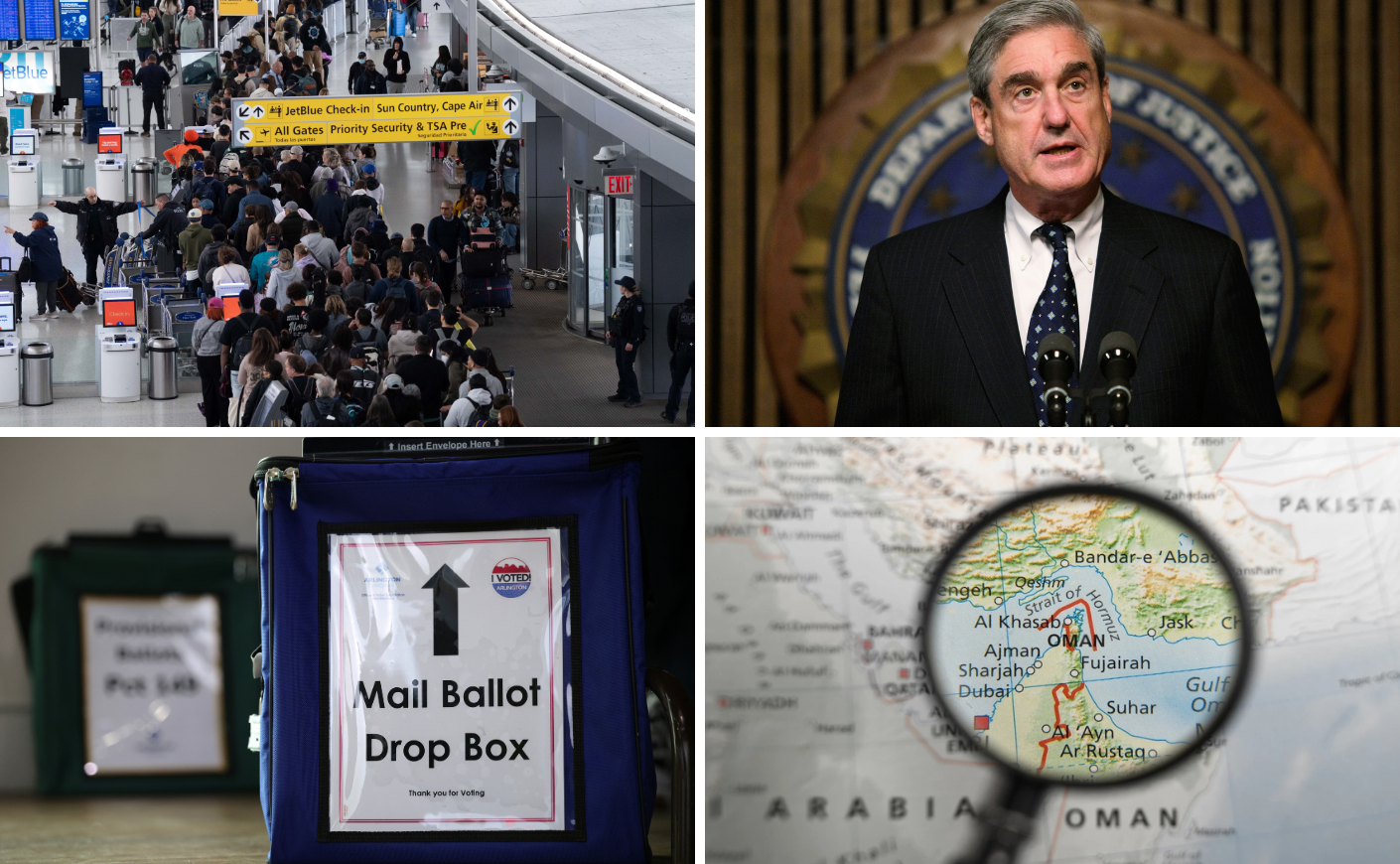
The news moved fast and furious over the weekend. On Monday, the Trump administration deployed Immigration and Customs Enforcement agents to more than a dozen airports across the country, including Chicago O’Hare, LaGuardia, and Houston’s William P. Hobby.
The plan comes as Transportation Security Administration officers continue to leave the workforce after weeks without pay, with more than 400 departures since the government shutdown began on Feb. 14. The strain is already showing at airports, where longer wait times and growing frustration are mounting. Officials say ICE agents will take on limited support roles to ease the burden, though some experts warn the move could blur the line between airport security and immigration enforcement.
The rollout also lands at a moment of escalating pressure on the administration. President Trump has ramped up tensions with Iran and faces backlash over his response to former FBI Director Robert Mueller’s death — all while a new Supreme Court case is putting mail-in voting, one of the president's longest-running grievances, back in the spotlight. Here's a rundown of what you need to know.
Why is Trump sending ICE to airports?
In a Truth Social post Sunday, President Trump said Immigration and Customs Enforcement agents will be deployed to airports to help offset staffing shortages caused by the ongoing government shutdown. According to a document seen by the New York Times, these will include Kennedy and LaGuardia in New York, Newark, Philadelphia, Chicago, Atlanta, New Orleans, Houston, and Phoenix.
Border czar Tom Homan later confirmed the plan on CNN’s State of the Union, saying he is working with acting ICE Director Tedd Lyons to begin deployments as soon as Monday. When pressed on the rapid timeline, Homan pointed to ICE’s existing presence at airports, describing the move as an expansion of current operations. Some Border Patrol agents, for example, already staff checkpoints along the southern border. “When we deploy tomorrow, we’ll have a well-thought-out plan to execute,” he told host Dana Bash.
HOMAN ON SENDING ICE TO AIRPORTS: "When we deploy tomorrow, we'll have a well thought out plan to execute."
BASH: "With respect, if you're doing this in 24 hours, how well thought out could it possibly be?"
HOMAN: "Again, ICE has been at airports across the country for a long… pic.twitter.com/AanXM2Tkvf— State of the Union (@CNNSOTU) March 22, 2026
Despite Trump’s earlier claim that ICE agents would “do security like no one has ever seen before,” officials say they are expected to take on limited support roles — such as monitoring exit lanes — to free up TSA officers for more specialized tasks like X-ray screening.
But those familiar with how TSA operates are skeptical the move will meaningfully ease the strain. Joe Shuker, a regional vice president of the union representing TSA employees, told The Washington Post that assigning ICE agents to airports “doesn’t seem like a lot of help,” noting that many exit lanes are already automated and require minimal staffing.
Others point to a deeper mismatch: former acting ICE Director John Sandweg said the move could shift the focus from security to immigration enforcement — and serve as a “political wedge” in the broader standoff.
Trump, however, has framed the plan as leverage, warning Saturday that he would deploy ICE agents if Democrats didn’t “immediately sign an agreement” to end the partial shutdown.
So far, there has been little progress. While Democrats have pushed to fund TSA separately, negotiations over the Department of Homeland Security remain stalled as they press for changes to immigration enforcement, including proposals to bar ICE agents from wearing masks during operations.
Iran threatens to close Strait of Hormuz as Trump escalates standoff
In a major escalation, Iran’s military warned it would “completely close” the Strait of Hormuz if President Trump follows through on his threat to “obliterate” the country’s power plants. The statement comes after Trump reportedly issued a 48-hour ultimatum on Saturday to reopen the vital shipping lane or face strikes on Iran’s energy infrastructure, according to Reuters.
Iran warned it could retaliate by shutting the strait, targeting companies with U.S. ties, and striking energy facilities in countries hosting American bases, which it called “lawful” targets.
“We did not start the war and we will not start it now,” Iran’s Islamic Revolutionary Guard Corps (IRGC) said in a statement. “But if the enemy harms our power plants, we will do everything to defend the country and the interests of our people.”
Iran’s president struck a similarly defiant tone. In a post on X, President Masoud Pezeshkian said U.S. threats reflect “desperation,” writing: “The illusion of erasing Iran from the map shows desperation against the will of a history-making nation.”
“Threats and terror only strengthen our unity,” he added. “The Strait of Hormuz is open to all except those who violate our soil. We firmly confront delirious threats on the battlefield.”
The stakes are global: The Strait of Hormuz carries roughly one-fifth of the world’s seaborne oil and liquefied natural gas, making it one of the most critical chokepoints in the global economy.
Access is already severely restricted, with only limited transit for allied vessels — driving up energy prices worldwide, including in the U.S., where gas is averaging about $3.94 per gallon and approaching $5 in cities like Houston.
Trump's statement on Robert Mueller's death draws backlash
Former FBI Director Robert Mueller died Friday night at age 81, his family announced. He had been living with Parkinson’s disease since 2021, according to The New York Times.
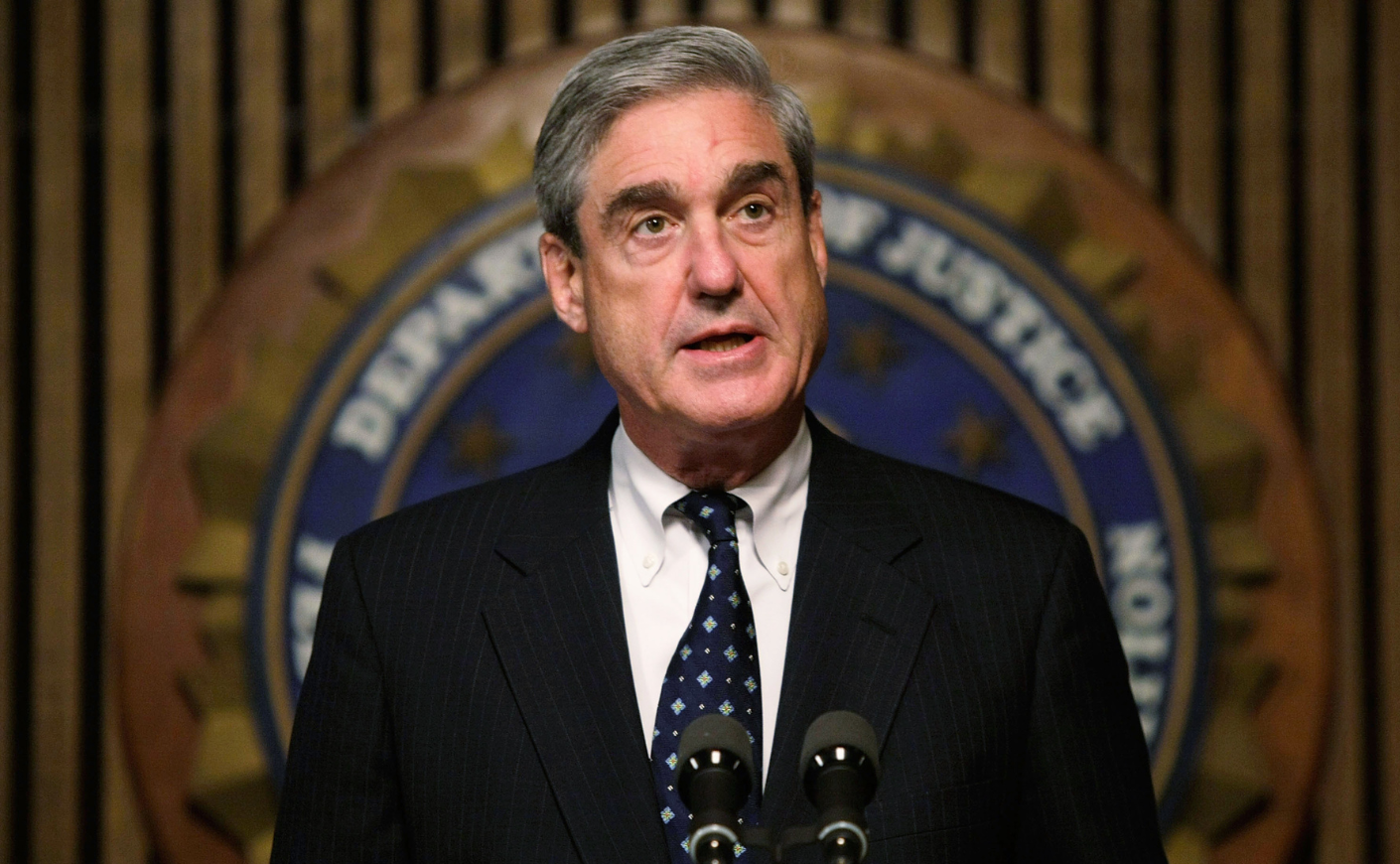
“With deep sadness, we are sharing the news that Bob passed away last night,” his family said in a statement.
Mueller spent decades in public service and was widely seen as a steady, disciplined figure — from his time leading Marines in Vietnam to guiding the FBI in the aftermath of the Sept. 11 attacks.
But for many Americans, his legacy is most closely tied to one of the most politically charged investigations in recent history: the Justice Department probe into Russian interference in the 2016 election and potential ties to the Trump campaign. That work put him squarely in Trump’s crosshairs, especially after Mueller declined to say the president had not committed any wrongdoing.
But tensions didn’t end with Mueller’s death. In a post reacting to the news, Trump wrote: “Good, I’m glad he’s dead. He can no longer hurt innocent people!”
The comment quickly sparked outrage across the political spectrum. Former Republican National Committee Chair Michael Steele called Trump “a vile, disgusting man” with “no moral core.” Meanwhile, Senate Minority Leader Chuck Schumer offered condolences to Mueller’s family and wrote in a social media post: “The cruelty is the point. Trump’s goal is to distract you from rising gas prices, his aimless war, ICE abuses, and the Epstein files.”
Trump’s mail-in voting fight heads to the Supreme Court
Finally, the Supreme Court is set to hear arguments today for a case that could reshape how states handle mail-in ballots.
At the center of the dispute is Watson v. RNC, a Republican-backed challenge to Mississippi’s policy allowing ballots postmarked by Election Day to be counted even if they arrive afterward. The case asks whether those grace periods conflict with federal law setting a single nationwide voting date — a ruling that could ripple beyond Mississippi to more than a dozen states with similar policies.
The timing is notable: Voters are already gearing up for November’s midterms, which will determine control of Congress. And while voting by mail has fallen from its pandemic-era highs, it remains a significant part of the electorate — nearly 30 percent of voters cast ballots that way in 2024.
Trump has spent years attacking mail-in voting, falsely claiming it is vulnerable to widespread fraud and insisting it cost him the 2020 election. His administration has also worked to pressure states to change their election rules, an effort detailed in newly obtained documents reported by CNN, while allies in Congress have followed suit: Senate Republicans have devoted days to debating a sweeping election overhaul bill aimed at curbing most mail-in voting, though the measure is expected to stall in the face of a Democratic filibuster.
But experts say the case may not have much real-world impact. Political scientist Daniel Thompson tells USA Today that states without grace periods for late-arriving ballots tend to see rejection rates similar to those that allow extra time — and ballots arriving after Election Day accounted for less than 1 percent of rejected votes in 2020.
Still, the case could matter in another way: shaping how voters think about election integrity. “Watson fits into this broader pattern of lawsuits over vote-by-mail,” Rick Hasen, an election law expert at UCLA, said in a webinar about the case. “I think they’re meant to please Trump, and they’re meant to make the elections seem fraudulent.”
