






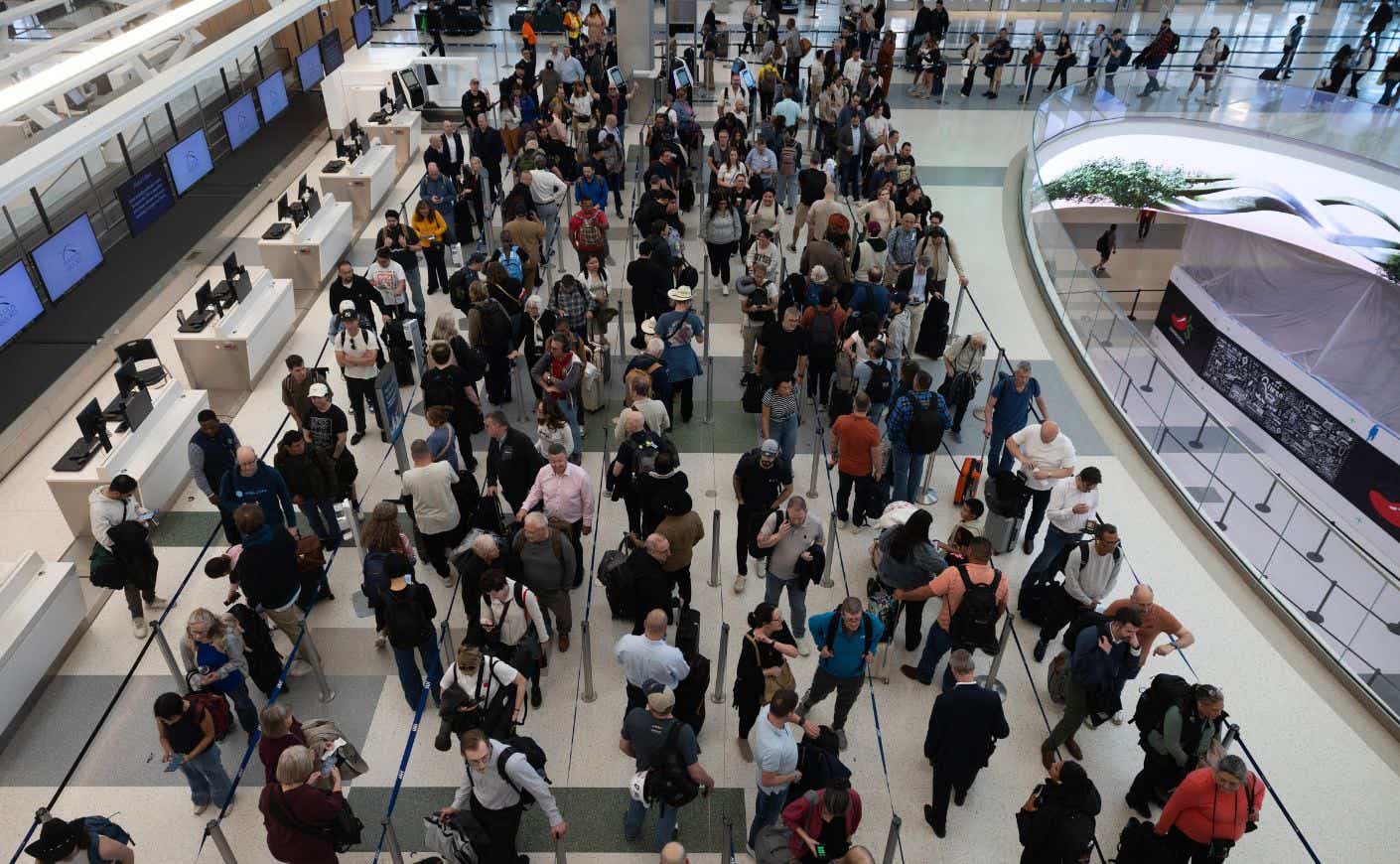
The effects of the partial Department of Homeland Security shutdown are showing up in a place many Americans can’t ignore: airport security lines.
As TSA officers go weeks without pay due to the impasse, call-out rates have climbed into the double digits at major hubs like New York’s John F. Kennedy International Airport. The result? Snaking security lines and growing bottlenecks at checkpoints.
What began as a political impasse is now playing out in real time for travelers, just as spring break travel ramps up across the country. Here’s what you can do to prepare — and potentially avoid the worst of the delays.
What’s going on?
A growing number of TSA officers aren't showing up to work at major airports as the partial government shutdown drags on, creating ripple effects for travelers nationwide.
The standoff in Washington has left roughly 50,000 TSA officers working without pay since mid-February, after lawmakers failed to fund the Department of Homeland Security. The strain is mounting: call-outs have climbed above 10 percent overall — and much higher at some major hubs, hitting about 25 percent at New York’s John F. Kennedy International Airport and roughly 38 percent at Houston’s George Bush Intercontinental Airport. The day before, more than a third of TSA officers called out at three major U.S. airports — William P. Hobby Airport in Houston, Louis Armstrong New Orleans International Airport, and Hartsfield-Jackson Atlanta International Airport — as the funding standoff continued.
NEW: Terminal C is now seeing an hour and a half wait at security checkpoints at Bush airport. We are tracking TSA wait times now on @KHOU pic.twitter.com/DSbQZX7tup
— Ugochi Iloka KHOU (@UgochiKHOU) March 19, 2026
For many of those still on the job, the financial pressure is becoming increasingly difficult to manage. Some workers are struggling to cover basic expenses like rent, car payments, and childcare, prompting support efforts in some cities. At Pittsburgh International Airport, for example, officials have partnered with local food banks to help affected staff.
Those staffing shortages are now spilling into daily operations. The result is longer lines, fewer open checkpoints, and growing delays. At some airports, wait times have stretched to two or even three hours, with some checkpoints shutting down entirely, forcing travelers into already crowded lines.
Officials warn the situation could escalate further. Acting Deputy TSA Administrator Adam Stahl told CBS News that if call-out rates continue to rise, “There could be scenarios where we may have to shut down airports.”
Airlines, for their part, are scrambling to manage the disruption, holding flights for delayed passengers and rebooking others when possible. Meanwhile, industry leaders are becoming more vocal. Delta Air Lines CEO Ed Bastian called the situation “inexcusable,” accusing Congress of using frontline workers as “political chips.”
How long will these travel disruptions last?
The partial DHS shutdown is now dragging into its second month, with no clear end in sight.
At the center of the standoff is a policy fight over immigration enforcement. Democrats are pushing for stricter limits and oversight, while the White House has resisted some of those demands. The administration has offered a counterproposal that includes measures like expanded use of body cameras and clearer identification for agents.
But Senate Minority Leader Chuck Schumer says that counter falls short of Democrats’ core demands, including barring federal agents from entering private property without a judicial warrant and from wearing face masks. “They haven’t budged on those,” Schumer reportedly said. “They’ve got to get serious.”
Both sides claim they’re negotiating in good faith, but talks remain stalled, with no breakthrough and no meetings currently planned between President Trump and Democratic leaders.
Amid growing strain on federal agencies and travel systems, Trump’s pick to lead the Department of Homeland Security, Sen. Markwayne Mullin, called for action at his confirmation hearing Wednesday: “We have to get DHS funded. We have to. My friends, we have to set the partisan side down.”
What travelers should know
If you’re flying in the coming days, a little extra planning can go a long way. With spring break driving peak travel, consider arriving at the airport three to four hours early to account for longer security lines, parking delays, and bag checks. Wait times have become so unpredictable that some travelers have shown up even further in advance. Reggy Monsanto, for example, told CBS he arrived five hours early for a 45-minute flight.
Before you leave, check current TSA wait times using the agency’s app or your airport’s website so you know what to expect. And if you travel often, TSA PreCheck or CLEAR can help you move through security faster.
TSA is expanding its Touchless ID program, which uses biometric verification to streamline screening. The program is now available at more than 65 airports nationwide, including major hubs like John F. Kennedy International Airport and Boston Logan International Airport, though availability varies by airline and terminal. To use it, travelers must already be enrolled in TSA PreCheck and have a frequent flyer profile with a participating airline — Alaska, American, Delta, Southwest, or United — along with a valid passport on file.
It’s also worth packing with security in mind. Keep liquids within the allowed limits, and make sure items like laptops and electronics are easy to access if needed. Small steps like these can help you avoid unnecessary delays and make a potentially stressful travel day a little smoother.
