






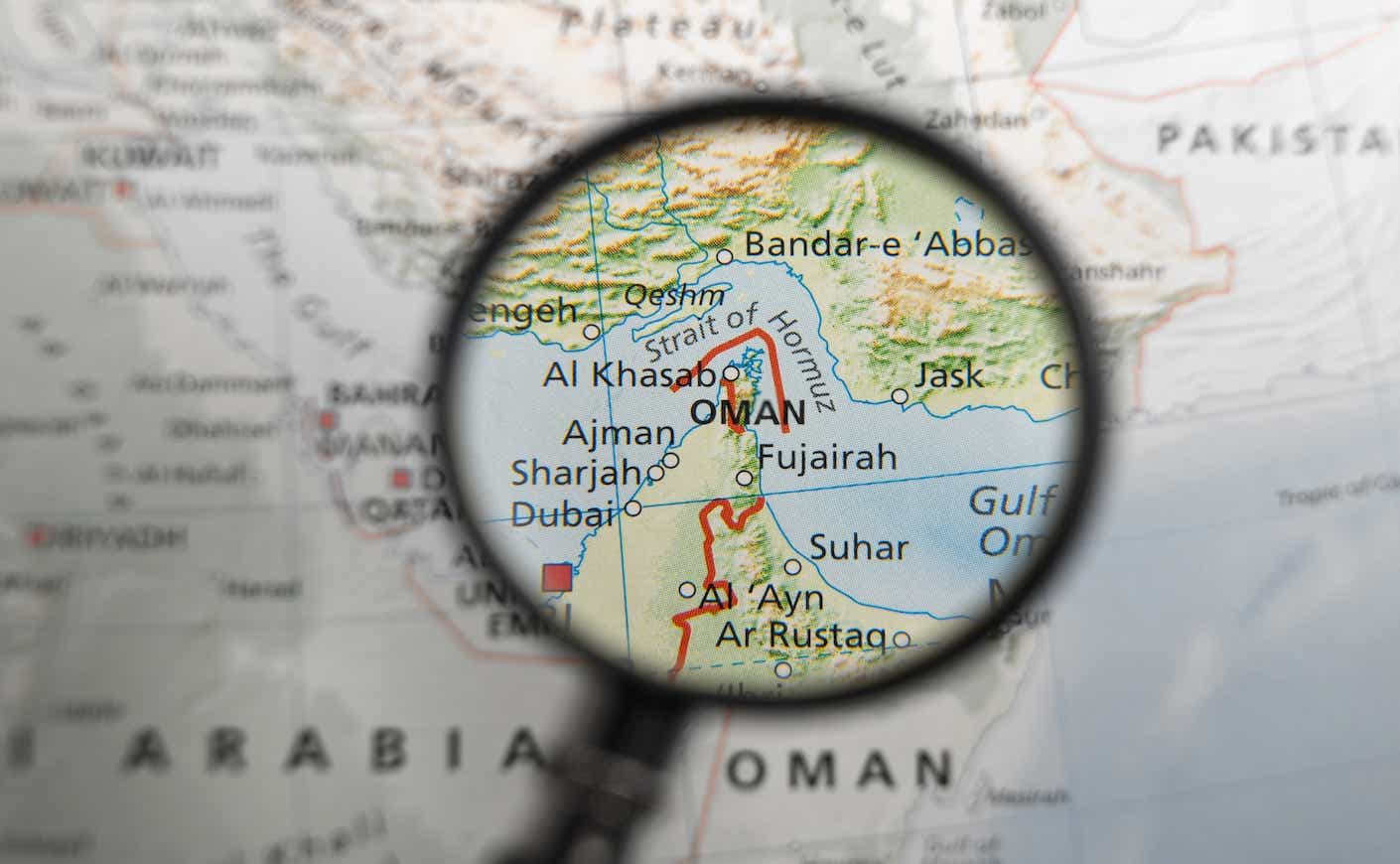
The Iranian regime has announced the closure of the Strait of Hormuz and threatened to target ships attempting to transit the narrow waterway. Some have already been damaged. While this could seriously harm global energy supply and raise costs, the consequences actually extend far beyond these markets.
The Strait of Hormuz, which sits to the south of Iran and connects the Persian Gulf with the Arabian Sea, is one of the most critical chokepoints for international trade. More than 30,000 ships, carrying around 11 percent of global seaborne trade by volume, transit the strait each year. And around 34 percent of seaborne oil exports and 19 percent of seaborne natural gas shipments also pass through it.
However, oil and gas are not the only commodities moving through the strait. The Gulf region serves as a major hub for the transfer of containers carrying consumer goods, particularly between Asia and Europe.
Alongside Jebel Ali in the United Arab Emirates — the world’s ninth-largest container port — the region handles more than 26 million containers annually, around 80 percent of which are transhipment (cargo containers being transferred between vessels). It is estimated that more than 150 ships, with a combined capacity of about 450,000 containers, are stranded in the region.
What is the Strait of Hormuz?
The Strait of Hormuz is central to the global fertilizer trade. More than 30 percent of urea — the most widely used nitrogen fertiliser produced from natural gas — is exported from Gulf countries by sea.
Urea prices rose by about 14 percent on March 2 compared with the previous day. Fertilizers account for a significant share of production costs in many agricultural products, just over a third each for both corn and wheat, for example. When increasing fertilizer prices combine with rising energy costs, producing important crops becomes more expensive.

Food and agriculture supply is at risk
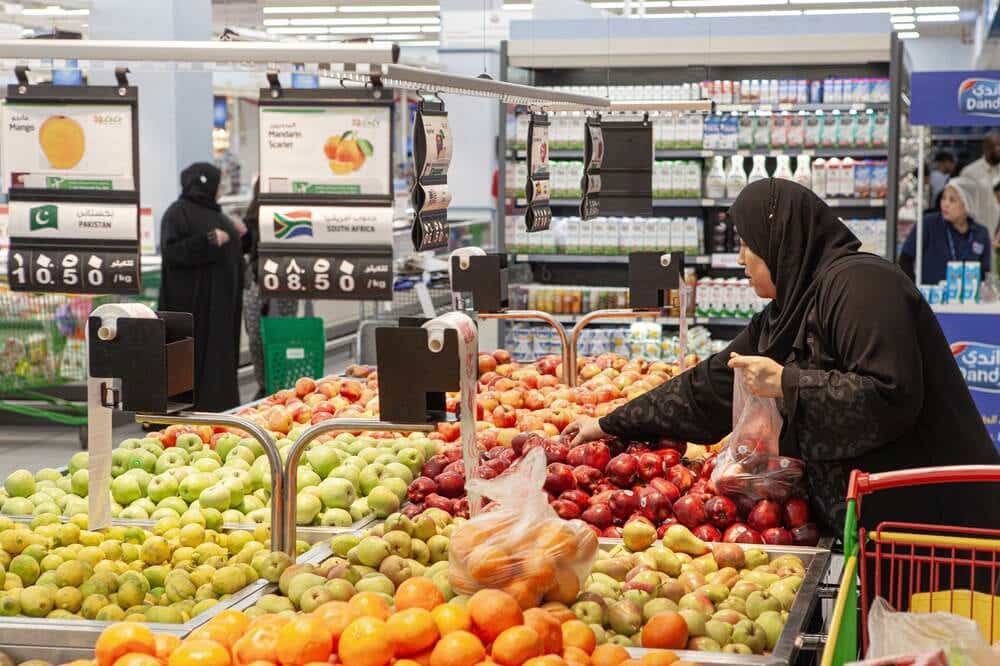
So the availability of agricultural output and food products could also be affected by the crisis. In addition to potential fertilizer shortages, disruptions to shipping may hit supplies. Perishable goods transported in refrigerated containers are already at risk of spoilage as container ships remain stranded near the strait.
Gulf countries face particularly high risks because many depend heavily on imported food. In Qatar, for example, more than 90 percent of food is imported, with the vast majority arriving by sea. With flights not fully operating across the region, food availability could become a growing concern. Food by road freight from Turkey may provide an emergency alternative, but capacity would be limited and costs significantly higher than maritime transport.
Beyond the region, consumer prices may also rise. Higher energy costs are likely to be a major driver, although the overall impact will depend on how long the crisis lasts and what happens to those energy prices in the meantime. Brent crude oil prices increased from about $72 (£54) before the strikes began to around $79 as of March 4 — compared with roughly $66 one month earlier.
A 2023 analysis by the European Central Bank suggested that inflation in Europe could rise by 0.8 points if a third of oil and gas supplies passing through the Strait of Hormuz were disrupted. In the current situation, almost all shipping traffic through the strait has been halted.
The price of consumer goods could also be affected by the disruptions. Shipping costs have already increased for containerised shipments to the region, with major container lines imposing war risk surcharges ranging from $1,500 to $4,000 per container. For context, the typical cost of moving a container from Shanghai to Europe is around $2,700-$3,600, including freight and port cargo handling charges.
Similar surcharges are also applied to shipments between other regions not using the Strait of Hormuz, as leading container lines bypass the Suez Canal, which links the Red Sea and the eastern Mediterranean. Instead, they reroute vessels around the Cape of Good Hope off the southern tip of Africa.
This strategy was also adopted during the Red Sea crisis in late 2023, when Houthis in Yemen (backed by Iran) began seizing and attacking passing ships. Freight costs increased by 250 percent in the first few months of the crisis.
Overall freight rates — the price companies pay to transport goods — may once again increase globally as shipping capacity shrinks. Increases could be limited this time though, because the container sector was actually facing an overcapacity issue.
But perhaps surprisingly, higher shipping costs do not necessarily translate into large increases in consumer prices. For many products, maritime transport accounts for as little as 0.35 percent of the final retail price. But delayed shipments and unreliable transit times may instead create logistical challenges, including higher inventory costs and temporary shortages of essential goods, which can affect consumers more.
A prolonged crisis, combined with vessels rerouting around the Cape of Good Hope, could intensify pressures on consumer prices, logistics, and production costs, and the availability of food and other consumer goods. It’s a reminder that regional tensions happening in strategic locations like the Strait of Hormuz have global consequences for consumers.
Gokcay Balci, Lecturer in Sustainable Freight Transport and Logistics, University of Leeds and Ebru Surucu-Balci, Assistant Professor in Circular Supply Chains, University of Bradford
This article is republished from The Conversation under a Creative Commons license. Read the original article.
