






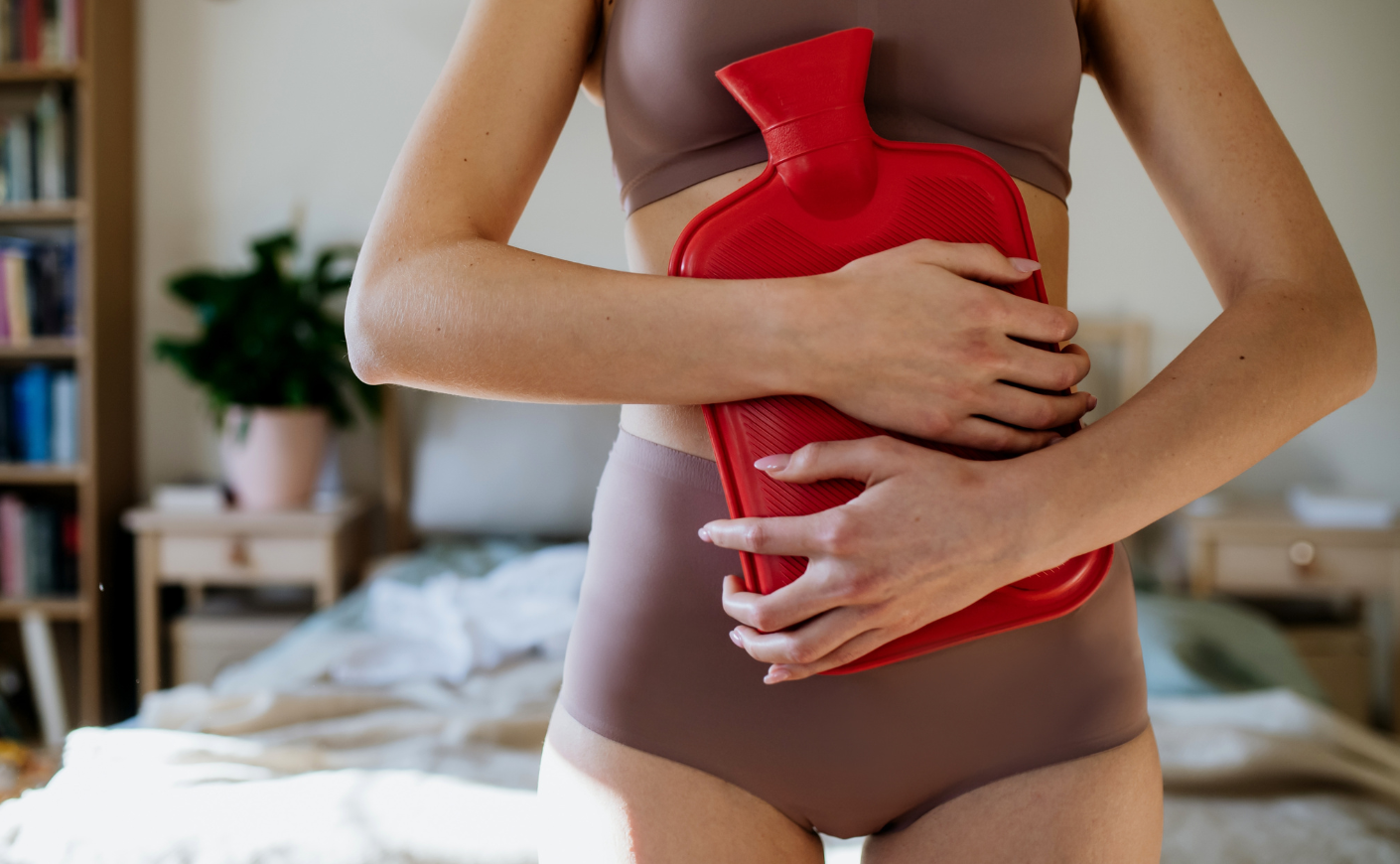
By her second period, Leah Chapman could not get out of bed.
She was 12 years old and on vacation with her family in Colorado. The mountains were outside. The rest of the family had left for the day. She was stuck inside, curled on the couch, blinds half drawn, negotiating with pain that felt bigger than something called cramps and heavier than anything she could name. It would take 20 years before someone finally did name it: endometriosis.
Stories like Chapman’s are part of why the American College of Obstetricians and Gynecologists recently updated its guidance on how endometriosis is diagnosed. For years, surgery was treated as the gold standard to confirm the disease. Now, clinicians are encouraged to make a diagnosis based on symptoms and examination and to begin treatment without waiting for surgical proof.
That shift may sound technical, but it changes something important. It means the pattern your body has been showing you carries more weight than it used to.
Endometriosis is not rare. The chronic inflammatory condition impacts about 10 percent of reproductive-age women. Those women have tissue similar to the lining of the uterus growing outside of the uterus — sometimes attaching to the ovaries, bowel, bladder, ligaments deep in the pelvis, and even nerves. Yet despite how common it is, diagnosis often takes years.
One reason for that delay is deceptively simple. Most women have no reference point for what normal menstrual pain should feel like. You only know your own baseline.

If your mother missed work every month because of her period; if your grandmother described her cycles as something to endure rather than manage; if vomiting, fainting, or severe cramping were framed as part of "becoming a woman," then intense pain can start to seem ordinary. Familiar becomes normal. But "common" and "healthy" are not synonyms.
When I talk with patients about recognizing endometriosis, I often point out what I think of as the “dys” pattern: dysmenorrhea, dyschezia, dyspareunia, dysuria. The language sounds clinical because it is, but the meaning is straightforward: Painful periods. Pain with bowel movements. Pain with sex. Pain with urination.
You don't need to collect every one of these symptoms for something to be wrong. Endometriosis doesn't require a complete checklist. Where the disease implants often determines what you feel. If it involves the bowel, pain with defecation that worsens around menstruation may dominate. If it involves the bladder, urinary discomfort without infection may return month after month. If it affects deeper pelvic structures, intercourse may feel sharp or positional in a way that changes intimacy. Some adolescents experience nothing but debilitating menstrual pain that keeps them home from school.
The thread running through all of it is when you notice a pattern. Does the pain interrupt your life? Do you cancel plans? Do you schedule around certain days of the month? Does the discomfort flare predictably with your cycle rather than appearing at random?
The updated guidance from ACOG recognizes that symptoms and history matter enough to begin acting. That does not mean every painful period is endometriosis. It does mean that when pain is severe, persistent, and patterned, it warrants thoughtful evaluation rather than dismissal.
If you suspect something more than ordinary cramps, start by observing your own data. Track your cycle for several months. Write down when your period begins. Rate the severity of pain. Note where it's located. Pay attention to bowel or bladder changes. Record the things you miss out on because of it. Patterns that feel vague in memory often become unmistakable when written down.
When you speak with your clinician, describe the impact instead of using minimizing language. Instead of saying your periods are bad, explain that you've missed school or work. Instead of saying it’s uncomfortable, describe the nausea, the inability to stand upright, the days you remain in bed. If intimacy has become painful enough to avoid, say that clearly. These details help clinicians connect the dots.
You can also ask a direct question. Could this be endometriosis? What would an evaluation involve? What are the next steps?
Not everyone with endometriosis sees a gynecologist first. Some see pediatricians for severe teenage periods. Some see gastroenterologists for bowel pain that worsens monthly. Some see urologists for recurring urinary symptoms. Some seek care for back or sciatic pain that mysteriously intensifies at predictable times. Connecting symptoms to the menstrual cycle often reveals a larger picture that might otherwise remain fragmented.
Leah Chapman understands the cost of that missed connection. By the time she received her diagnosis, she had advanced disease and an ovarian cyst that eventually ruptured, requiring emergency surgery. Her fertility journey has included multiple egg retrievals and embryo transfers, each cycle carrying significant emotional and financial weight. Her experience led her to found the Women’s Health Research and Action Center in Houston, an organization focused on improving research, awareness, and policy so that earlier recognition becomes standard rather than exceptional.
Earlier recognition does not guarantee an easier path, but it can influence options and timing, shift conversations forward, and reduce the years spent wondering whether the pain is exaggerated or imagined.
If there’s one moment of clarity to take from this, it’s this: Severe, life-disrupting menstrual pain is not something to automatically accept as the price of womanhood. When pain consistently shapes how you live, it deserves investigation.
Understanding your own pattern and bringing that information into the exam room changes the conversation. It turns vague discomfort into a clinical narrative. And it allows medicine to respond earlier, when the body has been asking for attention all along.
Sarah Berg, MD, is a board-certified OB-GYN and certified menopause practitioner who spent over a decade in clinical practice caring for women across all stages of life. She now focuses on evidence-based education and storytelling that helps women understand their bodies, prioritize preventative care, and navigate midlife health with clarity and confidence. Learn more at Selfority.
