






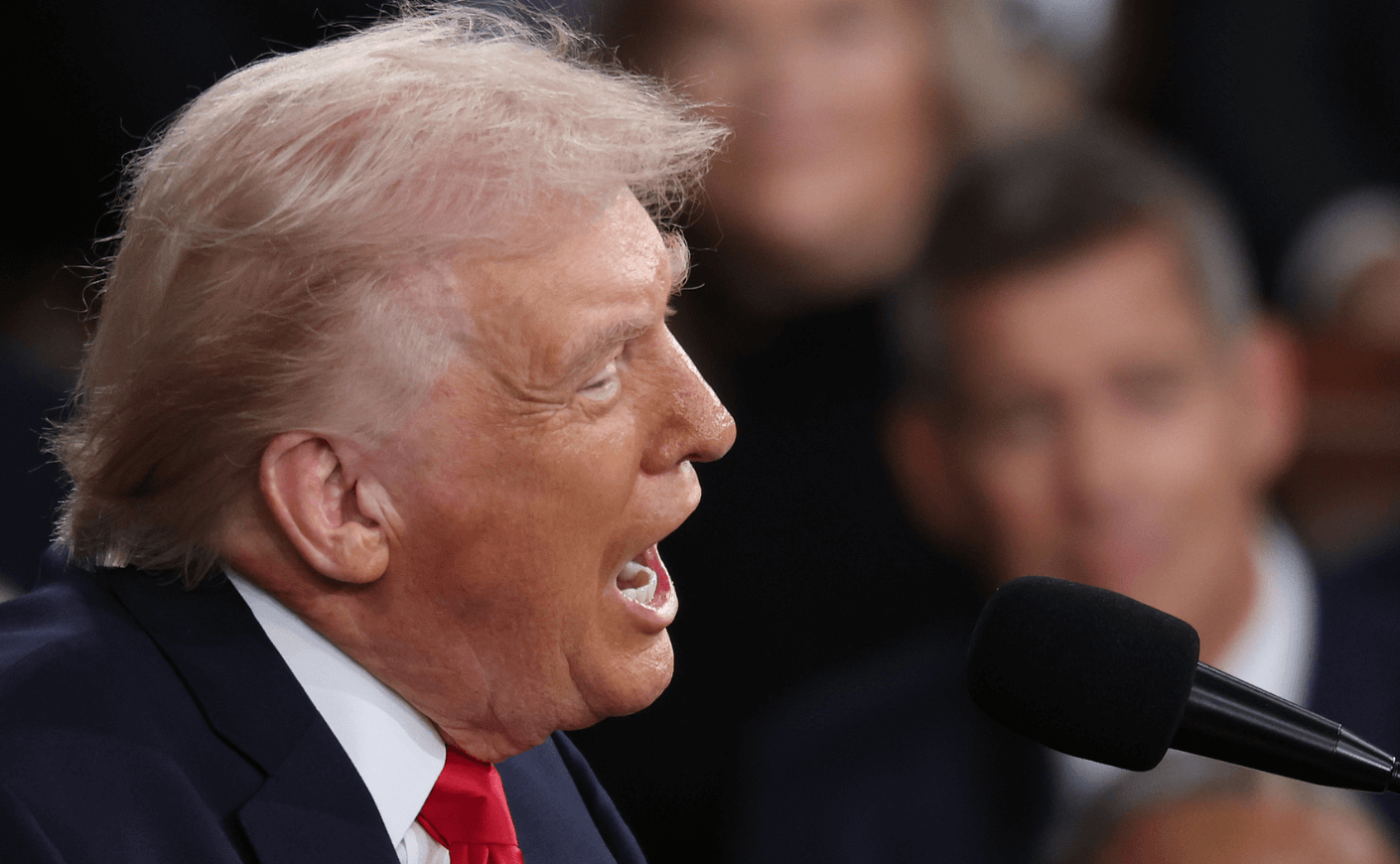
When I first saw the headlines about the phone call in which President Trump slighted the U.S. women’s hockey team — praising the men, needling the women, and turning what should have been a unifying, celebratory moment into yet another culture-war flashpoint — I felt that familiar mix of frustration and exhaustion. On its own, maybe it would have been just another eye-roll-inducing moment. But it didn’t land on its own. It landed on top of decades of comments, insults, boasts, and legal battles that have shaped how many women hear him now.
Why, this time, did it feel like such a body check…or even worse..boarding? (Getting blocked or "slammed" in hockey, particularly when it involves force, is generally called a body check, if legal, or boarding/interference, if illegal/violent. Thanks ChatGPT!)
The controversy began after Trump publicly celebrated the men’s team and either minimized or ignored the women’s accomplishments entirely — prompting backlash and, ultimately, the women declining an invitation tied to a high-profile political event. There have been instagram posts galore; my favorites are from hockey moms like this:
In a vacuum, you could argue it was a playful joke steeped in systemic sexism. But in context? It felt like something else. Like a pattern.
Because the pattern is long.

For years — way before he entered politics — Trump’s public rhetoric about women followed a consistent script. In The Art of the Deal, he wrote about dating “beautiful women” who “couldn’t carry on a normal conversation” — framing women as decorative objects. In a 1991 Esquire interview, he famously reduced status and prestige to having “a young and beautiful piece of ass."
Then came the 2005 comments on The Howard Stern Show, where he described walking in on pageant contestants and "inspecting" them while they were undressed saying, “I sort of get away with things like that." And of course, there's the infamous Access Hollywood tape the same year, in which he bragged about grabbing women without consent — “when you’re a star, they let you do it” — describing access to a woman's body as a perk of male fame.
When women challenge him in public, he often reverts to humiliation:
Megyn Kelly? “Blood coming out of her… wherever.” (Megyn's about-face on Trump is worthy of its own essay.)
Carly Fiorina? A "horseface.”
Hillary Clinton? “Such a nasty woman.”
Mika Brzezinski? “Bleeding badly from a face-lift.”
It’s not just the words — it’s the reflex. Woman asks a hard question, woman becomes nothing more than her appearance. Woman competes for power, woman becomes a punchline.
And then there’s the legal history. In the E. Jean Carroll case, juries found Trump liable for sexual abuse and defamation, awarding significant damages after he publicly attacked her credibility. Whatever your politics, those aren't minor footnotes — they're institutional findings.
So when Trump appears to demean or dismiss a championship women’s team — women who've trained their entire lives, who represent this country with grit and grace — it doesn’t feel isolated. It feels cumulative.
Sports matter in our culture. They’re one of the few arenas where excellence is clearly measurable and visible. And when women’s teams win — and the U.S. women's hockey team has won a lot, bringing home its third Olympic gold medal this year — they challenge the old narrative that women are ornamental or secondary. Instead, they're demonstrating that they can be powerful and disciplined. For the people for whom that mental shift is a challenge, deal with it. We're so tired of having to prove this point over and over and over again.
Respect is communicated in small gestures. Who you congratulate first. Whose name you say. Whose invitation you extend warmly — and whose you frame as an afterthought. That's what real leadership involves, too. I keep thinking how easy it would have been for the president to be gracious. “How about those women hockey players?” “Your female counterparts were awesome!” “Nice to have two golds, thanks to US Women’s Hockey.” Inclusive. Classy. And savvy. I guess it’s simply too much to ask.
If this hockey situation had happened in isolation, I’m not sure it would've had the same staying power. But human beings don’t experience events in isolation. And for many women, this felt like yet another reminder that their achievements are often (and should be) minimized, their professionalism overshadowed by politics, and their hard-earned victories treated like afterthoughts.
There’s a reason the reaction to Trump's recent comments was swift. It wasn’t just about hockey — it was about dignity.
And here’s the thing: Women and girls are watching. They see who gets celebrated fully, and who gets sidelined. They see which accomplishments are amplified and which are treated like cultural bargaining chips.
Ultimately, this issue is about whether the most powerful person in the country models respect. On its own, maybe this moment would have faded. But layered on top of everything that came before it, it feels less like a misstep — and more like a throughline.
On Thursday, it was announced on X that Flavor Flav (yes, Flavor Flav) would be hosting an event in Las Vegas this July called She Got Game, aimed at celebrating the women's hockey team and other female athletes. The outpouring of love directed at the team is heartening. And I hope the ladies party their brains out in Vegas. But they shouldn’t be put in a position of getting some kind of consolation prize just because we have a president, who, after all these years, still doesn’t get it.
