






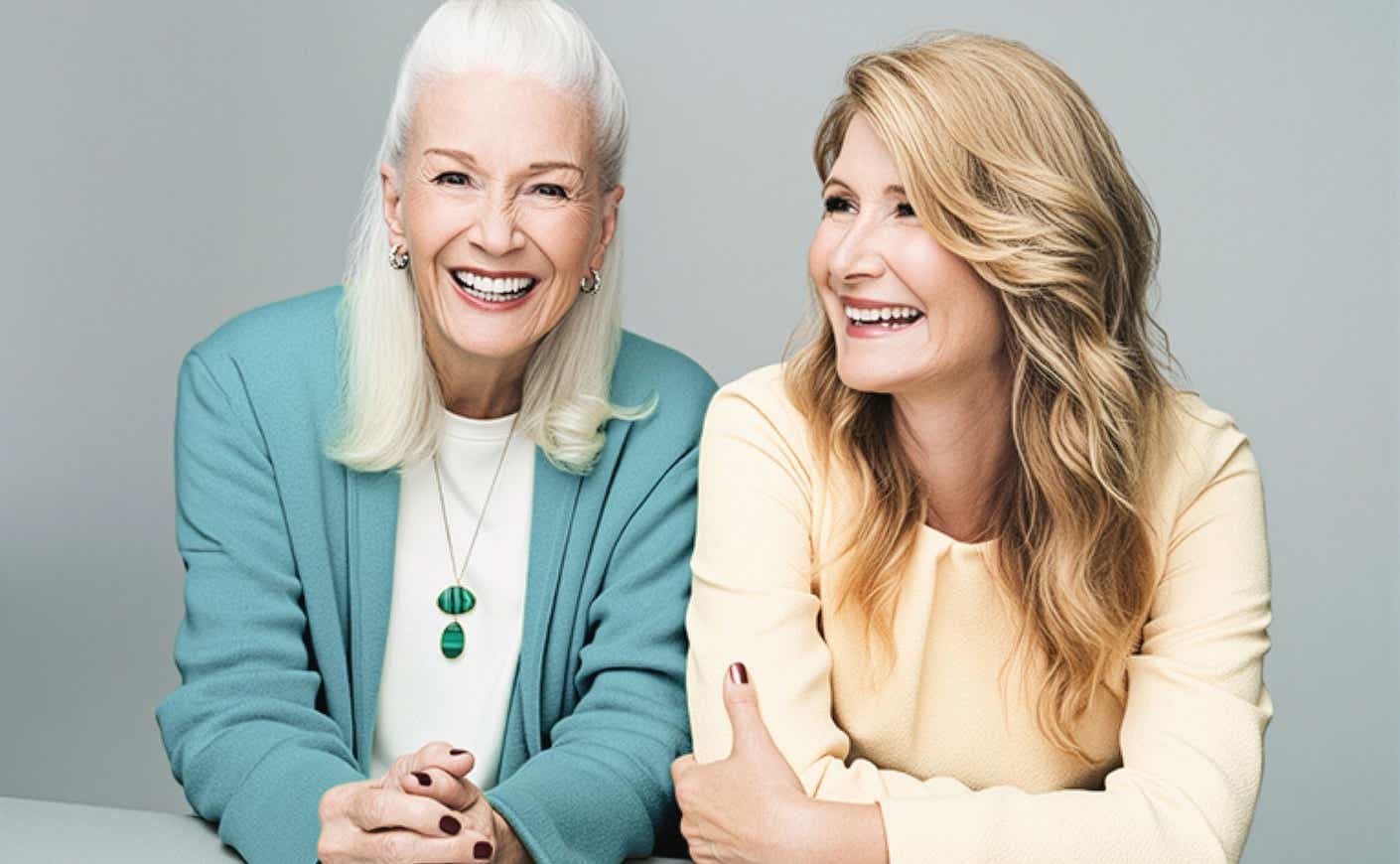
Veteran actress and producer Laura Dern has built a formidable career of her own — though storytelling runs in her blood. She’s the daughter of Bruce Dern, whose filmography spans from dramedies like Nebraska to cult-classic tragedies like They Shoot Horses, Don’t They?, and the late Diane Ladd, the acclaimed actress and director known for films like Chinatown. Together, they cemented the family’s reputation for unforgettable performances.
In a time when nepo babies are often teased for their famous parents, Dern has never shied away from her roots. She's worked with her parents creatively in the past — even as recently as collaborating with her dad on the TV show Palm Royale in 2024. But these thoughtful partnerships with her parents weren't limited to small and big screens — her last joint project with her mother focused on a disease that had greatly impacted their family.
Ladd died of chronic hypoxic respiratory failure in 2025 — a long-term condition where the lungs cannot adequately transfer oxygen to the blood, often caused by pulmonary fibrosis. Ladd had grappled with a diagnosis of idiopathic pulmonary fibrosis (IPF) years before her death. The progressive lung disease is characterized by irreversible scarring of lung tissue, which gradually impairs breathing.
Before Ladd's death, she and Dern teamed up with the pharmaceutical company Boehringer Ingelheim for their Beyond the Scars campaign, which raises awareness of Interstitial Lung Disease — an umbrella term for a group of over 200 conditions, including IPF. Ladd died during her and Dern's involvement in the campaign.
"When mom was diagnosed in 2018, we didn't know about Boehringer Ingelheim," Dern says. "We wished we had Beyond the Scars then. Mom was determined to partner with Boehringer Ingelheim to spread the word. And she asked that, no matter what, I would continue utilizing her legacy for good in whatever ways possible."
To that end, Dern spoke to us about Ladd's initial misdiagnosis and subsequent fight to uncover the truth, her heartfelt advice for caregivers, and what she wants you to know about advocating for yourself in scary situations.

KCM: Idiopathic pulmonary fibrosis (IPF) is often misunderstood or misdiagnosed in its early stages. What was your mom's experience in getting diagnosed?
Laura Dern: My mother was misdiagnosed between 2016 and 2018. Her symptoms were shortness of breath, a dry cough, acid reflux, and esophageal issues. She was told she had asthma — she was surprised [by that] because she was in her 80s and hadn't ever had asthma.
I remember a few times hearing her tell doctors, "I'm telling you, something doesn't feel right in my lungs. I can't catch my breath." And the doctor would say, "Are you a smoker?" She would say, "No. I never really smoked." And they'd go, "Well, it's not lung disease."
She felt those years were wasted searching for answers when she could have been supporting her lung health, understanding the disease, and getting a team around her.
Because the cause of IPF is unknown, it was a very traumatic and disconcerting journey until my mom had what they believed was pneumonia. She demanded imaging through a chest X-ray. The doctor showed me these spiderwebs on her lungs and explained they were scarring. They showed me that it was more advanced in one lung than the other, but explained that it was a progressive disease. They said, "Your mother has three to six months to live. Be gentle with her. There's nothing you can do." There's no help, basically. Which was not only devastating and terrifying, but it wasn't true. What was true was that we needed to find an incredible pulmonologist. She lived for seven years after her first meeting with a pulmonologist.
How did that change your mom's prognosis?
With the help of the pulmonologist, there were myriad options, many of which she found really useful, like oxygen therapy and pulmonary rehab, which included walking every day.
And within pulmonary rehab, she found community, other people dealing with interstitial lung disease or going through similar challenges, but still wanted to have a purpose-driven life doing what they love and living alongside this diagnosis.
You've spoken about your role as a caregiver to your mother. What are some meaningful ways that caregivers can help loved ones manage the physical realities of this illness, but also maintain hope, community, independence, and emotional strength?
If you have a patient who's a strong self-advocate, really listen to and learn from them about their needs, and match them. If they have a purpose-driven life and want to keep working, want to be at their grandkids' high school graduation, and don't want to be too reliant on oxygen, be their partner. If they want to get out and walk, be there with them. When it's a good day, your loved one might say, "Make sure I walk every day." Then three days later, they might say, "Don't make me walk today." That's when you say, "Sorry, you told me we had to walk every day." You have to be their strength when they're really struggling.
My mom really taught me to rely on community so that I could have space for self-care. I used to feel guilty about leaving her at hard moments, and she would say, "No, I'm being selfish. If you go walk the dog, you come back happier, and you're more patient with me." It's really hard to spend days sleeping in a hospital with the person you love. Take a break, get some fresh air, and have somebody else step in. In my case — as a single parent — my kids helped take care of their grandmother.
At first, I said, "I don't want to bother [my kids]," or "They shouldn't have to see their grandmother in pain." But it's really enhanced their empathy. They love their grandmother even more deeply. It's beautiful to see that, because God knows it takes a village, and Mom needed the energy of the young people in her life.
What do you feel isn't discussed enough about ILD?
There's no known cause — that isn't talked about enough. When I did the film Wild in 2014, I played Cheryl Strayed's mother, who died at a very young age of lung cancer as a non-smoker. It's tragically common among women. I learned that fact because I was an actress on a movie set, but it gave me this little voice inside that said, "Hold on, wait," when my mom had pneumonia in 2018. We decided we needed all of the scans to figure out what was going on. Both of us felt like her doctors didn't know what they were talking about, or didn't know the research as deeply as they should have. We also didn't know to ask for a great pulmonologist.
Don't be embarrassed or uncomfortable when you're not appreciated or liked. Because you know what? There are different kinds of people, and sometimes people aren't going to like you. When you're in a doctor's office, and they've given you three minutes to tell you a diagnosis, and they don't give you answers — demand more answers. Demand more time. Ask the hard questions. And if there are people who aren't listening to you, the patient — or me, the caregiver — push harder. Get a second opinion. Know that there is something you can do. There's always something we can do.
How has your personal experience with advocacy influenced the kind of stories you're drawn to tell as an actor?
I start with empathy. The deeper our life experience, the deeper we can go in bringing our own humanity, vulnerabilities, and life experience to the roles we play and the stories we tell. Like when I did Wild — we shared a story that can teach others about this life experience, about community, about connection, about taking care of each other. This should be a theme everywhere we turn. Within our own families, as we raise the next generation, we need to raise them to take care of themselves, each other, their elders, and their community.
