






This article is part of an ongoing series providing insights and tips from a primary care doctor on how to get the most from your medical appointments, what your doctor might be experiencing on the other side of the exam table, and all that patients and doctors have in common, so we can make the best of our healthcare system together.
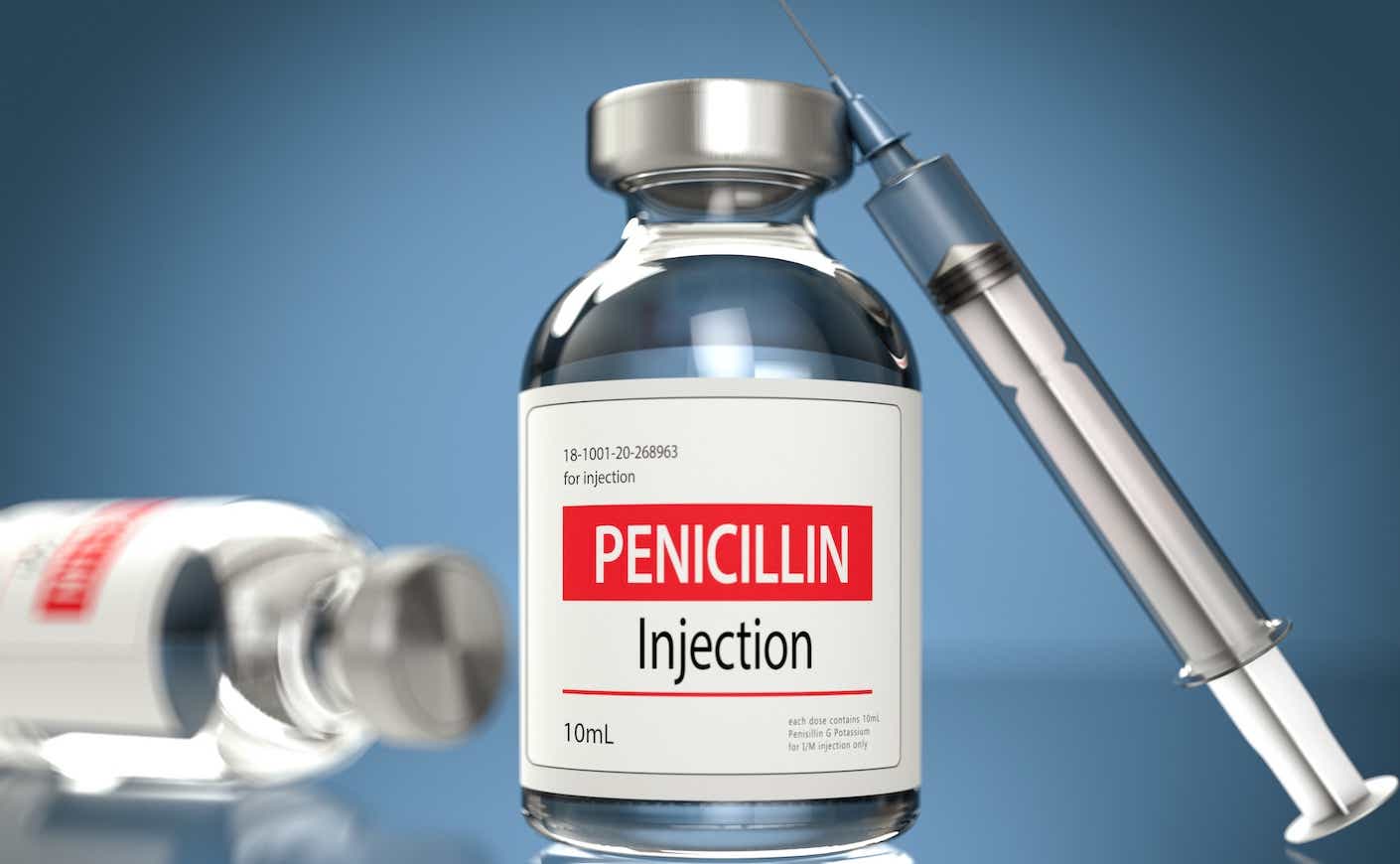
On a recent episode of the popular medical drama The Pitt, the clinical team treats a patient with a penicillin allergy who needs antibiotics. The nurse and the attending physician, Dr. Robby, use this opportunity to teach their medical student that most people who think they have a penicillin allergy are not actually allergic to this medication.
At this point in the show, my husband and I looked at each other and smiled. This topic is one of my favorites as a primary care physician, and it’s also personal for our family.
Like approximately 10 percent of the population — about 34 million people in the United States — I was diagnosed with a penicillin allergy as a young child. I had developed an itchy red rash on my legs after taking amoxicillin, a mainstay medication in the penicillin family. From then on, my medical chart carried a label that read: “ALL: PCN,” shorthand for “allergies: penicillin.”
I didn’t think much about this label until my son was diagnosed with a penicillin allergy when he was six years old. He also developed a rash a few days after taking amoxicillin. By that point, my medical training had taught me what the characters on The Pitt know: Most people with a reported penicillin allergy can actually take it safely.
Unfortunately, there can be real harm associated with a penicillin allergy label, including exposure to inefficient treatment and harsher side effects. It's important for clinicians and patients to determine together whether this allergy is real. Most of the time, we can safely do so during a routine outpatient appointment.

The penicillin allergy label: common, but often wrong
Clinicians prescribe antibiotics very frequently in our healthcare system, with 85-95 percent of antibiotic prescriptions occurring in the outpatient setting, such as doctors’ offices. In 2024, U.S. outpatient pharmacies dispensed 256 million antibiotic prescriptions. So when 10 percent of the population reports a penicillin allergy, medical teams have to decide: Is it real? And if so, does the patient need to take a second- or third-line antibiotic option that may be less effective or riskier?
One of the most fascinating things I’ve learned in my time as a physician is that 90 to 95 percent of people who think they have a penicillin allergy are not actually allergic. There are a few reasons behind this myth:
- The allergy was never a true allergy to begin with. Maybe the person (often in childhood) had a stomachache, diarrhea, or headache. These are common side effects of many antibiotics, rather than signs of a true allergy.
- That rash both my son and I had? Rashes show up all the time in childhood, sometimes as part of the illness itself (especially if it’s viral). It can be hard to tell whether the rash is from the penicillin.
- Even if a child is genuinely allergic to penicillin, half of all people with a penicillin allergy lose their allergy within five years! About 80 percent lose it within 10 years. They can take penicillin again after this time and be completely fine. But most people don’t get retested. That “ALL: PCN” label ends up being hard to shake.
The risk of an inaccurate penicillin allergy
What’s the big deal about a penicillin allergy label in the first place? Why not just avoid penicillin-based medications if you're unsure? It turns out that the label has real consequences. Penicillin-based drugs are wonderful first-line antibiotic options for many infections, ranging from strep throat and ear infections to more serious infections of the heart valves or bloodstream. The class of antibiotics to which penicillins belong is also the first-line choice to prevent surgical infections.
One of the most important guiding principles in using any antibiotic is to choose the most precise tool for the job — a fine scalpel rather than an axe. When a person with a penicillin allergy needs antibiotics, their healthcare team is often forced to choose broader-spectrum, more powerful antibiotics than what the patient actually needs, leading to several downstream complications.
When antibiotic regimens deviate from the standard of care, healthcare costs increase. The risk of antibiotic resistance increases. So does the risk of dangerous, sometimes life-threatening healthcare-associated infections, including a drug-resistant form of Staph aureus (MRSA), which causes painful skin and soft tissue infections and can spread to the bloodstream and other organs, and Clostridium difficile, or C. diff for short, which causes a severe, highly contagious form of diarrhea. If a person needs surgery, the risk of a surgical site infection goes up. The risk of death may increase.
In many cases, a penicillin-based antibiotic is the right drug for the job. And in more than 90 percent of these cases, the person who thought they were allergic could have received penicillin all along.
How to determine if you're allergic to penicillin
A lot, it turns out! Together, patients and clinicians have safe, effective, and easy tools to help determine whether a penicillin allergy is real. It all starts with the PEN-FAST rule, which was developed by researchers in 2020 and has been validated in more recent studies.
PEN-FAST is a series of questions where each answer earns between 0 and 2 points. The higher the final score, the more likely it is that the allergy is real. The first question is just, "Does the person report a history of a penicillin allergy?" If so, move on to the F-A-S-T questions.
- F: Has it been five years or less since the reaction? (0 points for “no,” 2 points for “yes” or if the answer is unknown)
- A: Was there a severe reaction like anaphylaxis or angioedema, where tissues in the airway became swollen? OR
- S: Was there a severe cutaneous adverse reaction, like skin sloughing off in large sheets, revealing raw, red skin underneath (NOT a mild, itchy rash)? (0 points for “no,” 2 points for “yes” to either of these two questions)
- T: Was treatment required for the reaction, such as a trip to the emergency department or needing to stay in the hospital? (0 points for “no,” 1 point for “yes” or if the answer is unknown)
If the total score is 3 or higher, the person’s allergy could be real, and they should see an allergist for a more detailed evaluation, such as skin testing. If the total score is less than 3, the risk of a true allergy is low. The crucial next step is a direct oral challenge in which a person tries two different doses of amoxicillin in a clinically supervised setting (like a doctor’s office) and is monitored for an hour to see if they have a reaction.
If the person feels fine after taking the smaller dose and then the full-strength dose of amoxicillin during this period of monitoring, they and their medical team can feel confident that the penicillin allergy label is inaccurate and should be removed.
As it turns out, neither my son nor I is allergic to penicillin. We were tested; we underwent a direct oral challenge with amoxicillin, and the results were conclusive: no allergy.
A penicillin allergy label may seem like a small detail in your medical record, but it can shape every infection you’re treated for in the future. In my work as a primary care doctor, when I see that a patient has a penicillin allergy label, I talk about it with them rather than immediately accept it as fact. If I go through the PEN-FAST questions as I learn more about their history, I can quantify their risk of having a true penicillin allergy and maybe work with them on a direct oral challenge.
And if the direct oral challenge goes well, I can remove the penicillin label from their chart. I feel relieved and grateful that they can receive the right medicine for future infections, rather than overly broad or powerful antibiotics that can cause harm.
Neda Frayha, MD, is a primary care internist, editor and host of the Primary Care Reviews and Perspectives podcast by Hippo Education, and public radio contributor on topics related to health and medicine. She has written for the Washington Post, reported on health care for WHYY, and been featured on podcasts such as The Pulse, The Broad Experience, and The Curbsiders.
