






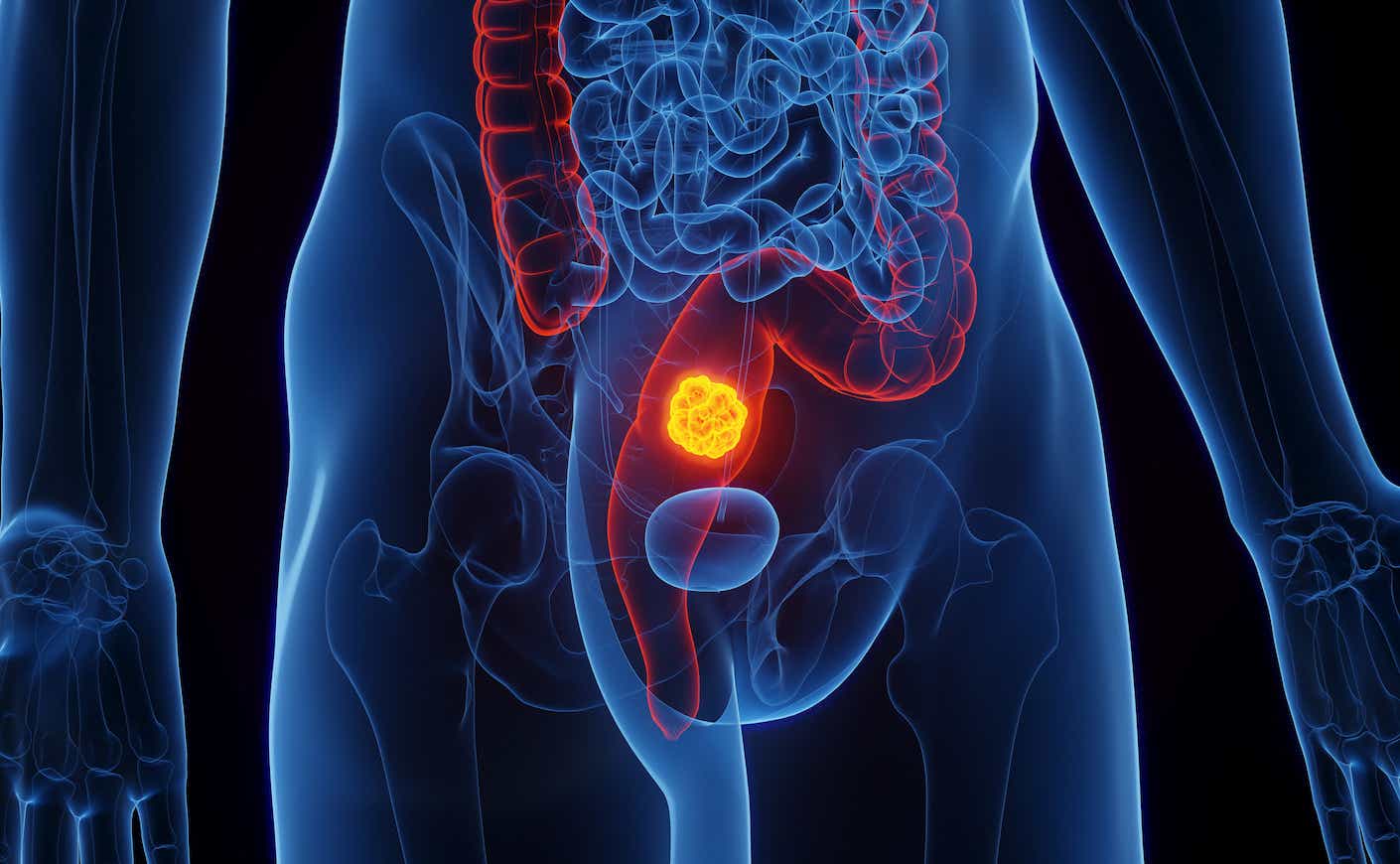
Colorectal cancer is often spoken of as a single disease, but it actually refers to two related cancers: colon cancer and rectal cancer. The latter was recently revealed as the reason we lost the wonderful Catherine O'Hara earlier this year. (According to PEOPLE, her primary cause of death is listed as a pulmonary embolism, and rectal cancer is listed as the underlying cause of the embolism on the death certificate.) While the disease is on everyone's mind, we wanted to use this opportunity to educate our readers on the difference between the two forms of cancer. Both are considered colorectal cancer, but understanding exactly where the tumor starts makes a real difference in treatment, outcomes, and even prevention. (Some researchers have argued that we should stop lumping them together as "colorectal cancer" because of their distinct characteristics.)
According to the American Cancer Society, colorectal cancer remains one of the most commonly diagnosed cancers in the United States. In 2026 alone, an estimated 108,860 new cases of colon cancer and roughly 49,990 new cases of rectal cancer are expected. And if you combine all the cases across genders, it's the second most common cause of cancer deaths in America.
What’s the difference between rectal and colon cancer?
Colon cancer originates in the colon, the long, tube-like portion of the large intestine that absorbs water and nutrients from digested food before passing waste along. Rectal cancer starts in the rectum, the last portion of the large intestine — about 12 to 15 cm long — where stool is stored before it exits the body, says John Marshall, MD, the chief medical consultant for the Colorectal Cancer Alliance and director of the Ruesch Center for the Cure of Gastrointestinal Cancers.
Both cancers “tend to develop within glandular structures in the GI tract and are referred to as adenocarcinomas,” says Van K. Morris, MD, a gastrointestinal medical oncologist at the University of Texas MD Anderson Cancer Center. In contrast, anal cancer, which develops in the anus — at the very end of the digestive tract — tends to be linked to prior infection with human papillomavirus (HPV) and is generally a squamous cell cancer, developing in the skin’s outer layer.
Age is another differentiating factor: Although most colon and rectal cancers occur after age 50, younger adults are relatively more prone to rectal cancer, Dr. Marshall says. Recent data show that among colorectal cancers in people under 50, about 37 percent start in the rectum (versus about 24 percent in older patients).
Signs and symptoms
Symptoms for these diseases can overlap, but there are some subtle distinctions. The shared symptoms include:

- Persistent changes in bowel habits (like diarrhea, constipation, or narrowing of stool)
- Blood in the stool
- Unintended weight loss
- Fatigue or weakness
- Abdominal pain or cramping
The symptoms for rectal cancer are often quite similar to symptoms for other “non-cancerous issues like hemorrhoids,” Dr. Morris says. Rectal bleeding, pain in the rectal area, or a persistent feeling of incomplete evacuation are all warning signs that should prompt a visit to the doctor to rule out rectal cancer.
Treatment
Both cancers are often detected through the same screening tools, especially via colonoscopy, which allows doctors to visualize the entire colon and rectum and remove precancerous growths (polyps) before they become cancerous. But once a diagnosis is made, treatment paths can differ.
Colon cancer is most often treated with surgery to remove the tumor and surrounding tissue, followed by chemotherapy as needed. Rectal cancer treatment, by contrast, frequently involves combining chemotherapy and radiation therapy, often before surgery, to shrink tumors and improve the chance that surgery can remove the cancer while preserving bowel function.
Because of the difference in location, treatment approaches for the two cancers often vary. For example, radiation therapy is used much more often for rectal cancer than for colon cancer. That's because the rectum sits in a tight pelvic space, making surgery more challenging. A tumor in the rectum, even if it's small, is closer to organs like the bladder, prostate, and vagina. Colon cancers higher up in the abdomen tend to stay more self-contained in early stages.
Plus, some patients with rectal cancer require a permanent or temporary ostomy when part of the rectum is removed, Dr. Marshall says. A surgeon will create an opening in the abdomen — called a stoma — to allow waste to leave the body.
"With rectal cancer, patients are often worried about the possibility of needing an ostomy bag for the rest of their lives," says Felice Schnoll-Sussman, MD, a gastroenterologist at Weill Cornell Medicine and the director of The Jay Monahan Center for Gastrointestinal Health (named after Katie's late husband). "A permanent ostomy is more likely when the tumor is very low and invading the sphincter muscles."
“Even for people who do need a permanent ostomy, most are able to live full, active lives," Dr. Schnoll-Sussman says. "Studies show that over time, the quality of life for patients with permanent ostomies is often similar to that of people who don't have one.”
Why early detection matters
Survival for both cancers is overwhelmingly tied to stage at diagnosis: When detected early, colorectal cancers are highly treatable. For example, cancers confined to the colon or rectum (localized stage) have nearly 90-91 percent five-year survival rates.
But these cancers spread (or stay localized) in different ways, thanks to their location. The colon has a protective outer layer of tissue called the serosa. The rectum lacks that protective layer, which means that tumors located there can more easily grow outward into nearby pelvic tissues. Even with today’s treatments, rectal cancer generally carries a higher risk of local recurrence than colon cancer. Recent studies report recurrence rates in the single digits (roughly 4–10 percent), though estimates vary. Michigan Medicine, for example, has cited a local recurrence risk of about 20 percent for rectal cancer, compared with roughly 2 percent for colon cancer — a difference largely attributed to anatomy and surgical complexity.
Many cases are unfortunately diagnosed at later stages, when cancer has spread to nearby structures or distant organs — making treatment harder and survival outcomes less favorable. That’s why routine screening beginning at age 45 (or earlier for those with risk factors) can be lifesaving.
The key to prevention
Colon and rectal cancers share a family name and many risk factors. But where the tumor begins — the colon versus the rectum — affects how doctors approach treatment, what symptoms might show up first, and even how the cancer behaves biologically.
As always, early detection is paramount in combating these diseases. So if you or someone you love is due for screening, or if you’ve noticed changes in your digestive health, don’t delay. The timing can make all the difference.
