






We stepped off the plane in Greenland on assignment for National Geographic and Paul was immediately hit with a wave of nostalgia. This was not his first time in the Arctic. In fact, it felt like coming home. Growing up on Baffin Island in Canada, Paul was immersed at a very young age in Arctic survival and the rich culture of Inuit life. Childhood memories of playing beneath the Northern Lights, whistling for them to come closer, or sharing stories about Qalupalik crawling out from under the ice to snatch children flooded his mind.
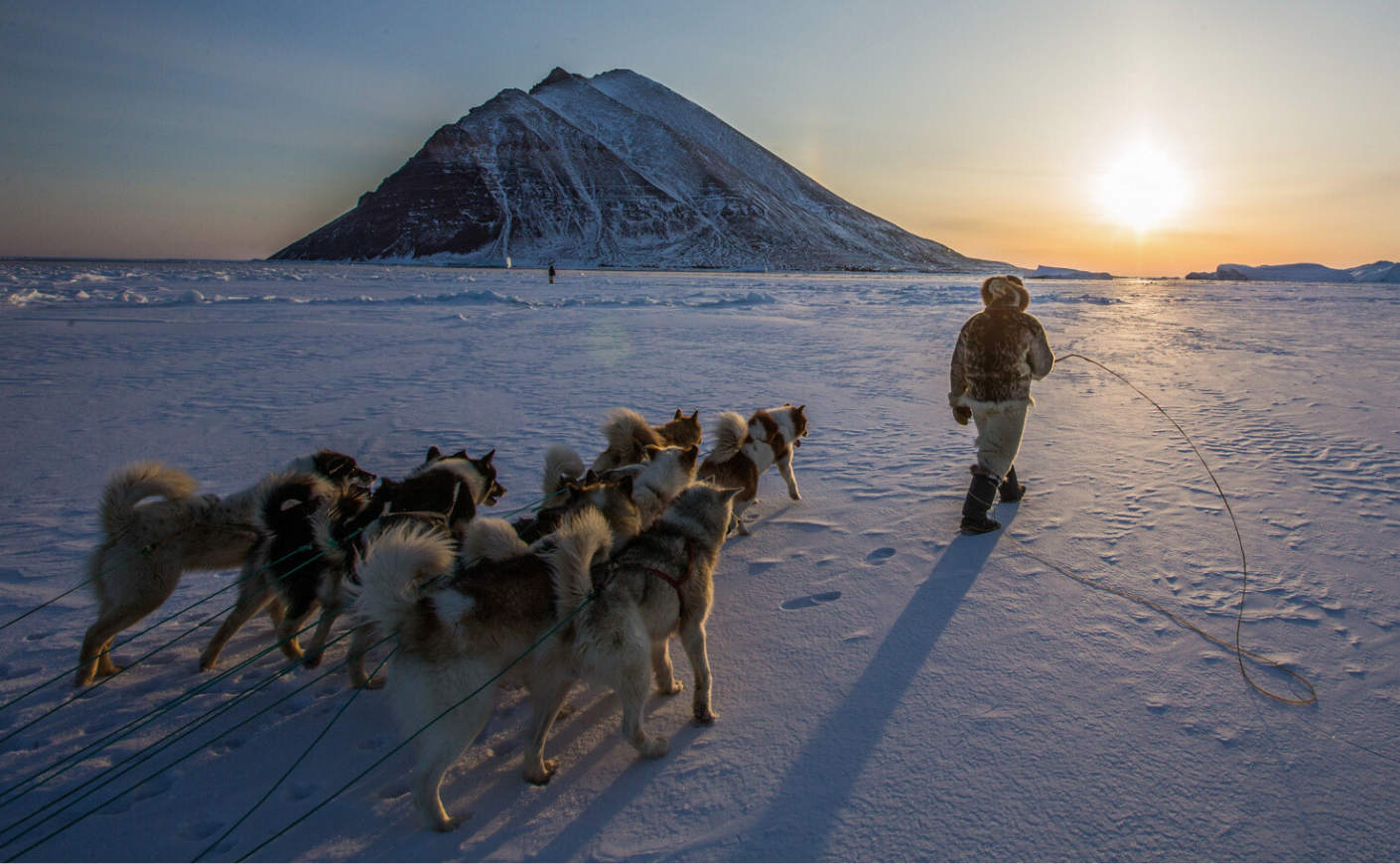
This particular assignment, however, brought us even further north, to the frozen town of Qaanaaq, the last true stronghold of the Greenlandic sled dog. These were working dogs that lived to pull, so much so that mushers struggled to keep them from taking off with half-loaded sleds in tow.
We spent the next few weeks with Inuit hunters, traveling across the sea ice by dog sled and listening to their stories.
The Inuit call Greenland “Kalaallit Nunaat,” meaning “Land of the People,” and they have lived here for millennia. They spoke of abundance and balance, of a life once built around community and shared responsibility, only a few generations ago. Before colonization, they explained, everyone had a role and a purpose.

They also told stories of loss. Since the early twentieth century, Greenlanders have been pushed into a Western way of life that has steadily eroded their language, knowledge, community, purpose, and self-determination.
However, through decades of political advocacy and resilience, Greenland’s heritage remains very much alive. Though not what it once was, it is still rich in culture and life.
A web of life
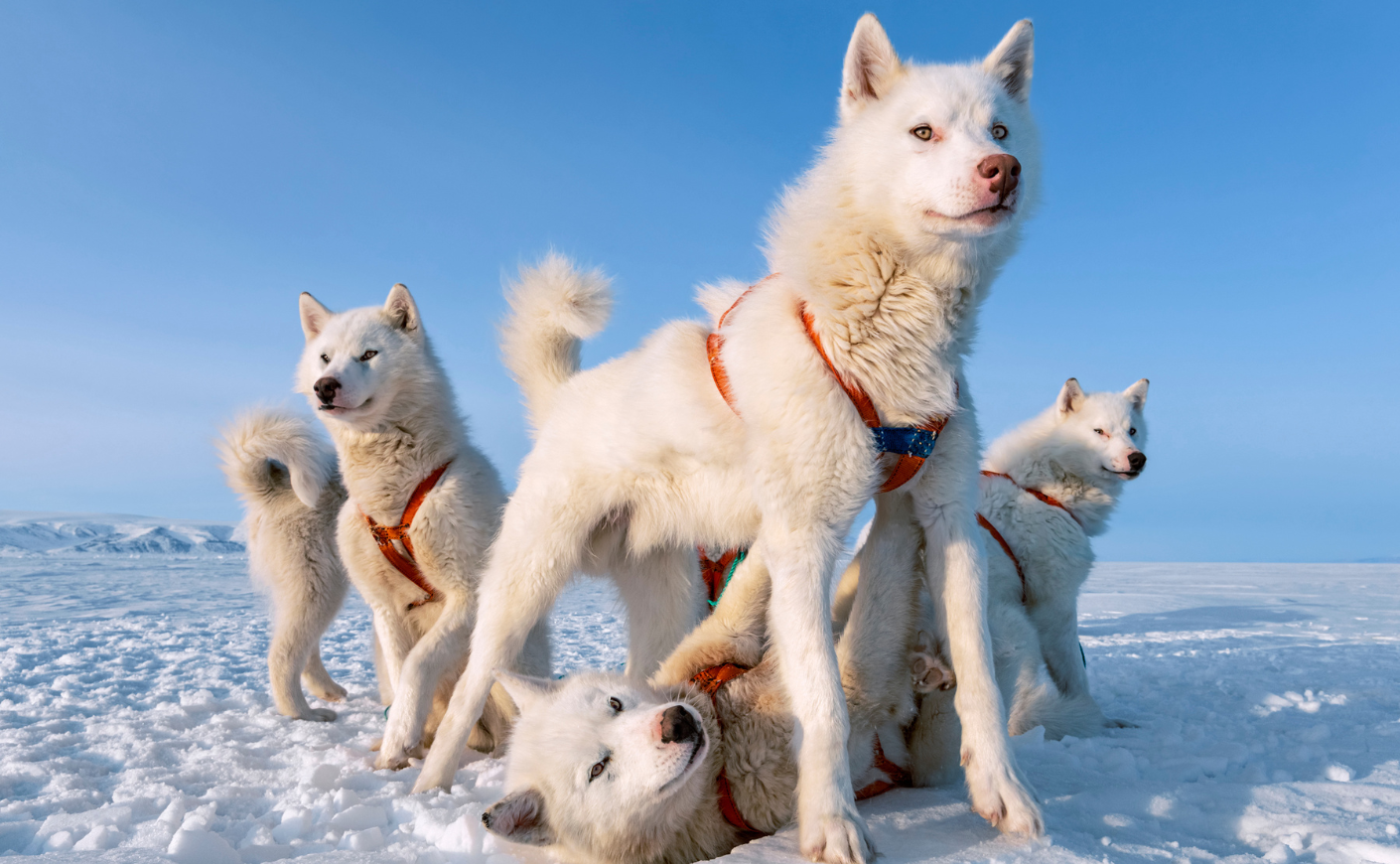
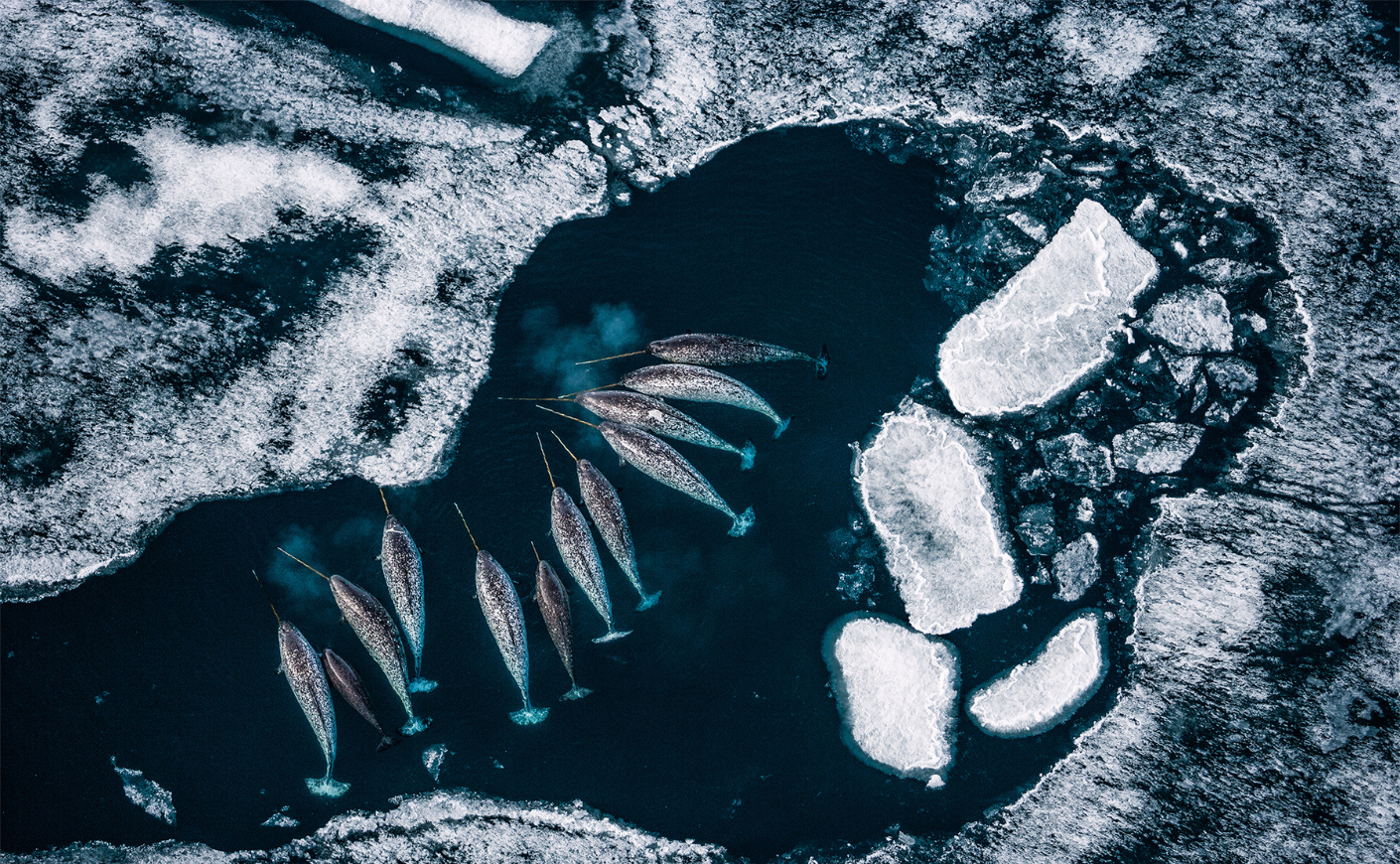
The waters beneath our sled were, and still are, some of the most biodiverse in the Arctic. Polar bears hunt seals. Seals hunt fish. Fish feed on plankton and algae. Narwhals, walruses, whales, and seabirds are bound together in an intricate food web Inuit have managed sustainably for thousands of years. The foundation of all this life is the ice itself.
Inuit, like many Indigenous Peoples, do not see themselves as above or separate from nature, but as part of it. Humans are equal to the polar bear at the top of the food chain. The same conditions that threaten the survival of apex predators ultimately threaten humans too.
When the ice disappears
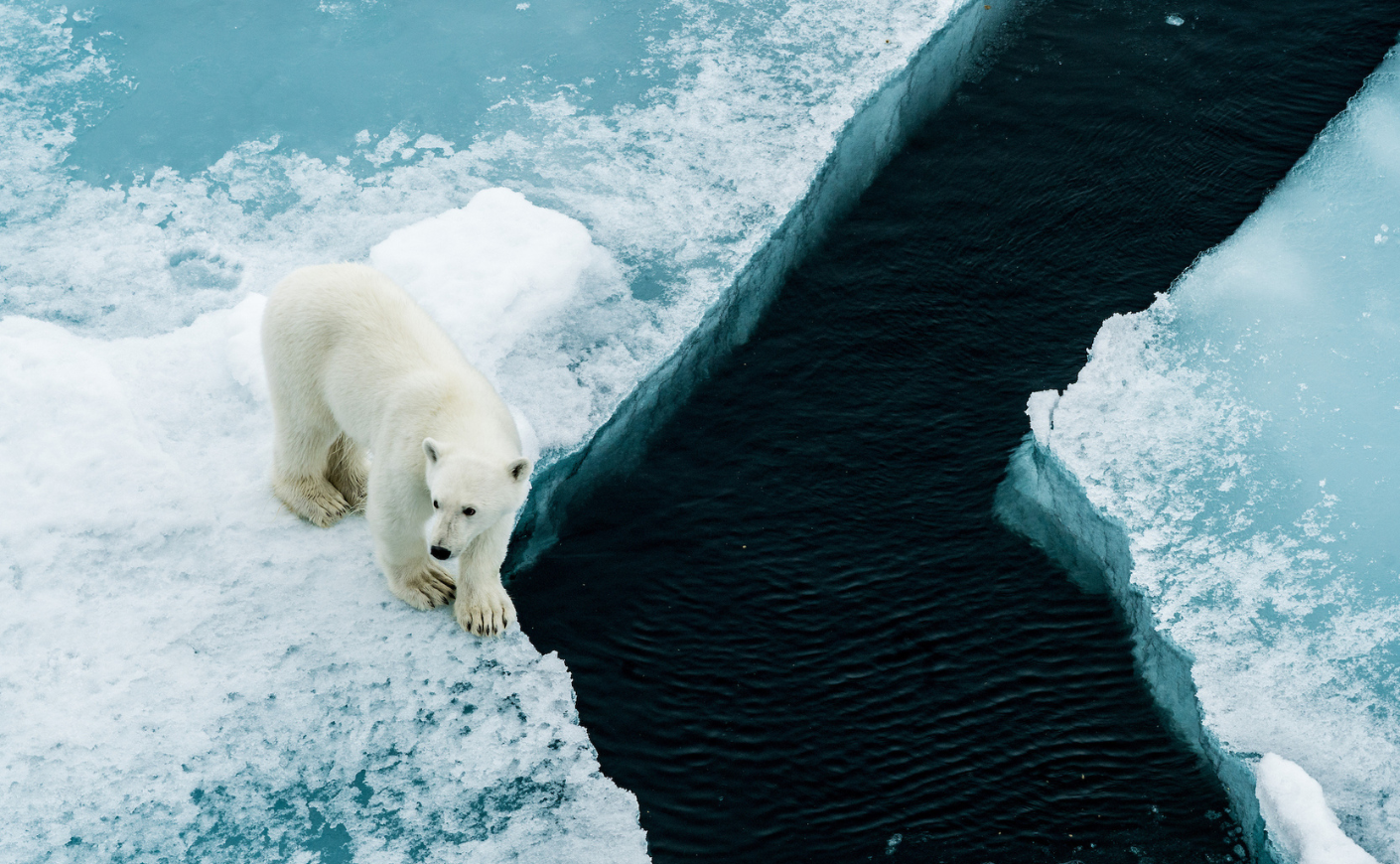
For centuries, Inuit in Greenland and Canada were connected by an ice bridge, traveling back and forth by dog sled, sharing family, culture, and stories. Today, that ice no longer forms reliably. What once united communities now separates them. Hunters can no longer reach ancestral hunting grounds. Routes that existed for generations have vanished within a single lifetime.
The Arctic is warming nearly four times faster than the rest of the world, and the consequences do not stay in the Arctic. The extreme cold that has swept across North America this winter may be confusing, or even reassuring to some. In reality, it is a symptom of a system coming undone.
The polar vortex is a massive system of rotating air that moves around Earth's poles, acting like a barrier to keep extremely cold air trapped around the Arctic. As the planet warms, that system is weakening. Cold air spills out, disrupting weather patterns much further south. We are opening the door of a warming planet like a fridge, reassured by the brief chill, while the systems that have sustained life on this planet collapse before our eyes.
It’s difficult to register a warming Arctic in daily life, but it is becoming impossible to ignore the growing sense that everything is getting worse. The same forces erasing Greenland’s ice are destabilizing weather systems, food production, and economies around the world. Greenland is simply one of the first to feel it.
Frontiers for profit
When the United States suddenly expressed interest in acquiring Greenland, we were not at all surprised, and here's why.
Scientists once predicted that by 2040, summer sea ice would be mostly gone, but recent studies now estimate that an ice-free Arctic could come much sooner. As the ice retreats, it exposes oil, gas, minerals, industrial fishing grounds, and new shipping lanes promising faster global trade. Nearly a quarter of the world’s remaining oil and gas reserves are believed to lie in the Arctic, making it one of the last frontiers of large-scale extraction alongside the deep sea.
Governments and industry know this. If climate change were not real, global powers like the United States, China, and Russia would not be racing north. The melting ice has turned climate change into economic opportunity, but only for those positioned to exploit it.
Climate change is profitable for the top 1 percent, for now. But it is already catastrophic for the rest of the world, especially biodiversity, coastal communities, and Indigenous Peoples like the Inuit, who depend on the ice that remains.
We are moving down a dangerous path by prioritizing short-term profits for the wealthiest while ecosystems collapse and cultures disappear. To treat Greenland as vacant, as a prize for whoever can exploit it fastest, is to erase centuries of stewardship and the lives of those who call it home.
When the last wilderness on Earth is stripped bare, what remains for the rest of us will not be prosperity, but loss. So the question is: Will we continue to accept a world where a few benefit while the rest pay the price, or will we stand with the people and the planet that are being bulldozed for profit?
Paul Nicklen and Cristina Mittermeier co-founded SeaLegacy in 2014. SeaLegacy’s mission is to inspire people to fall in love with the ocean, amplify a network of changemakers around the world, and catalyze hands-on diplomacy through hopeful, world-class visual storytelling. For more updates on their meaningful work, learn more about SeaLegacy, and subscribe to Ripple Effect, Katie Couric Media’s sustainability newsletter.
