




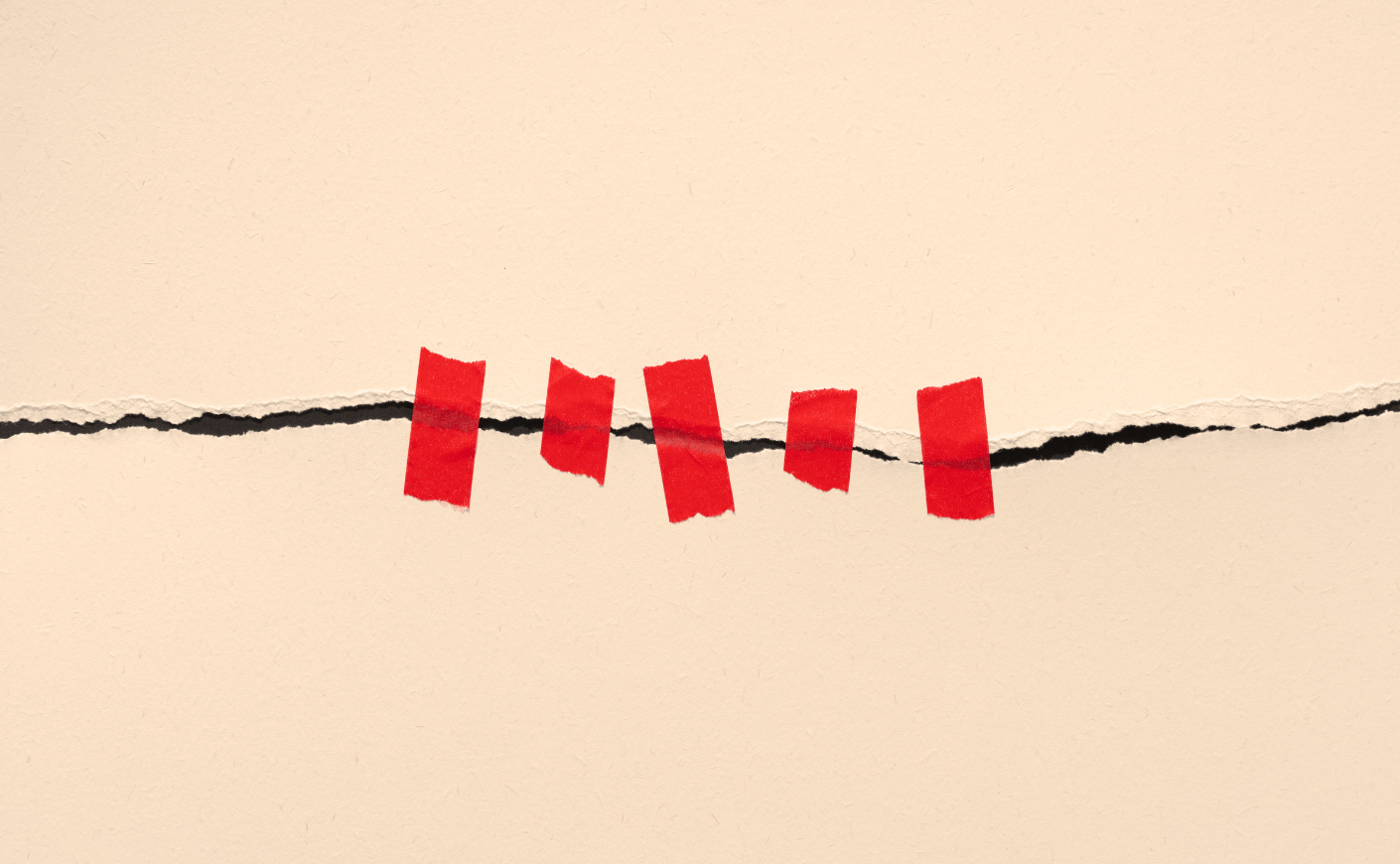
Family estrangement is having a moment. And although it’s not a new phenomenon, it seems the controversy around the concept has hit an all-time high. From viral stories to hot topic podcasts, social media debates, and MomTokers “clapping back,” there are countless strong opinions about whether to cut ties with parents or siblings and never look back — or push through at all costs. (The Cornell Family Estrangement & Reconciliation Project even says that more than one-quarter of Americans have decided to estrange themselves from a family member.) For many, that's a a shocking statistic.
What I rarely see discussed is what repair looks like when there’s been past hurt and pain, but families are interested in finding their way back to each other — without minimizing what happened.
There are plenty of situations in which there is pain and a desire for the relationship.
For many families, especially within parent-adult child relationships, decades of shared history complicate even the smallest attempts to reconnect. Time doesn’t simply heal origin wounds (the unmet emotional needs and relational injuries we carry from our earliest relationships); in some cases, it deepens them. Yet most people don’t want disconnection, they just don’t know how to move forward without defensiveness, side-stepping responsibility, or being engulfed by shame.
Let me first tell you what repair isn’t. Repair is not pretending that nothing happened, brushing it under the rug, or telling someone to “get over” a rift. It also isn’t self-sacrificing or endlessly apologizing for something to simply keep the peace when you don’t understand or agree with it. True reconciliation requires something else of us. It asks for emotional maturity, acknowledgment, responsibility, and change.
Now before we go any further, let me be abundantly clear: This is not an invitation to reconnect with someone who is abusive, chronically unsafe, or unwilling to take responsibility. Sometimes protecting yourself means stepping away. But there are plenty of situations in which there is pain and a desire for the relationship. If that's the case with you, here's my guidance on where to begin.
The key to healing family estrangement? Emotional maturity
It’s hard to be told you’ve hurt or disappointed someone, or that you failed to meet an important need of theirs. Your body might tighten, your heart might race, and your mind might rush to defend itself: I didn’t mean to. You’re too sensitive. That’s not what happened. This is where emotional immaturity takes hold — when your discomfort becomes more important than the other person’s experience. Emotional immaturity isn’t a lack of care, but a lack of capacity: a nervous system that can’t tolerate the discomfort, leading to defensiveness, withdrawal, or blame.
Emotional maturity requires three things: an anchored sense of Self, the ability to move through shame and fear without being overtaken by them, and a regulated nervous system capable of hearing feedback. Without these, feedback feels like rejection, accountability feels like shame, and even well-intentioned conversations can feel unsafe, pushing you into self-protection instead of repair.
If you're thinking of re-initiating contact, explore the following:
1. Identify what you struggle with most. Is it shame? Anger? Guilt? Rejection? Which of those emotions — especially in the midst of a difficult conversation — make you want to shut down, defend, or disappear? Your reactivity points directly to where your growth lies and where your own origin wounds live. (Take my What’s Your Origin Wound quiz to learn more.)
2. Understand your origin story. Look deeper into your childhood: What did you learn about making a mistake, disappointing, or letting someone down? These experiences inform your nervous system about how to respond to feedback. If you grew up in an environment where mistakes were punished, love was withheld, or emotions were dismissed, your nervous system learned that being wrong meant being unsafe. Even gentle feedback can feel like an attack. It’s not that you don’t want to grow; it’s that your system is wired to equate “being wrong” with “being unsafe.”
3. Combat shame. If feedback pushes you into self-protection, it reveals that you struggle to hold yourself in high enough regard while honoring your humanness. Practice holding two truths simultaneously: I’ve made mistakes and let someone I love down, and I’m human and still worthy of connection.
4. Prepare for the feedback. The truth is, you probably know what the feedback from your family member is already. Instead of personalizing it and writing a story about yourself that you need to protect, offer yourself some other possibilities. For example, imagine someone shares that they didn’t feel prioritized by you as a child. Instead of jumping to defining yourself negatively, can you move toward some simple believable thoughts:
-They’re hurt and want me to know.
-They feel disappointed and want me to prioritize them differently.
-Their origin wound is activated and they want to know I care.
And while it may seem intimidating at first, it's ideal to invite feedback. If you’re initiating the conversation this might sound something like, "I’d really like to hear about your experience. Are you willing to share more about how I’ve hurt you?" It is vital that you do not offer feedback back to them. This is not an invitation for you to share your hurt or the things you believe they’ve misunderstood. Center all of your attention on them first.
5. Regulate before you respond. Before the conversation actually begins, do something that helps regulate your nervous system: Go for a walk. Listen to a grounding song. Do a meditation. Stretch your body. Become intentional with your breath. Notice the sensations in your body shift. Ideally, you'll replace tension, tightness, and restlessness, with calm, peace, and stillness.
If your body tightens or your face flushes during a conversation, pause. This is a good indicator that it’s time for you to take a moment to reconnect with yourself. Visualize a safe place, and remind yourself: This is feedback, it does not define me. I can hear this and we can still be okay. Practice this over and over again.
6. Find the truth. You might not agree with everything your family member shares with you, but can you find any truth in what they’re saying, and try to connect with it? This is where heartfelt empathy can be expressed: "You’re right. I can only imagine how awful that must have been for you. I’m so sorry I didn’t have the tools to navigate that differently before."
7. Stick around, even when it’s hard. Maturity grows when you stop running from discomfort and learn to stand beside it. That’s what makes others feel safe, too. While navigating these difficult moments without avoidance, you continue to communicate that you can move through hard things and come out the other side okay. This is the sentiment at the core of secure attachment.
8. Acknowledge that change is needed. Get curious about what shifts need to take place for there to be a relationship. Promises and apologies only go so far when hurtful patterns continue. Ultimately, change speaks the loudest.
9. Offer your commitment. Things won’t settle into place right away. Change takes practice, and safety and trust are built over time. Which changes are you willing to commit to?
Some important reminders for you during this process: Repair is not a single conversation; it’s a practice. Start small. Reinitiating contact doesn’t mean resolving everything at once. In fact, it might look like you sending a brief message that names your intention without demanding immediate closeness: "I’ve been thinking about you, and I’d like to see if there’s a way forward that feels respectful for both of us."
Set boundaries around what you can and cannot discuss right now. And remember that boundaries aren’t punishments — they're guardrails for connection.
Throughout your conversations, remember that every person in a family system carries their own history and wounds, and while context doesn’t excuse behavior, it can help it make sense. Get curious and ask questions to create a deeper understanding of each other.
Reconciliation is never guaranteed, but doors can carefully be reopened when you have people who are willing to put their defenses down, acknowledge what needs to be named, and commit to a new path forward. It’s hard work, but beautiful work.
Vienna Pharaon is a licensed marriage & family therapist and author of the national bestseller The Origins of You. Pharaon has been featured in The New York Times, The Economist, Netflix, Vice, and Motherly, and has led workshops for Peloton and Netflix, amongst others. Follow her on Instagram, visit her website, or take her quiz to discover your "origin wound" right here.