






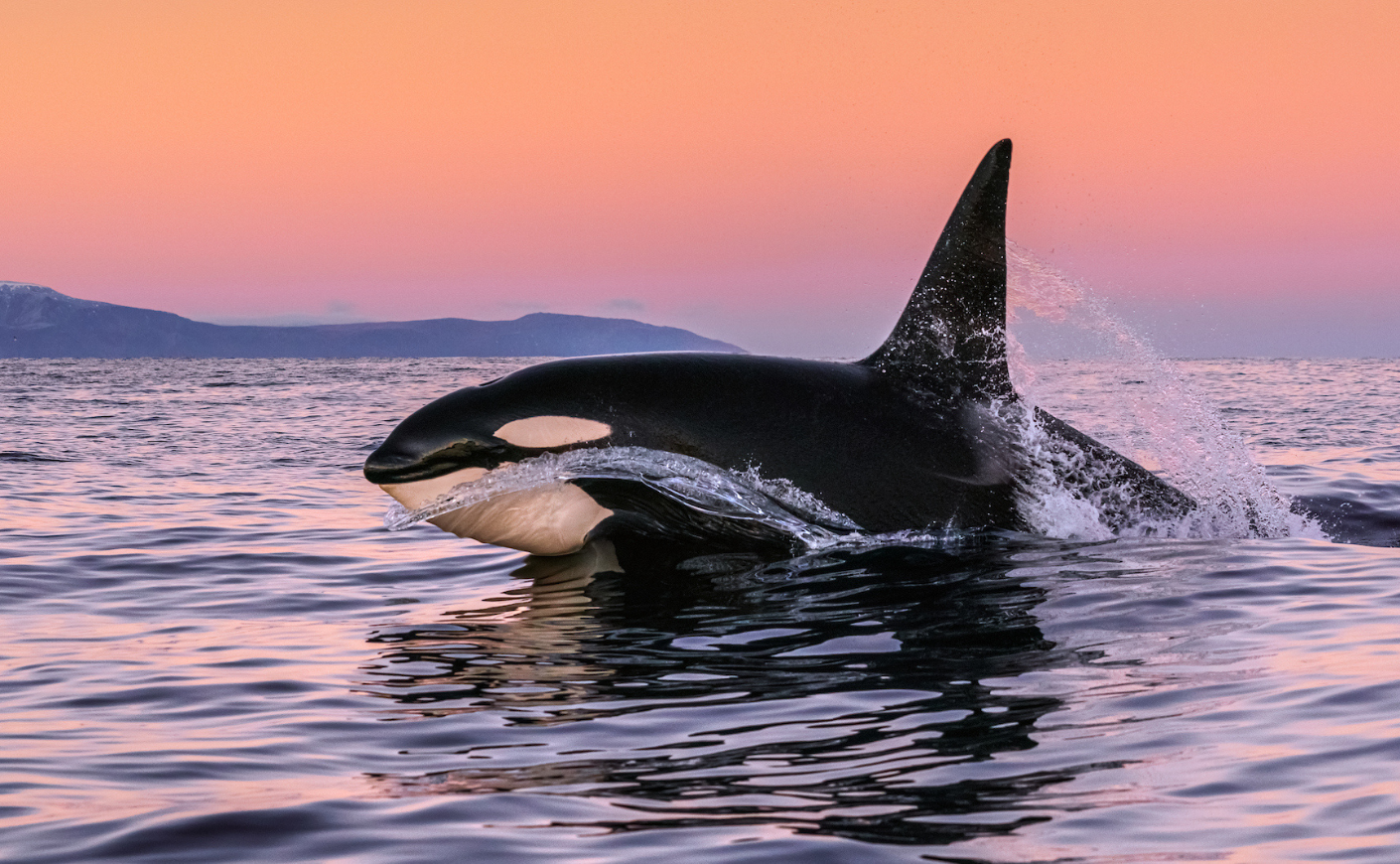
The water is almost black as our zodiac skims the fjords of northern Norway. The horizon keeps the dawn like a secret. It's late winter, and above the Arctic Circle, the sun disappears for weeks at a time. It will still be days before we see the first rays of light.
I hear them first: the sharp exhale of an orca’s breath. Then, in the half-light, tall, triangular dorsal fins cut the surface. I don’t even notice the cold whipping against my face anymore. A primeval fear sets in as the zodiac bucks against the choppy sea. There’s no time to hesitate before my partner, Paul Nicklen, is already sliding into the freezing abyss.
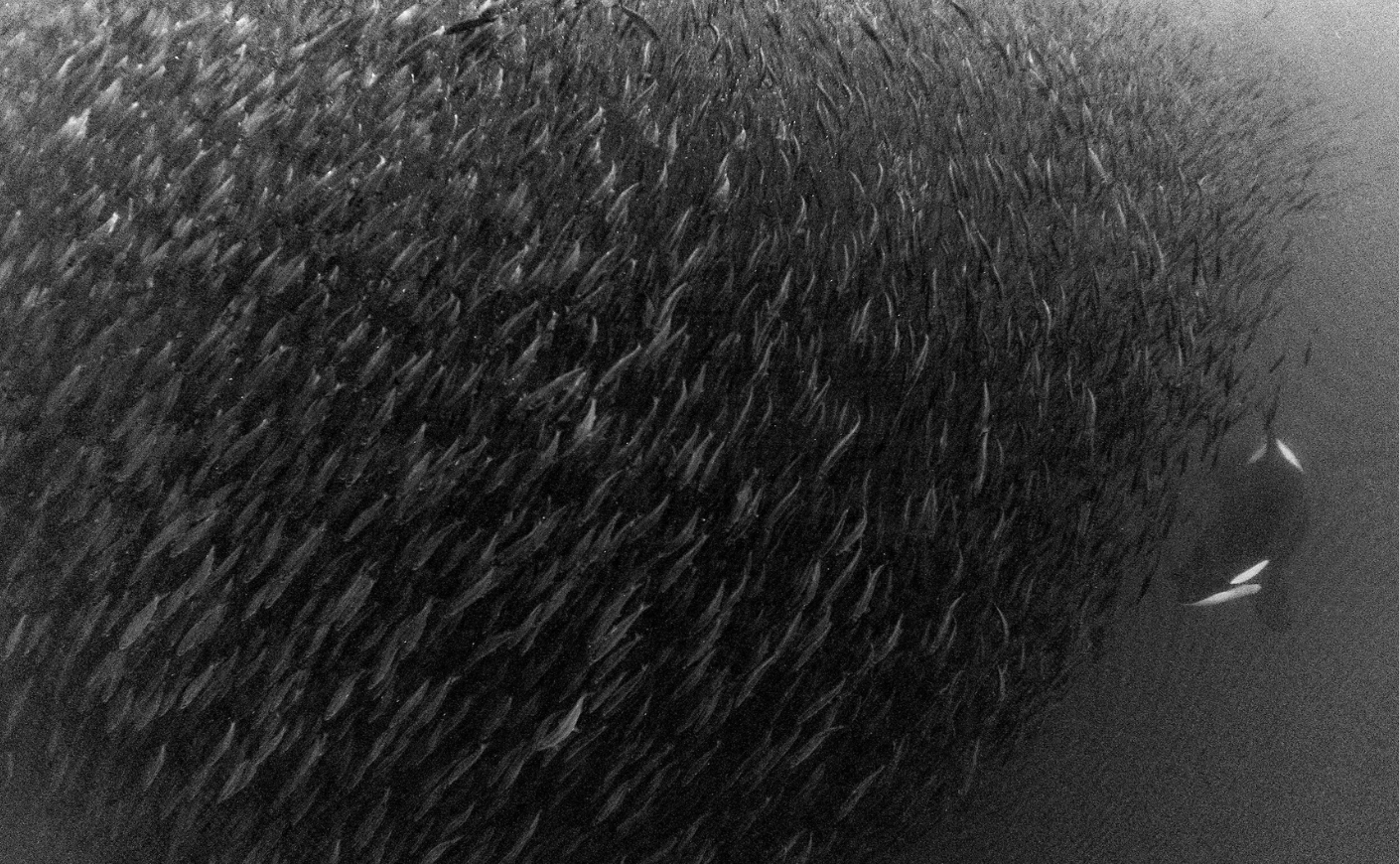
As soon as I hit the water, the fear disappears. Below the surface, the darkness softens. Orcas move through the water like a ballet, their black-and-white bodies weaving in and out of an enormous school of herring. The school expands and compresses like a murmuration of starlings. In a coordinated effort, the orcas close in, herding the herring into a tight ball. Calves mirror their mothers, learning the mechanics of survival. The water buzzes with sound as the orcas communicate, their clicks reverberating through my chest. I feel no fear, no cold, only the electric sensation of being profoundly alive.
It’s impossible to come out of an encounter like that unchanged. Experiences with nature are readily available to anyone willing to step beyond their comfort zone. Those who do so often walk away with a deeper connection to this planet and a clearer understanding of what stands to be lost if we continue to treat nature as expendable.
For many, including myself, those fleeting moments of connection have shaped entire lives, like it did for my friends Dr. Rob Williams and Dr. Erin Ashe. Both encountered orcas at a young age, and those early moments stayed with them.
As a kid, Rob realized that the oceans are full of dinosaur-sized animals, all singing and dancing beneath the surface. How could you not want to learn more about them? That sense of wonder never faded. It guided his choices, brought him together with Erin, and ultimately led them to found their Pacific Northwest–based organization, Oceans Initiative, where they’ve dedicated their lives to studying and protecting orcas.Today, they research one of the most imperiled orca populations on the planet: Southern Resident Killer Whales (SRKWs). This small population is genetically distinct from other orcas and lives in the waters between Washington State and British Columbia. Sometimes I’m lucky enough to see them pass by from my dining room window.
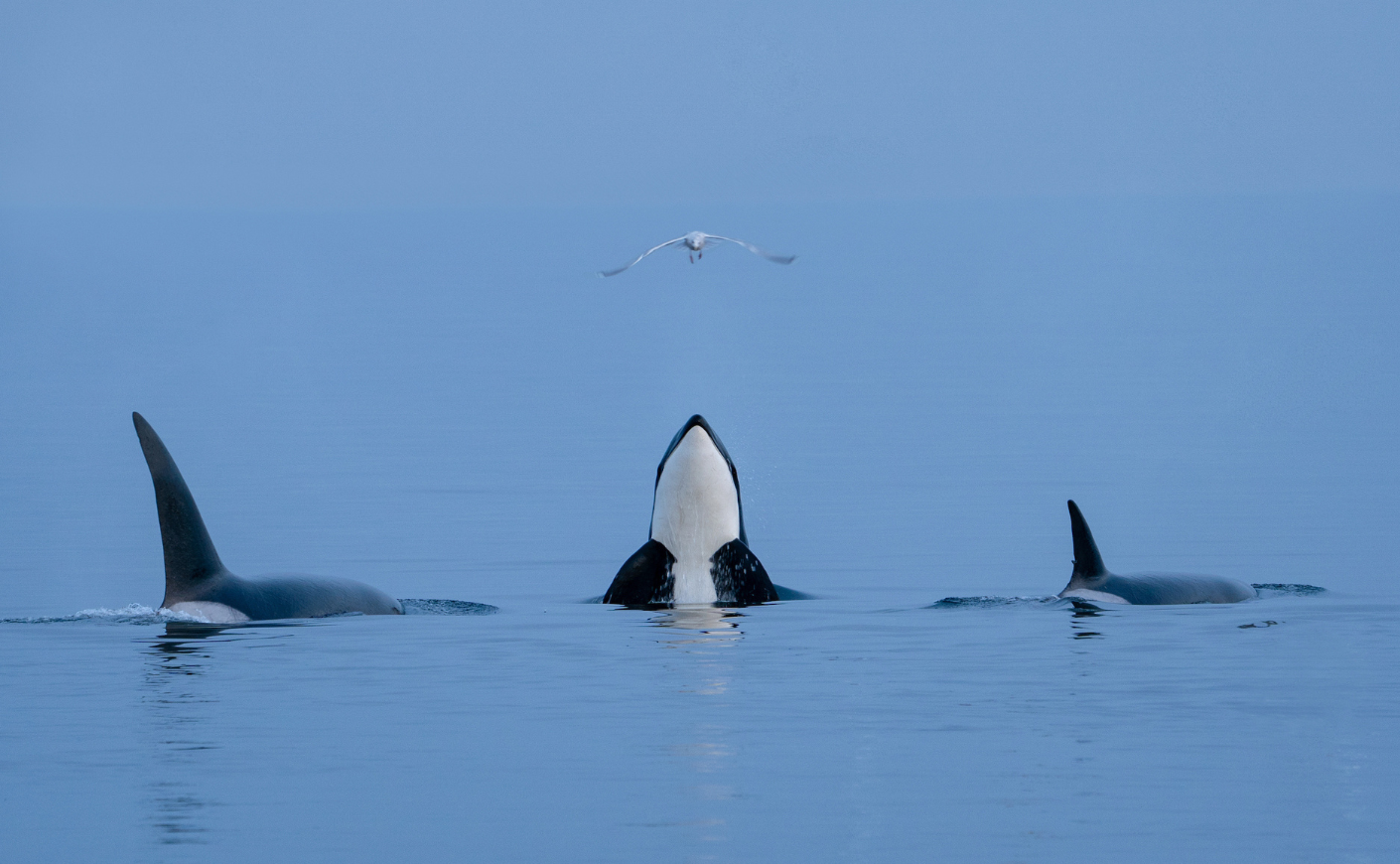
During the rise of marine entertainment parks, many SRKWs were captured from the wild. Combined with pollution, declining salmon populations, and vessel noise, their numbers never recovered. Today, only 75 individuals remain, and we know every whale by name. SRKWs may become the first species that we watch go extinct while having such an intimate understanding of their peril.
SRKWs are social animals with their own unique cultures, including wearing salmon as hats. Like other cetaceans, sound is everything to them. It’s how they hunt, navigate, socialize, and maintain bonds within their pods. Their habitat is increasingly dominated by noise from massive ships moving in and out of Vancouver and Seattle.

Shipping traffic noise overlaps directly with SRKW vocalizations, forcing them to “speak up,” which uses more energy and sometimes causes them to abandon hunts altogether. For animals already struggling to find enough food, this constant noise can be the difference between life and death.
We know a lot of this because of the work Oceans Initiative has done. Through years of focused research and collaboration, they’ve shown that something as simple as slowing down can significantly improve conditions for orcas. Some shipping companies have even voluntarily adjusted their operations in key orca habitats. It’s all about small changes with measurable impact.
To think, all of this traces back to a few early moments connecting with orcas in the wild. Sometimes that’s all it takes to reorient how you see the world and your place within it. That’s the ripple effect.
Our team at SeaLegacy has just released a short film on WaterBear that tells the story of Rob and Erin and the work of Oceans Initiative. It’s part of WaterBear’s Watch for Impact initiative. For every minute watched, $1 will be donated to Oceans Initiative. Just by watching, you’ll help us turn storytelling into tangible action. Watch the film here. And if their work resonates with you, you can also support Oceans Initiative directly through a donation here.
Paul Nicklen and Cristina Mittermeier co-founded SeaLegacy in 2014. SeaLegacy’s mission is to inspire people to fall in love with the ocean, amplify a network of changemakers around the world, and catalyze hands-on diplomacy through hopeful, world-class visual storytelling. For more updates on their meaningful work, learn more about SeaLegacy, and subscribe to Ripple Effect, Katie Couric Media’s sustainability newsletter.
