






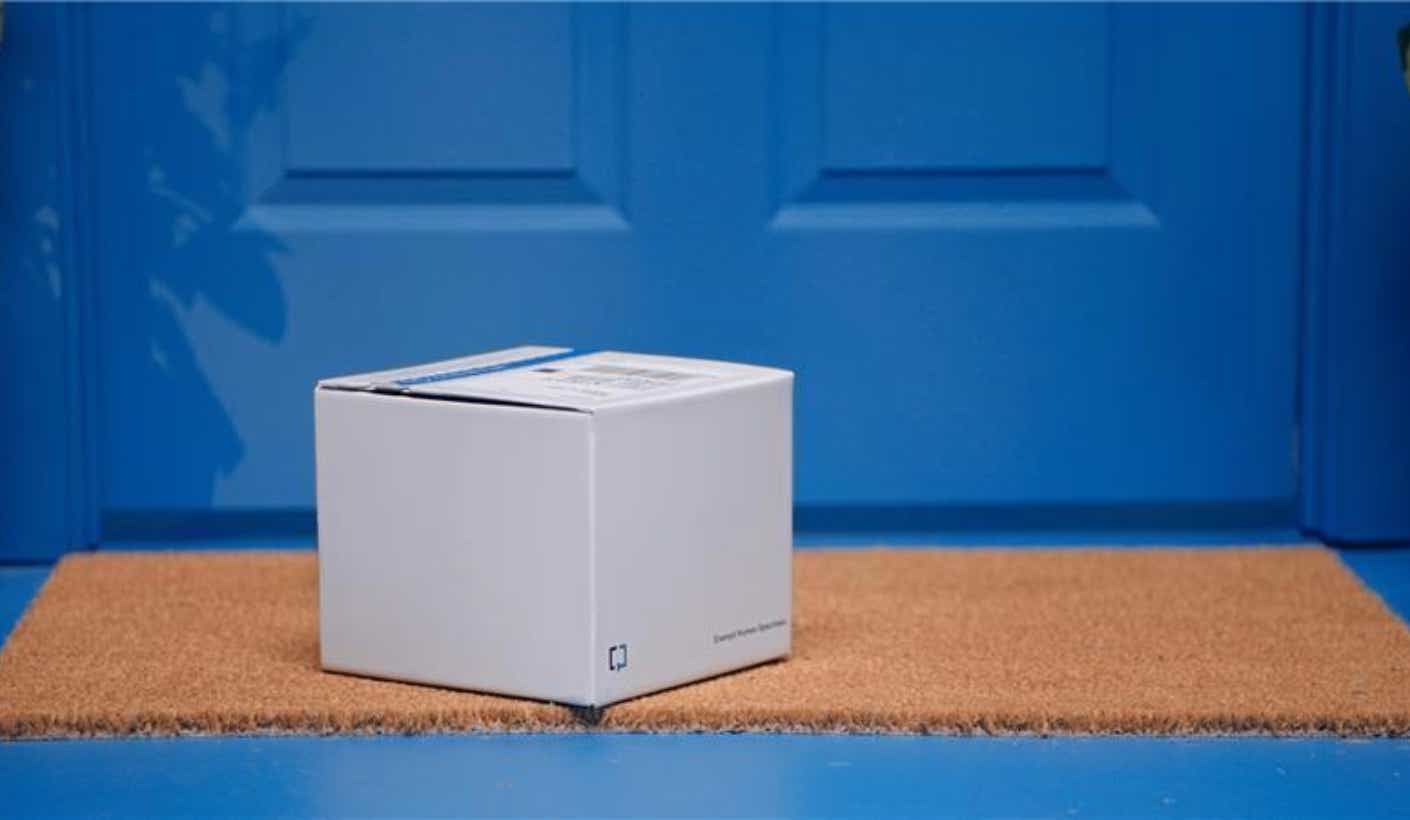
With the exception of junk catalogs or bills, getting mail these days is a rarity. But for some Americans, one particular piece of mail could be the key to early detection — and that can make all the difference.
If you’re one of the 120 million adults 45 years and older at average risk of colon cancer, and haven’t yet gotten screened, you might be one of the thousands of Americans who finds (or will soon find) a colon cancer screening test at your door. These tests, such as fecal immunochemical tests (FIT) or Cologuard® kits, aren’t just sent out at random: They're sent to people who are identified by insurance companies or health systems as eligible for average-risk screening and, in the case of Cologuard, prescribed by licensed clinicians.
Colon cancer is one of the most preventable cancers we face today — but only if it’s caught early. When precancerous polyps are detected and removed in time, the vast majority never progress into cancer, and survival rates climb dramatically. But because nearly one in three eligible adults remains unscreened, too many diagnoses happen late, when treatment is more difficult, more invasive, and far less effective… Which is what makes the effort to get more Americans screened so urgent.
For insurance companies and health systems, the strategy of mailing non-invasive colon cancer screening kits isn’t new. In fact, the practice of sending out FIT, which detect blood in stool, by mail has been used by insurers for more than a decade. For example, in one 2016 program, health plans sent FITs to 12,000 eligible adults in Washington and Oregon. Around one in five recipients completed and returned the test — some of whom may have skipped their screening, had one not appeared on their doorstep.
There are countless reasons why someone eligible for a colon cancer screening might not get one: scheduling, transportation, financial concerns, inability to take time off work, or lack of childcare might be barriers for some. The changing medical landscape is another factor that may be contributing to low screening rates. According to Lisa Richardson, MD, former division head of cancer prevention and control at the CDC, many individuals in the eligible age range are becoming increasingly disenfranchised with in-office primary care, so may not even know they should be getting screened: “Many people who need to be screened never even get identified,” she says. “There are all kinds of ways people can fall through the cracks.”
That’s why, according to Paul Limburg, MD, chief medical officer for screening at Exact Sciences, the scientific and medical community need to get creative in figuring out ways to meet people where they are. “Colon cancer is much more treatable when we’re able to diagnose it early,” he explains. “Sending kits in the mail is a relatively accessible, scalable way to reach screen-eligible people who haven’t gotten this important preventive service.”

Colon cancer screening isn’t the only form of preventive care that healthcare companies and insurers are making available outside of a traditional doctor’s office setting. For example, you can get a flu or Covid vaccine at most major pharmacy retailers, and you might even receive a phone call or text nudging you to come in for it. People who may have had no intention of getting a flu shot, especially if it meant having to schedule an appointment with their primary care provider, are now getting vaccinated simply because the pharmacist offered it while they were waiting to pick up a prescription.
Even when you make preventive care as easy as possible, not everyone is going to opt in — but it’s important to make sure they have the option to make that decision. “If a patient who receives a Cologuard kit doesn’t think it’s right for them, they can certainly decline to take the test or discuss appropriate options with their primary care team before completing whichever screening test is right for them,” explains Dr. Limburg. “The Cologuard kit comes with a welcome letter with easy-to-follow instructions, including eligibility requirements, to make certain the person who received it understands if screening is needed and can then make an intentional choice to return the test and complete the recommended follow-up.”
While no mail-out colorectal cancer screening program is likely to result in 100 percent adherence or participation, for insurers, any strategy that gets more people screened is a win. A small-scale study found that five years after a group of patients had a polyp removed during a colonoscopy, more than 98 percent never developed colon cancer. This relieves those patients of the physical and emotional toll of a cancer diagnosis, while also relieving healthcare systems of the significant financial burden that comes with covering cancer treatment.
Dr. Richardson admits the approach isn’t perfect, but says it’s important to approach initiatives aimed at increasing screening rates by recognizing that perfect shouldn't be the enemy of the good.
Data on the long-term outcomes, including mortality and recurrence rates, of using Cologuard in mail-out colorectal cancer screening programs is not yet available, but it’s likely that more people are getting screened because of it. “Having an in-person discussion with your clinician before making a choice about preventive care is less common than it used to be, and with initiatives like these people have another way into the screening funnel instead of otherwise being left out,” says Dr. Limburg. “The bottom line is that getting more people appropriately screened has tremendously positive clinical benefits and there isn’t a single strategy that works for everyone.
“Whether it’s using carrots or sticks, we’re going to keep trying to find solutions to get more people screened,” adds Dr. Richardson. “And we won’t give up.”
