






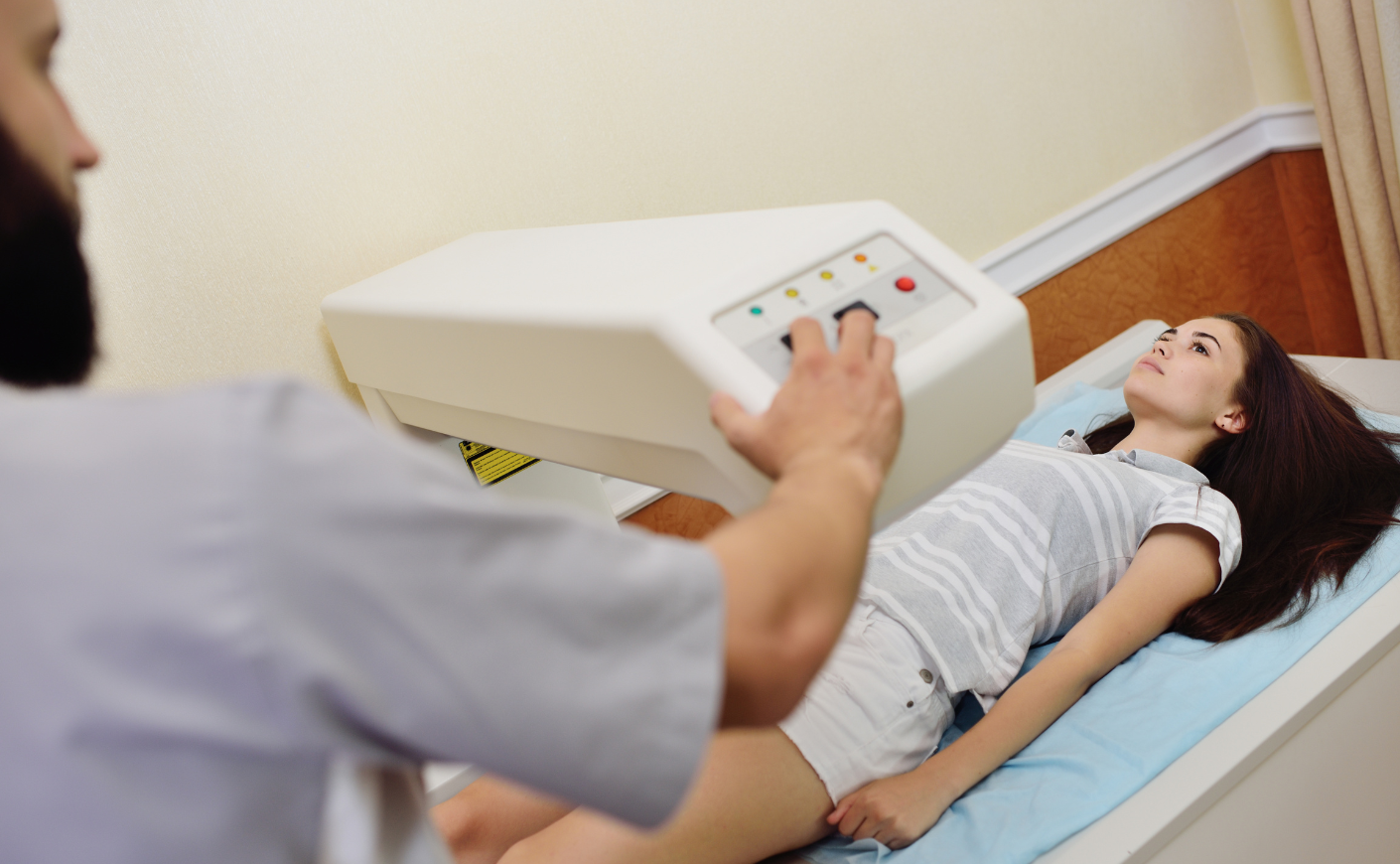
DXA scans have long been administered to women 65 and older as a way to screen for osteoporosis. But in recent years, the bone-density test has been rebranded as a wellness tool that much younger women — and plenty of men — are shelling out hundreds of dollars for.
Here’s why — plus, a look at how it works, what you should know before you get screened, and why some bone health experts argue the test should be more widely administered.
What is a DXA scan?
DXA, sometimes called DEXA, is short for dual-energy x-ray absorptiometry. It measures bone-mineral density and has been the gold standard for osteoporosis screening since the 1980s.
The DXA machine sends low doses of radiation into the hips and lower spine. Thick, healthy bone absorbs these beams, while weaker bone allows more radiation to pass through. DXA measures how much radiation penetrates through the bone to come up with a T-score. A score of -1.0 or higher is normal, between -1.0 to -2.5 qualifies as osteopenia, and anything lower is considered osteoporosis.
The test only takes a few minutes, is noninvasive, and covered by Medicare. But it’s still “underutilized,” Miriam Bredella, a radiologist with NYU Langone, tells us. “Only about one in five women who actually should get a DXA, do get a DXA,” she says.
Who should get a DXA scan?
It’s recommended that all women 65 and older get screened, along with some younger women with certain risk factors: Women with a parent who’s broken a hip, those who’ve undergone premature menopause, or who have other specific conditions are advised to get the test earlier. Hyperthyroidism, diabetes, cancer, rheumatoid arthritis, and a history of eating disorders all put patients at higher risk, says Nancy Salloum Harrison, MD, a rheumatologist at Hattiesburg Clinic’s The Arthritis Center-West.

The guidelines for men are a bit murkier: The U.S. Preventive Services Task Force — a federal organization that helps determine which screening tools must be fully covered by insurance — determined that the “current evidence is insufficient” to endorse men get a DXA. But other organizations, like the National Osteoporosis Foundation, recommend men get checked at 70.
Osteoporosis is much more prevalent in women, affecting nearly one in five women over 50, compared to 1 in 20 men — but it can be more lethal among the latter group. A man with osteoporosis who breaks a hip is twice as likely as a woman with the same condition to die within a year, the New York Times reports.
Should you get a DXA before 65?
Many women start losing bone density well before they’re diagnosed. Bone mass declines beginning in your thirties, but plummets in the years leading up to menopause when estrogen levels drop off. That’s why some medical organizations recommend that women start getting scanned as early as age 50.
“We suggest earlier screening, especially during perimenopause, when women can lose up to 20 percent of their bone mass,” Jennifer Wagner, chief health and performance officer at Canyon Ranch, told Wired.
In fact, that wellness resort is one of a growing number of luxury spas marketing DXA scans as a premium longevity offering. In recent years, they’ve become more popular because the tests not only analyze bone, but also body composition — captivating prominent anti-aging influencers, like Dr. Peter Attia, who are interested in DXA as a way to track their visceral fat and muscle mass. They argue that keeping tabs on their levels give them a clearer picture of their cardiovascular risk and metabolic health.
But even if you’re not interested in knowing precisely how much belly fat you have, it’s a good idea to ask your doctor about getting a scan — especially if you’re at high risk for osteoporosis. Says Dr. Bredella, it's an important way to catch this silent disease before it progresses.
